SEC Exemption Ignites a Tokenized-Stock Race; Hong Kong Puts $1.3T of Bills On-Chain
On-chain RWA Market Cap
$34.18B
▲ 85.2% (2026 YTD)
Tokenized Equities
$4.43B
▲ 390.4% YTD · 13% share
Capital Activation Rate
12%
Private credit leads at 49.67%
HK Exchange Fund Bills
$1.3T+
Tokenization pilot within 2026
72 Hours After SEC’s Innovation Exemption: Coinbase Files for Single-Stock Perps, Kalshi Submits Rules
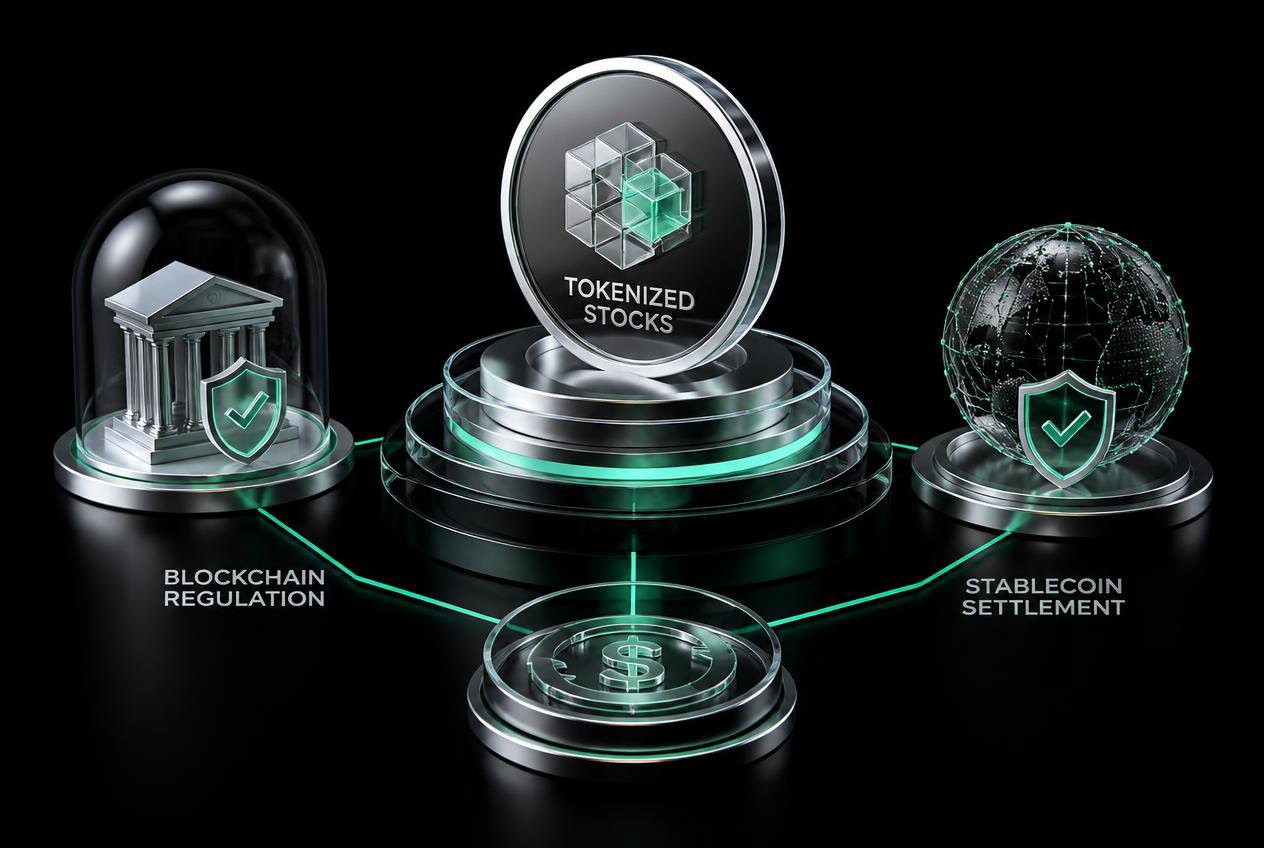
Just three days after the SEC unveiled its five-year Innovation Exemption on September 17, institutional follow-through arrived at record speed: Coinbase Derivatives has filed with the CFTC for single-stock perpetual futures, while Kalshi submitted rules for equity perpetual contracts covering individual names such as Apple. In the same week, S&P Global announced an agreement to acquire smart-contract security firm OpenZeppelin. Goldman Sachs and Citizens analysts named Coinbase, Robinhood, and Circle as early beneficiaries — mapping to custody, tokenization infrastructure, and stablecoin settlement respectively.
- The exemption allows qualifying venues to trade tokenized U.S. equities on-chain, provided voting and dividend rights are preserved and halts on the underlying stock carry over to the tokenized version
- The lane is anchored to AMM execution rather than CLOB: Coinbase would need new AMM capability to self-operate, or route flow through AMM protocols on its Base network
- Issuers hold objection rights, and venue volume and listings are capped — regulators deliberately blunting near-term leakage from NYSE and Nasdaq
Market Impact
24/7 on-chain U.S. equities gain their first explicit regulatory lane; a five-year pilot window opens
Competitive Landscape
CLOB incumbents and AMM-based on-chain venues begin to split the market; Uniswap jumped 30% in a day
Infrastructure
Custody, tokenization platforms, and USDC settlement form the three beneficiary rails; WisdomTree’s fund already approved for 24/7 trading
Source: CoinMarketCap · AMK News · September 20, 2026
Hong Kong Policy Address: $1.3T+ in Exchange Fund Bills to Be Tokenized Within 2026; Stablecoin Trading on Licensed Venues
At the 2026 Policy Address press conference, Financial Services and the Treasury Secretary Christopher Hui announced that the HKMA will pilot the tokenization of Exchange Fund Bills — over $1.3 trillion outstanding — by year-end, enabling round-the-clock asset-and-liability management for banks. CMU OmniClear will stand up a digital asset platform this year offering one-stop digital bond issuance and settlement. Regulated stablecoins will be allowed to trade on licensed virtual-asset platforms and encouraged for settling tokenized money-market funds.
- Bill tokenization targets the wholesale interbank layer, supporting settlement outside traditional market hours
- Stablecoin policy moves from issuance licensing toward regulated trading and real use cases; the SFC begins digital-asset custody surveillance next year
- Digital bonds issued in Hong Kong accounted for nearly 50% of the global market between 2025 and H1 2026
Policy Signal
The digital-asset framework extends from spot trading and custody into full capital-markets issuance and settlement
Infrastructure
CMU OmniClear + EnsembleTX form an issuance–settlement–CBDC loop landing within the year
Regional Race
Singapore, Japan, and Korea are all accelerating — the Asia-Pacific tokenization-hub contest enters a dense policy phase
Source: CoinAlertNews · CoinPost · September 21, 2026
Korea’s Eugene Investment Partners with BEATOZ to Test Stablecoin Settlement of Tokenized-Security Subscriptions
On September 21, Eugene Investment & Securities signed an MOU with blockchain firm BEATOZ to verify the use of stablecoins in settling subscription payments for tokenized securities. The pain point is clear: rights to tokenized securities are recorded on-chain, but subscription payments still run through conventional bank accounts — a dual-track split between securities and cash. The two firms will first run a proof-of-concept converting subscription payments into stablecoins, collapsing subscription, payment, and clearing into a single on-chain workflow.
- Eugene built its tokenized-securities issuance platform in 2024 and took part in the Korea Securities Depository’s tokenized-securities pilot last year
- The firm is also a member of Hana Financial Group’s won-denominated stablecoin consortium — experience it can reuse here
- Once the PoC verifies out, the parties plan infrastructure integration and follow-on cooperation
Settlement Revolution
Full on-chain single-track from subscription to clearing eliminates dual-system friction
Institutional Design
A “stablecoin consortium + securities platform” pairing becomes the template for Korea’s path
Industry Signal
Competition in tokenized securities shifts from issuance capability to full-workflow on-chain capability
Source: Seoul Economic Daily · ChosunBiz · September 21, 2026
Binance Research’s “RWA Activation Era”: $34.18B On-Chain, Tokenized Equities Up 390% — Yet Only 12% Activated
Binance Research published “The RWA Activation Era” on September 18: as of September 15, on-chain RWA reached $34.18 billion, up 85.2% year to date. Tokenized equities hit $4.43 billion after a 390.4% YTD surge, lifting their share from 4.9% to 13.0%. Yet the overall Capital Activation Rate (CAR) sits near 12% — only $12 of every $100 in tokenized assets is deployed in on-chain financial applications. The report projects 2030 tokenized-equity AUM between $61 billion (conservative) and $987 billion (bullish).
- Bonds and money-market funds lead at $182.9 billion, contributing 54.7% of this year’s increase; equities added 22.4%
- Within equity DeFi, liquidity pools account for 65.4% and lending 28.1% — together 93.5%; private credit posts the highest CAR at 49.67%
- Competition is shifting from issuance to distribution and use: lifting equity CAR from 10% to 20% would double deployed capital to nearly $70 billion
Market Structure
A 0.01% penetration rate against a $151.9T listed-equity reference market — the ceiling is nowhere in sight
Key Metric
CAR replaces the scale narrative as the core yardstick of tokenization quality
Growth Path
Activating existing supply carries more leverage than new issuance; DeFi integration is the next battleground
Source: crypto.news · DigitalToday · September 18, 2026
Tether’s $1.5B Loan Now Finances Nearly All of Gold.com’s Gold Credit; 146-Ton Reserve Comes Into View
Tether has extended roughly $1.5 billion in loans to gold dealer Gold.com, financing nearly all of the firm’s gold-backed lending. Tether’s Q2 report shows holdings of about 146 tons of gold worth roughly $18.8 billion — gold is moving from a footnote on the reserve sheet to a pillar of the stablecoin issuer’s balance sheet, stretching the RWA narrative into precious-metals trade-finance infrastructure.
- Gold-backed loans generate yield income for Tether, reducing reliance on any single asset class
- Concentration risk is explicit: single-counterparty exposure stacked on gold-price volatility
- More RWA on Tether’s balance sheet means a new contagion channel between crypto and traditional markets
Asset Allocation
Stablecoin issuers expand from cash equivalents into hard assets and credit businesses
Risk Transmission
A new linkage between gold prices, credit, and crypto markets — watch the stress scenarios
Industry Evolution
USDT’s role is quietly shifting from settlement rail to “precious-metals financing bank”
Source: MyCryptoParadise · September 21, 2026