Securitize Taps UAE First Institutional Chain, Ushering a Two-Track Middle East
Securitize is wiring its institutional tokenization infrastructure into ADI Chain, moving regulated assets onto a Gulf sovereign-backed blockchain as the UAE pivots from pilot projects to a settlement hub.
On September 30, ADI Foundation announced that Securitize, a tokenization platform registered with the US SEC and listed on the NYSE, is integrating with ADI Chain. The Middle East’s first institutional-grade Layer-2 blockchain thus becomes part of Securitize’s multichain ecosystem, opening a pathway for eligible regulated financial products to move onchain. By the official framing, this is the first time a US-licensed tokenization platform has formally connected with a Gulf sovereign-adjacent blockchain.
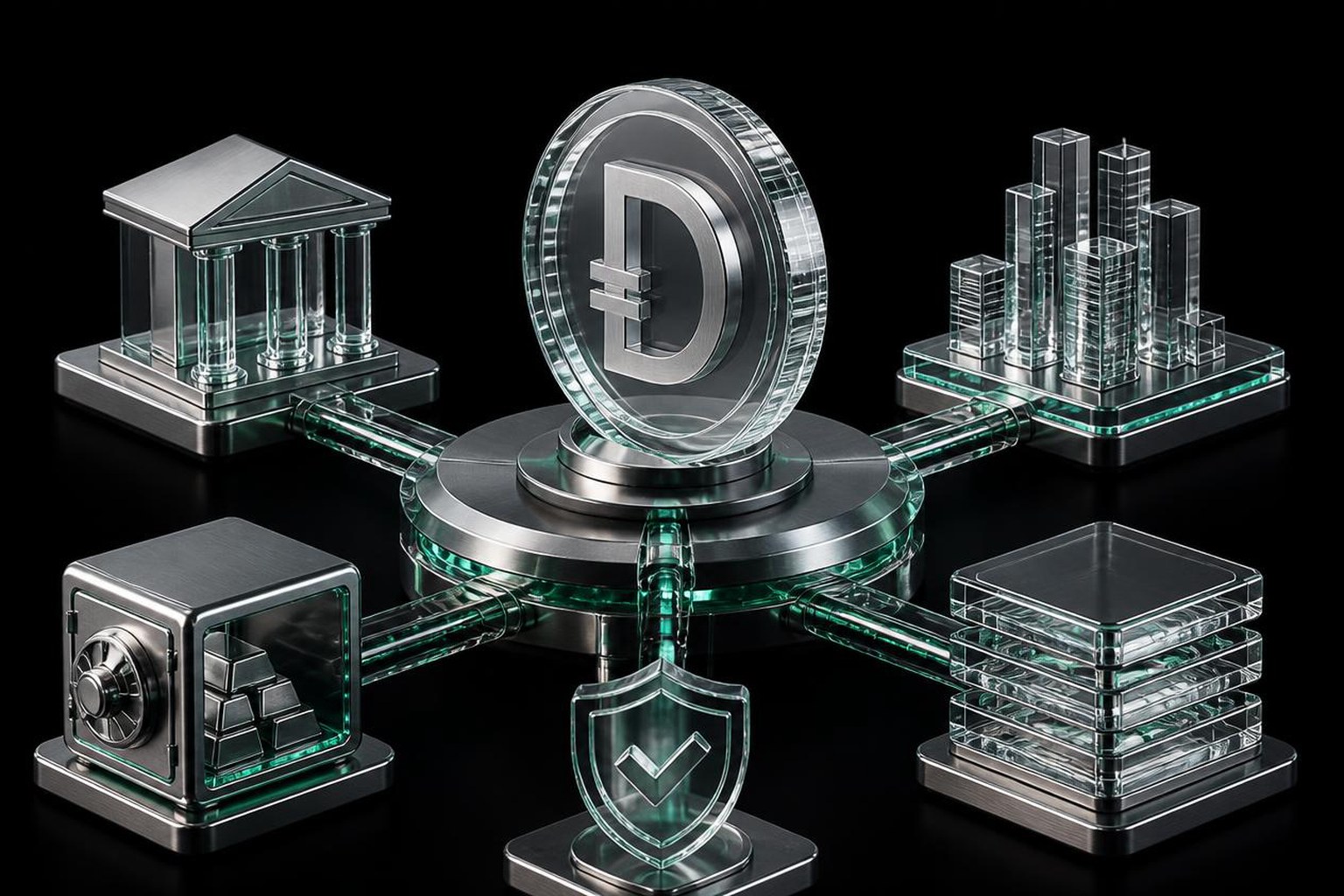
Two threads converge here. Securitize has secured two UAE relationships within a single month: a tokenization MOU with Dubai’s VARA on September 3, and the ADI Chain integration on September 30. ADI Chain itself sits behind DDSC, a dirham-backed stablecoin co-created by IHC, First Abu Dhabi Bank and Sirius International Holding, licensed by the UAE Central Bank, which handled an institutional-grade AED 110 million (about $30 million) transfer in May.
1. Why It Matters: The Middle East Moves From Issuance Narratives to Institutional Settlement Rails
Middle East crypto attention has mostly landed on exchange licenses, stablecoin issuance and real-estate tokenization pilots. ADI Chain has a different positioning: it is institutional infrastructure built around payments, RWAs and settlement, constructed on zkSync’s ZK Stack with the GPU-accelerated Airbender prover for zero-knowledge proofs, and supporting policy-aware Layer-3 networks. This integration effectively connects a US institutional product issuance pipeline onto that rail.
The signal is direct: the question for regulated assets is shifting from “which chain to issue on” to “which compliant rail to settle on.” The Middle East is competing not for issuance volume but for settlement-layer influence.
2. Industry Snapshot: A $5B AUM Multichain Bet
Securitize’s tokenized AUM now sits near $5 billion, climbing from $4.3 billion at the end of June, with Q2 transaction volume of $5.3 billion, up 147% year over year, serving 663 active funds. Its client roster includes Apollo, BlackRock, BNY, Hamilton Lane, KKR and VanEck. Over recent months it has pushed a multichain strategy: in August, it and Neuberger Berman launched the HINC high-yield tokenized fund simultaneously across Avalanche, Ethereum, Solana and Sui.
ADI Chain is not paper infrastructure either. Beyond DDSC, it completed a $50 million strategic financing round in July, is registered in ADGM, and counts BlackRock, Mastercard, Visa and Franklin Templeton among its collaborators. This integration is an infrastructure-layer expansion, not the launch of a new tokenized fund.
3. Deep Dive: The “Rail War” of Institutional Tokenization
4. Investment View
ADI’s token (ADI) holds a market cap near $77.7 million and showed no sharp move on the integration news, with the market apparently waiting for real product deployments rather than conceptual catalysts. Securitize (SECZ), the only platform holding regulated digital-securities licenses in both the US and EU, is worth tracking for its multichain expansion pace. More telling than any single event would be the circulating supply of DDSC: if institutional settlement volume keeps compounding, the UAE’s “stablecoin plus tokenization” dual engine says more than any one announcement.
5. Conclusion: The UAE Is Staking Its Claim as a Global Settlement Hub
Securitize plugging into ADI Chain is a watershed moment for institutional tokenization in the Middle East: regulated assets now have a compliant lane into the Gulf, and the Gulf now has a doorway into the global product pool. For practitioners, two variables deserve attention: the institutional settlement volume of DDSC, and how the VARA and CBUAE frameworks lock together. Whoever thickens the settlement layer holds the microphone for the next round of tokenization growth.
- Securitize — Securitize Integrates with ADI Chain to Expand Institutional Tokenization
- PR Newswire — Securitize Integrates with ADI Chain (ADI Foundation announcement)
- UseTheBitcoin — Securitize Integrates With ADI Chain
- TokenPost — Securitize Adds ADI Chain Support
- Invezz — ADI Chain Price, News & Market Cap
- BlackRock Research — The Machine-Native Economy
发表回复