博客

  • Nine Companies Veto Tokenized Stocks as Ondo Flips BlackRock for the Treasury Crown

    Nine Companies Veto Tokenized Stocks as Ondo Flips BlackRock for the Treasury Crown

    A
    Aurellix
    October 19, 2026
    1 min read

    Today’s Focus
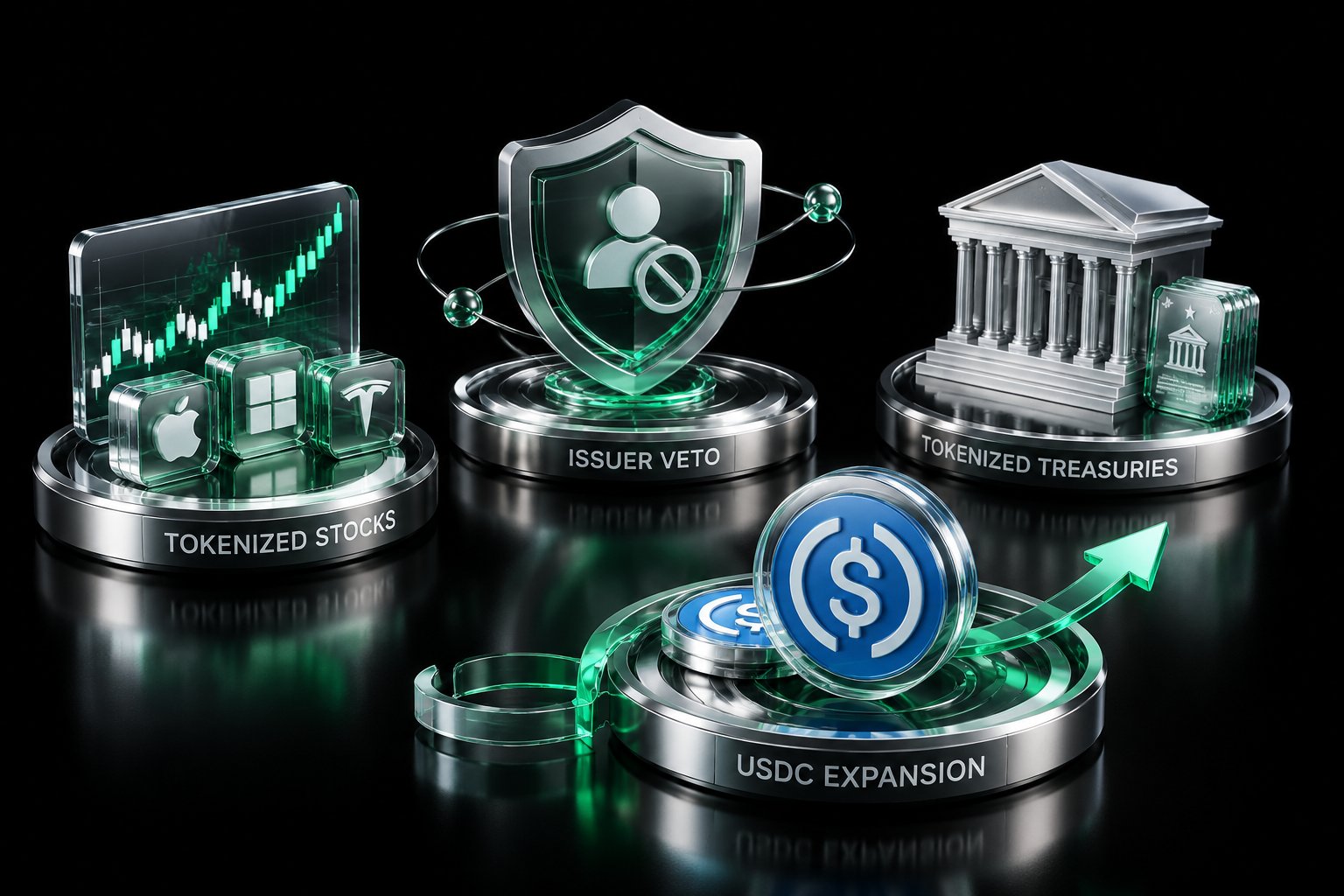
    Tokenized stocks face their first large-scale veto: 9 issuers formally objected among OKXICE’s initial 63 US stock tokens, putting the SEC Innovation Exemption’s opt-out mechanism to a live test. This week Ondo USDY ($2.33B) flipped BlackRock’s BUIDL ($2.2B) for the top spot as tokenized treasuries approach $15B. On the regulatory side, EBA named USDC the first significant e-money token under MiCA, accelerating stablecoin compliance tiers.

    Industry Flash

    10 items

  • OKXICE’s first tokenized stock batch draws 9 issuer objections — Broadcom, Verizon, UnitedHealth and others, roughly 14% of the initial list, formally vetoed, putting the SEC Innovation Exemption’s issuer opt-out to its first large-scale test
  • Ondo USDY flips BUIDL for the No. 2 single product — $2.33B vs $2.2B, Ondo’s tokenized treasury suite tops $3B combined, as a crypto-native issuer outranks a traditional asset manager by scale for the first time
  • USDC named MiCA’s first significant token — EBA designated Circle’s token a significant e-money token, shifting prudential supervision from Nov 12, the first of 45 EMTs to earn the tier
  • Circle takes USDC into 40 emerging markets — spanning Southeast Asia, LatAm, Africa and the Middle East; Samsung Wallet plugs into stablecoin transfers via Solana and Sui, as USDC circulation hits $73.3B, up 19% YoY
  • Italy, Portugal and Singapore hold 66.9% of tokenized treasuries — Italy 29.9%, Portugal 18.8%, Singapore 18.2% vs just 10.5% at home in the US, as offshore capital becomes the main driver of onchain dollar yield
  • ESMA consults on tokenized collateral — EU central clearing houses weigh using tokenized collateral across digital twins, native onchain assets and hybrid models, with comments open until Jan 15, 2027
  • Ant Digital and HSBC test AI tokenized payments — AI agents settled micro-payments with tokenized deposits, each typically under $2, in real time on the Jovay testnet, not yet commercially live
  • Multiliquid closes $8M seed round — led by Polychain with Circle Ventures joining, building a 24/7 atomic-swap liquidity layer between tokenized assets and stablecoins for institutions
  • BNY and Citadel complete a tokenized treasury tri-party repo — tokenized Treasuries recorded on a private ledger and settled within minutes, moving repo settlement from T+2 toward instant
  • Onchain RWA market cap hits $39.18B — holders rose 16.3% MoM to 5.2637M, stablecoins hold steady at $292.4B while monthly transfer volume retreated 17.75%
  • 9 家公司否决代币化股票,Ondo 反超贝莱德登顶美债代币化

    9 家公司否决代币化股票,Ondo 反超贝莱德登顶美债代币化

    A
    Aurellix
    2026年10月19日
    1 分钟阅读

    今日焦点
    代币化股票遭遇首次大规模否决:OKXICE 首批 63 只美股代币中 9 家发行人正式反对,SEC 创新豁免的 opt-out 机制迎来实战检验。同周 Ondo USDY($23.3 亿)反超 BlackRock BUIDL($22 亿)登顶,代币化美债总规模逼近 $150 亿。监管侧 USDC 被 EBA 认定为 MiCA 首个重要电子货币代币,稳定币合规分层加速。

    行业速报

    共 10 条

  • OKXICE 首批代币化股票遭 9 家公司反对 — 博通、Verizon、联合健康等占首批 14% 的标的企业正式否决,SEC 创新豁免的发行人异议机制首次大规模实战
  • Ondo USDY 反超 BUIDL 登顶单产品第二 — $23.3 亿 vs $22 亿,Ondo 系代币化美债合计破 $30 亿,加密原生发行方首次在规模上压制传统资管巨头
  • USDC 获 MiCA 首个重要代币认定 — EBA 将 Circle 列为重要电子货币代币,11 月 12 日起审慎监管职责移交,45 种 EMT 中首个获此分层
  • Circle 携 USDC 进军 40 个新兴市场 — 覆盖东南亚、拉美、非洲及中东,三星钱包借 Solana 与 Sui 接入稳定币转账,USDC 流通量 $733 亿同比 +19%
  • 意葡新三国持有 66.9% 代币化美债 — 意大利 29.9%、葡萄牙 18.8%、新加坡 18.2%,美国本土仅 10.5%,海外资本成链上美元收益主力
  • ESMA 就代币化抵押品征求意见 — 欧盟中央对手方使用代币化抵押品规则,涵盖数字孪生、链上原生及混合模式,意见征集截至 2027 年 1 月 15 日
  • 蚂蚁数科联合汇丰测试 AI 代币化支付 — AI 智能体以代币化存款完成小额支付,单笔低于 $2,在 Jovay 测试网实时结算,暂未商业上线
  • Multiliquid 完成 $800 万种子轮 — Polychain 领投、Circle Ventures 参投,为机构提供代币化资产与稳定币间的 24/7 原子互换流动性层
  • BNY 与 Citadel 完成代币化美债三方回购 — 代币化国债在私有账本记录并于数分钟内结算,回购结算从 T+2 迈向即时
  • RWA 链上总市值 $391.8 亿 — 持有者 526.37 万环比 +16.3%,稳定币市值 $2924 亿企稳,月度转账量回落 17.75%
  • Nine Issuers Veto Tokenized Stocks on OKXICE as Ondo’s USDY Overtakes BUIDL

    Nine Issuers Veto Tokenized Stocks on OKXICE as Ondo’s USDY Overtakes BUIDL

    Nine Issuers Veto Tokenized Stocks on OKXICE as Ondo’s USDY Overtakes BUIDL

    Tokenized Treasuries (total)
    $14.9B
    RWA.xyz · mid-Oct

    USDY (overtakes BUIDL)
    $2.33B
    Ondo · first-time lead

    USDC circulation
    $73.3B
    ▲ 19% YoY

    OKXICE first-batch objection rate
    14%
    9 / 63 tickers vetoed

    Nine Issuers Block Tokenized Versions of Their Stocks on OKXICE, Putting the SEC’s Opt-Out to Its First Big Test

    October 18, 2026 · Crypto Briefing / CoinAlert
    OKXICE, the 50-50 joint venture between crypto exchange OKX and Intercontinental Exchange (parent of the NYSE), disclosed on October 15 that nine listed companies formally objected within the SEC’s designated window to having their shares tokenized for trading on the venue — roughly 14% of the 63 US stocks in its first planned batch. It is the first large-scale real-world test of the issuer veto clause in the SEC’s Innovation Exemption, issued on September 17.
    • Objectors: Broadcom, UnitedHealth Group, Verizon, CoreWeave, Cerebras Systems, AppLovin, Applied Digital, Rocket Lab and Applied Optoelectronics
    • Mechanics: the SEC Innovation Exemption (published Sept 17, in the Federal Register Sept 22) requires venues to notify issuers before listing and grants a 30-calendar-day objection window; a written objection within it bars that specific venue from offering the token
    • OKXICE plans 24/7 permissioned tokenized-stock trading via Uniswap v4 pools, settled in USDC/USDT/USDG, with underlying shares held 1:1 by a registered broker-dealer
    • Most objectors gave no reason; Applied Optoelectronics said publicly it could not predict tokenization’s effect on its share price and liquidity, and worried investors might assume the company sponsored the tokens
    • The venue is not yet live and still plans tokens for Nvidia, Apple and Microsoft; Securitize listed issuer-consented US equities on Solana on Oct 8
    Regulatory signal
    The opt-out model is being used at scale for the first time; SEC will weigh it in its comment period when deciding whether to make the exemption permanent

    Industry impact
    Every new listing batch becomes a negotiation with issuers, making broad index coverage hard to achieve

    Structural gap
    Synthetic products tracking only price can still bypass company consent, so pure price-exposure instruments escape issuer vetoes

    Sources: Crypto Briefing · CoinAlert News · October 18, 2026

    Ondo’s USDY Edges Past BlackRock’s BUIDL as the Tokenized-Treasury Crown Changes Hands

    October 18, 2026 · RWA.xyz / TokenPost
    RWA.xyz data shows Ondo Finance’s tokenized-Treasury product USDY has reached roughly $2.328 billion, narrowly ahead of BlackRock’s BUIDL at about $2.204 billion, making it the second-largest single tokenized fund after Circle’s USYC. Ondo says its total tokenized US Treasury assets — including USDY, OUSG and tokenized Treasury ETFs — have crossed $3 billion, ranking first across platforms.
    • USDY $2.328B vs BUIDL $2.204B, a lead of about $124M; Circle USYC at roughly $2.384B remains the largest single product
    • The overall tokenized-Treasury market stands at about $14.91B across 100+ assets and 86,000+ holders
    • Very different structures: USDY uses a Reg S wrapper for non-US retail (18,358 holders); BUIDL targets US qualified purchasers (107 holders, $5M minimum)
    • Ondo and BlackRock are also intertwined: OUSG holds BUIDL as its core underlying, and USDY’s portfolio includes a BlackRock-managed iShares 0-1Y Treasury ETF
    • The ONDO governance token has decoupled from the business: down 9% on the week and 79.5% below its December 2024 high of $2.14
    Competition
    A crypto-native issuer has outpaced a traditional asset-management giant in size for the first time, putting tokenized Treasuries into a multi-player race

    Value decoupling
    USDY’s growth is not flowing into ONDO, underscoring how governance tokens and asset scale are diverging

    Structural note
    Retail-led Reg S and institution-led qualified-purchaser structures now run side by side, deepening segmentation

    Sources: CryptoCompass · 24/7 Wall St. · October 18, 2026

    Circle Takes USDC into 40 Emerging Markets as Samsung Wallet Adds Stablecoin Transfers

    October 17, 2026 · Reuters / Decrypt
    Circle CEO Jeremy Allaire said at the IMF/World Bank meetings in Bangkok that the company will enter roughly 40 emerging and developing markets across Southeast Asia, Latin America, Africa and the Middle East, moving USDC from the early-adopter phase into mainstream scaling. Meanwhile, Samsung Wallet announced stablecoin transfers over the Solana and Sui networks, citing the GENIUS Act as a key catalyst — turning consumer electronics into a stablecoin distribution channel.
    • USDC circulation hit $73.3B in Q2, up 19% YoY, roughly 25% of the stablecoin market (USDT near 60%); by adjusted transaction volume, USDC has passed 60%
    • Expansion firepower: a $400M all-stock acquisition of Singapore payments firm Tazapay (closing 2027) plus a $100M strategic investment from Binance, adding 60+ banking and fintech partners across 100+ markets
    • The GENIUS Act is expected to take effect in January; Allaire called it a watershed that will create “legal digital dollars.” Circle secured a federal banking charter in July
    • Samsung picked high-throughput Solana and Sui rails, reaching consumer users who have never touched a DEX through a pre-installed wallet
    • Circle says machine-to-machine micropayments between AI agents are driving USDC usage, while warning that AI amplifies security risks in financial infrastructure
    Distribution shift
    Pre-installed consumer wallets plus a 40-country payments network move stablecoins from trading tools onto everyday payment rails

    Regulatory catalyst
    Circle is building its global footprint ahead of the GENIUS Act taking effect in January, with the banking charter as a door-opener abroad

    AI variable
    Machine-to-machine payments become a new growth driver for stablecoins, even as AI attacks become a systemic concern

    Sources: Reuters via BigGo · Decrypt via Verdice · October 17, 2026

    Chainalysis: Italy, Portugal and Singapore Hold 66.9% of Tokenized US Treasuries

    October 18, 2026 · Cointelegraph / Chainalysis
    Chainalysis North America report data shows that within geolocated tokenized-Treasury holdings, Italy, Portugal and Singapore together account for 66.9%, with US-based holders in the minority. The concentration reveals what tokenized Treasuries really are — a dollar-access tool for offshore investors rather than a US retail phenomenon.
    • By value: Italy 29.9%, Portugal 18.8%, Singapore 18.2%, with the US itself at just 10.5%
    • By holder count: Japanese retail accounts for 16.4% of holders (top) but only 0.4% of value — mass small retail dollar-cost averaging vs a few high-net-worth entities driving value
    • Tokenized Treasuries at $15.42B represent 42.8% of all onchain RWA; total onchain RWA surpassed $36.07B in Q2, up 135% YoY
    • US investors can buy Treasuries through any broker, so they lack the incentive to hold tokenized versions; offshore users avoid account-opening friction via onchain wrappers
    • The “geolocated” qualifier matters: many wallets route through custodians and privacy tooling, so the real distribution is likely more dispersed
    Market structure
    Tokenized Treasuries are fundamentally a dollar-access tool; the demand map points to Lisbon, Milan and Singapore rather than New York

    Concentration risk
    A few jurisdictions and large holders dominate, and issuer and custodian concentration become systemic watchpoints

    Policy implications
    US-issued assets held mainly by foreign capital could feed future tax and capital-flow policy debates

    Sources: SpendNode · Marsbit · October 18, 2026

  • RWA 早报 | 2026年10月19日

    RWA 早报 | 2026年10月19日

    代币化股票遭遇发行人否决权,Ondo 反超贝莱德登顶美债代币化

    代币化美债总规模
    $149亿
    RWA.xyz · 10月中旬

    USDY 规模(反超 BUIDL)
    $23.3亿
    Ondo · 首次登顶

    USDC 流通量
    $733亿
    ▲ 19% 同比

    OKXICE 首批反对率
    14%
    9 / 63 只被拒

    OKXICE 首批 63 只代币化股票遭 9 家公司反对,SEC 豁免机制迎来首次实战检验

    2026年10月18日 · Crypto Briefing / CoinAlert
    OKX 与洲际交易所(NYSE 母公司)各持股 50% 的合资平台 OKXICE 于 10 月 15 日披露,其首批拟上线的 63 只美股代币中,有 9 家上市公司在 SEC 规定的异议窗口内正式提出反对,拒绝自身股票被代币化交易,约占首批名单的 14%。这是 SEC「创新豁免」机制自 9 月 17 日发布以来,发行人否决权条款遭遇的第一次大规模实战。
    • 反对名单:Broadcom、UnitedHealth Group、Verizon、CoreWeave、Cerebras Systems、AppLovin、Applied Digital、Rocket Lab、Applied Optoelectronics
    • 机制依据:SEC 创新豁免(9/17 发布,9/22 登联邦公报)要求平台上线前通知发行人,并给予 30 个自然日异议期,期内书面反对即可封禁该平台对应股票代币
    • OKXICE 计划通过 Uniswap v4 许可型流动性池提供 24/7 代币化股票交易,以 USDC/USDT/USDG 结算,底层股票由注册经纪自营商 1:1 托管
    • 多数公司未说明理由,Applied Optoelectronics 公开表示无法预测代币化对股价与流动性的影响,并担心投资者误以为其背书该代币
    • OKXICE 平台尚未上线,仍将推进 Nvidia、Apple、Microsoft 等其余标的;Securitize 已于 10/8 上线发行人同意的美股代币
    监管意义
    opt-out 模式首次被大范围使用,SEC 评论期内将据此评估是否把豁免转为永久框架

    行业影响
    每一次新批次上市都变成与发行人的谈判,代币化股票难以完整覆盖宽基指数

    结构漏洞
    仅跟踪价格的合成品仍可绕开公司同意,纯价格敞口产品不受发行人否决约束

    来源:Crypto Briefing · CoinAlert News · 2026年10月18日

    Ondo USDY 反超 BlackRock BUIDL,代币化美债龙头易主

    2026年10月18日 · RWA.xyz / TokenPost
    RWA.xyz 最新数据显示,Ondo Finance 的代币化美债产品 USDY 规模约 $23.28 亿,小幅超过 BlackRock 旗下 BUIDL 的约 $22.04 亿,成为仅次于 Circle USYC 的第二大单一代币化基金。Ondo 官方宣布其代币化美债资产(含 USDY、OUSG 及代币化美债 ETF)合计突破 $30 亿,在全平台排名中位列第一。
    • USDY $23.28 亿 vs BUIDL $22.04 亿,领先约 $1.24 亿;Circle USYC 约 $23.84 亿仍是单产品第一
    • 代币化美债整体市场规模约 $149.1 亿,109+ 资产、持有者超 8.6 万
    • 产品结构迥异:USDY 走 Reg S 路径面向非美国零售(持有者 18,358 户),BUIDL 面向美国合格购买者(107 户,$500 万门槛)
    • Ondo 与 BlackRock 亦深度绑定:OUSG 底层即持有 BUIDL,USDY 组合含 BlackRock 管理的 iShares 0-1 年期美债 ETF
    • ONDO 治理代币与业务脱钩:周跌 9%,较 2024 年 12 月高点 $2.14 回落 79.5%
    竞争格局
    加密原生发行方首次在规模上压制传统资管巨头,代币化美债进入多强并立

    价值错配
    USDY 增长并未传导至 ONDO 代币,治理代币与资产规模脱钩成为普遍现象

    结构观察
    零售主导的 Reg S 结构与机构主导的合格购买者结构并行,赛道分层加剧

    来源:CryptoCompass · 24/7 Wall St. · 2026年10月18日

    Circle 携 USDC 进军 40 个新兴市场,三星钱包接入稳定币转账

    2026年10月17日 · Reuters / Decrypt
    Circle CEO Jeremy Allaire 在曼谷 IMF 与世界银行年会期间宣布,公司将进入东南亚、拉美、非洲及中东约 40 个新兴与发展中市场,将 USDC 从早期采用阶段推向主流规模化。与此同时,三星钱包宣布通过 Solana 与 Sui 网络接入稳定币转账,将 GENIUS 法案视为关键催化剂,消费电子渠道正式成为稳定币分发入口。
    • USDC 二季度流通量 $733 亿,同比 +19%,约占稳定币市场 25%(USDT 近 60%);按调整后交易量计 USDC 已超 60%
    • 扩张弹药:$4 亿收购新加坡支付公司 Tazapay(全股票交易,2027 年完成)+ Binance $1 亿战略投资,合计 60+ 银行与金融科技伙伴、覆盖 100+ 市场
    • GENIUS 法案预计 2027 年 1 月生效,Allaire 称之为「合法的数字美元」分水岭时刻;Circle 7 月已获联邦银行牌照
    • 三星钱包选择 Solana 与 Sui 两条高吞吐链接入稳定币,借预装钱包触达从未接触 DEX 的消费用户
    • Circle 称 AI 代理间的机器对机器小额支付正推动 USDC 使用量增长,同时警告 AI 放大金融基础设施安全风险
    分发革命
    消费电子预装钱包 + 40 国支付网络,稳定币从交易工具走向大众支付轨道

    监管催化剂
    GENIUS 法案 1 月生效前,Circle 抢建全球分发版图,银行牌照成出海敲门砖

    AI 新变量
    机器对机器支付成为稳定币新增长极,同时 AI 攻击面升级为系统性风险

    来源:Reuters via BigGo · Decrypt via Verdice · 2026年10月17日

    Chainalysis:意葡新三国持有 66.9% 代币化美债,海外资本成链上美元收益主力

    2026年10月18日 · Cointelegraph / Chainalysis
    Chainalysis 北美报告数据显示,在可地理定位的代币化美债持有量中,意大利、葡萄牙、新加坡三国合计占 66.9%,美国本土持有者仅占少数。这一集中度揭示了代币化美债的本质——它更多是海外投资者获取美元收益的通道工具,而非美国国内的零售现象。
    • 分国别:意大利 29.9%、葡萄牙 18.8%、新加坡 18.2%、美国本土仅 10.5%(按持仓金额)
    • 按持有人户数:日本散户占 16.4% 居首,但持仓金额仅占 0.4%,海量散户小额定投 vs 少数高净值实体主导金额
    • 代币化美债 $154.2 亿占全网 RWA 42.8%;全网 RWA Q2 末突破 $360.7 亿,同比 +135%
    • 美国投资者可通过券商直接购买美债,无动机持有代币化版本;海外用户则以链上形式规避开户摩擦
    • 「可地理定位」存在口径局限:大量钱包经托管机构与隐私工具路由,实际分布可能更分散
    市场结构
    代币化美债本质是美元接入工具,需求地图指向里斯本、米兰与新加坡而非纽约

    风险集中
    少数司法辖区与大型持有者集中,发行方与托管方集中度成为系统性观察点

    政策含义
    美国发行资产由海外资本主导持有,或影响未来税收与资本流动政策讨论

    来源:SpendNode · 火星财经 · 2026年10月18日

  • The Tax-Free Era of Stablecoins Ends: France Votes by One to Tax Conversions, Singapore Closes the Yield Door on the Same Day

    The Tax-Free Era of Stablecoins Ends: France Votes by One to Tax Conversions, Singapore Closes the Yield Door on the Same Day

    The Tax-Free Era of Stablecoins Ends: France Votes by One to Tax Conversions, Singapore Closes the Yield Door on the Same Day

    Europe’s first major economy treats stablecoin conversions as taxable events, while Asia’s most cautious regulator locks stablecoins into a payments box. On October 16, the two markets stepped on the accelerator at the same time.

    Article Summary

    The regulatory coordinates of stablecoins are being rewritten globally in sync. France’s National Assembly passed Amendment I-3898 on October 16 by a razor-thin 38-37 vote, removing tax deferral on crypto-to-stablecoin conversions under MiCA and applying the 31.4% flat rate from January 1, 2027. On the same day, the Monetary Authority of Singapore (MAS) closed consultation P015-2026, proposing to write an issuance licence, 100% reserves, par-value redemption and an interest ban into the Payment Services Act. Combined with OCC Comptroller Gould’s October 15 announcement that the GENIUS Act final rule will land before the end of October, stablecoins are being redefined as payment instruments: conversions taxed, yields banned, issuance licensed. For practitioners, both the “tax-neutral” assumption and the “yield-bearing” design of stablecoins now demand a fresh look.

    France: 38 to 37, Stablecoin Conversions Are No Longer a “Tax-Free Stopover”

    On October 16, the French National Assembly, during the first reading of the 2027 budget bill, adopted Amendment I-3898 by 38 votes to 37 with 25 abstentions (only 100 deputies were present in the chamber). Filed by deputy Nicolas Sansu and 16 co-sponsors, the amendment modifies Article 150 VH bis of the tax code, providing that from January 1, 2027, any conversion of a crypto-asset into an electronic money token (EMT) as defined by Article 3 of MiCA is treated as a taxable disposal, even if the funds never leave the chain and never touch euros.

    This breaks a long-standing industry convention in France. Under the current tax regime, crypto-to-crypto swaps (without cash adjustment) enjoy capital gains tax deferral: investors who convert bitcoin or ether into stablecoins to park value trigger no tax liability, and only cashing out to fiat creates a taxable event. The amendment’s essence is to equate “converting into a regulated stablecoin” with “selling for cash” in law. Public Accounts Minister David Amiel publicly urged the chamber to withdraw the amendment, arguing implementation is too difficult, and that defining the scope of covered tokens and tracking reallocations within crypto portfolios both need more study. The chamber passed it anyway by a single vote.

    The tax rate remains the existing 31.4% flat regime (12.8% income tax plus 18.6% social contributions); the amendment itself sets no new rate. The calculation method is also rewritten: taxable gain equals disposal proceeds minus the acquisition cost of the asset sold, with a weighted-average acquisition cost for tokens of the same kind; for assets acquired before 2027, investors may allocate the portfolio’s total cost as of December 31, 2026, and that choice is irrevocable after the first qualifying return. A concrete example: bitcoin with a cost basis of EUR 6,000 converted into USDC worth EUR 10,000 yields a EUR 4,000 gain and an immediate tax bill of roughly EUR 1,256, while the investor holds no euros at all. For high-frequency traders, arbitrageurs and DeFi users who treat stablecoins as a low-volatility “parking asset,” every move into a regulated stablecoin becomes a potential taxable event.

    “An exchange in which the seller receives electronic money tokens (EMT), as defined by MiCA, would lose that deferral. A swap would become a taxable event even when no euro is received.”
    – Journal du Coin, on Amendment I-3898 to the French National Assembly, October 2026

    The most notable boundary of the amendment is that it uses MiCA’s asset definition rather than issuer authorization as the trigger for taxation. This means only regulated single-currency stablecoins (USDC, EURC) fall inside the tax net, while tokens without MiCA authorization such as USDT are excluded. Chainalysis warns on this basis that the tax differential could push volume toward unregulated channels, creating an incentive opposite to the legislative intent. This is not France’s first attempt: the finance committee passed the identical committee amendment I-CF1826 on October 7, and this is its plenary-session counterpart. The amendment has only completed its first reading; it still faces the October 20 vote on the budget’s first part, the November 17 vote on the full bill, and Senate scrutiny. It is not yet law, but the direction is clear. France’s move echoes earlier adopters: the UK and Italy have already legislated stablecoin conversions into the taxable scope, and France’s entry accelerates the diffusion of this trend within the EU.

    Singapore: On the Same Day, Stablecoins Get Locked in the “Payments” Cage

    At almost the same moment, MAS closed the comment window for consultation paper P015-2026 (published September 1, comments due October 16), planning to turn the stablecoin framework from a policy document into statute through amendments to the Payment Services Act 2019. The framework stems from the first consultation of October 26, 2022 and the final response published August 15, 2023, covering single-currency stablecoins (SCS) issued in Singapore and pegged to the Singapore dollar or any G10 currency. The core of this legislative revision is adding a new “stablecoin issuance service” category to the list of regulated payment services: entities without a licence may not hold themselves out as issuing MAS-regulated stablecoins or use the “MAS-regulated stablecoin” label.

    Four hard constraints accompany the licence. First, reserve assets must at all times be no less than 100% of the par value of tokens in circulation, marked to market daily, held in segregated accounts with licensed financial institutions in Singapore or comparable overseas jurisdictions, and kept separate from the issuer’s own assets. Second, holders enjoy a direct legal claim to redeem at par, and issuers must complete redemptions in the pegged currency within MAS-prescribed timeframes. Third, issuers of MAS-regulated stablecoins may in principle not carry on other regulated activities at the same time. Fourth, and most critically, issuers are barred from paying interest, yield, or any form of return attributable to holding the stablecoin.

    The logic of the interest ban is straightforward: paying interest pushes stablecoins toward “deposit-like” products, dragging them into banking regulation and eroding their function as payment instruments. MAS has repeatedly stated since 2022 that stablecoins should operate as a neutral medium of exchange, not compete with bank deposits or money market funds as investment products. An issuer that breaches the ban loses its MAS-regulated status and is effectively barred from marketing tokens as regulated stablecoins in Singapore. The authority also proposes adding a systemic designation power under the Payment Services Act, allowing MAS to designate a stablecoin as systemic whether it is issued in Singapore or abroad if it poses systemic risk, and to apply enhanced requirements.

    The consultation leaves two key points open. First, the minimum share of cash and bank deposits in reserves: MAS cites ranges used or planned in the UK and EU, roughly 5%-30% for non-systemic stablecoins and 40%-60% for systemic ones, but does not set its own threshold, instead seeking market views. Second, the boundary of “yield”: whether the ban extends to indirect forms of return, such as revenue-sharing with third-party platforms, cash-convertible loyalty points, or holding-period-linked airdrops, MAS gives no substance-over-form test, a gap of major significance to global issuers. MAS also proposes allowing stablecoins jointly issued by a Singapore entity and a foreign issuer to qualify once risks are adequately mitigated, and is considering limited recognition of a small number of foreign stablecoins under comparable overseas frameworks, mainly for cross-border wholesale use.

    MAS Deputy Managing Director Ho Hern Shin said when launching the consultation on September 1: “MAS’ proposed legislative amendments will give effect to a stablecoin framework that promotes responsible financial innovation. As asset tokenisation gains traction, trusted and well-regulated stablecoins can serve as a credible settlement asset in tokenised financial markets.” She also explained that the MAS label is not an endorsement: it does not mean central-bank backing, does not eliminate redemption risk, and does not constitute deposit insurance. The statement is as restrained as the framework itself: Singapore grants stablecoins a “legal identity” while deliberately defining them as a constrained payment instrument, not an investment product.

    Jurisdiction Stablecoin conversion tax Interest/yield ban Key milestone
    France Proposed 31.4% (I-3898, 2027/1/1) Not proposed 10/20 budget vote, 11/17 full bill
    Singapore N/A Proposed full ban (P015-2026) 10/16 consultation closed, statute pending
    United States N/A GENIUS Act ban (OCC final rule by end of Oct) Effective 2027/1/18 or 120 days after final rules
    United Kingdom Already legislated into taxable scope Banned in regulatory framework 2027 authorisation deadline
    Italy Already legislated into taxable scope Not explicit Early adopter

    Three Signals Converge: Stablecoins Are Shifting from “Asset-Class” to “Currency-Like”

    Placing the three developments in France, Singapore and the US OCC on a single timeline reveals a structural judgment: the stablecoin regulatory paradigm is shifting from “asset regulation” to “currency regulation.” Asset regulation cares about disclosure, custody and investor protection; currency regulation cares about the three properties of a payment instrument, namely value stability, free convertibility, and no speculative yield. France eliminates “conversion tax avoidance” on the tax side, Singapore eliminates “yield on holdings” on the conduct side, and the US enforces “100% reserves plus no interest” on the issuance side. These directions converge on the same endpoint: stablecoins returning to their nature as payment instruments.

    For the industry, this means the underlying assumptions of the stablecoin business model are failing. For years, issuers and DeFi protocols have treated “earning yield on stablecoin holdings” as a core selling point, from Coinbase’s USDC rewards to various “yield stablecoin” protocols, all of which in essence package a payment instrument as a yield product. France’s tax reform punishes this packaging directly: every move of floating gains into a stablecoin parking position triggers tax. The MAS ban prohibits it outright: interest, rebates, staking rewards and promotional returns all fall within the prohibition. The US GENIUS Act codifies the same principle at the federal level. Multiple regulators have reached the same conclusion independently: stablecoins are not a substitute for money market funds.

    The boundary questions deserve equal attention. France’s reform covers only MiCA-compliant stablecoins (USDC, EURC) and lets non-compliant tokens like USDT off the hook, a dangerous incentive misalignment: compliance is taxed while non-compliance escapes. Chainalysis has already warned on this point. In Singapore, MAS has not yet clarified whether the yield ban covers indirect forms of return, nor set a final threshold for the cash share of reserves. These grey zones are precisely the variables global issuers’ compliance teams should watch most closely in the coming months. Combined with the coincidence that France’s budget vote and the SEC Reg Crypto Assets comment deadline both land on October 20, the next two weeks will stress-test the final shape of this regulatory turn.

    Takeaways for Practitioners

    1
    The “tax-neutral” assumption is dead; product design must put tax first
    If the French amendment passes, every move into a regulated stablecoin triggers a 31.4% tax bill. For DAOs, crypto funds and firms that use stablecoins for treasury management, rotating assets into USDC to hedge will produce a real cash-flow shock: converting EUR 1 million of governance tokens into USDC creates roughly EUR 300,000 of tax liability with no euros in hand. Product teams need to reassess where stablecoins sit in the capital chain, and tax teams need to build models for “non-cashing-out disposals.”

    2
    The stablecoin “yield” model is being shut down systematically worldwide
    The US GENIUS Act, Singapore’s P015-2026 and France’s tax reform form a combined force within the same month, treating the “yield add-on” of stablecoins as an erosion of payment-instrument attributes. Any product that relies on stablecoin yield as a user incentive, whether issuer rewards, DeFi yield pools or wallet rebates, needs to find an alternative value proposition before 2027. Singapore’s grey zone is worth exploiting: whether indirect forms of return (loyalty points, revenue sharing, airdrops) fall within the ban is not yet clear, but the “substance over form” regulatory direction means edge-case designs will ultimately be closed off.

    3
    The “MAS-regulated stablecoin” label is about to become Asia’s compliance watershed
    Once Singapore writes the issuance licence, 100% reserves and par redemption into statute, unlicensed stablecoins will revert to “digital payment token” status and face DPT consumer protections (no incentives, no financing or leverage, no locally-issued credit card payments). For issuers planning to use Singapore as a hub, preparation for the stablecoin issuance licence should begin before the legislation lands; for cross-border settlement businesses, MAS’s foreign-stablecoin recognition path is worth tracking, as it may become Asia’s “compliant stablecoin whitelist.”

    4
    The regulatory calendar enters a dense delivery phase; the next two weeks are a key window
    October 19 closes the US Treasury comment period on GENIUS Act provisions; October 20 brings both France’s budget vote and the SEC Reg Crypto Assets comment deadline; the OCC final rule lands by the end of October; and Singapore’s FIDReC consultation (P017-2026, proposing to bring stablecoin issuers into the dispute-resolution mechanism) closes November 30. The outcomes of these milestones will jointly determine the final shape of stablecoin regulation. Practitioners should read the October 16 “double shot” from France and Singapore as a signal of a global regulatory turn, not as isolated events.

  • 稳定币免税时代终结:法国一票之差开征兑换税,新加坡同日关上收益之门

    稳定币免税时代终结:法国一票之差开征兑换税,新加坡同日关上收益之门

    稳定币免税时代终结:法国一票之差开征兑换税,新加坡同日关上收益之门

    欧洲第一个主要经济体把稳定币兑换当作应税事件,亚洲最审慎的监管者把稳定币锁进支付工具。10 月 16 日同一天,两大市场的稳定币监管同时踩下油门。

    文章解读

    稳定币的监管坐标正在全球同步改写。法国国民议会 10 月 16 日以 38 票对 37 票通过修正案 I-3898,取消加密资产兑换为 MiCA 合规稳定币时的税收递延,自 2027 年 1 月 1 日起按 31.4% 统一税率征税;同一天,新加坡金融管理局(MAS)关闭 P015-2026 咨询,拟将稳定币发行牌照、100% 储备、按面值赎回与利息禁令写入《支付服务法》。叠加美国 OCC 署长 Gould 10 月 15 日宣布 GENIUS 法案最终规则将在 10 月底前落地,稳定币正在被重新定义为支付工具:兑换被征税、收益被禁止、发行被许可。对从业者而言,稳定币的”税务中性”假设与”收益附加”设计,都需要重新审视。

    法国:38 比 37,稳定币兑换不再是”免税中转站”

    10 月 16 日,法国国民议会在 2027 年预算案一读中以 38 票赞成、37 票反对、25 票弃权的结果,通过了由议员 Nicolas Sansu 及 16 名共同提案人提出的修正案 I-3898(现场仅 100 名议员到场)。修正案修改《税法》第 150 VH bis 条,规定自 2027 年 1 月 1 日起,任何加密资产兑换为 MiCA 第 3 条定义的电子货币代币(EMT)的行为一律视为应税处置,哪怕资金从未离开链上、从未兑换成欧元。

    这打破了法国运行多年的行业默契。现行税制下,加密资产之间的互换(无现金调整)享受资本利得税递延,投资者把比特币或以太坊兑换成稳定币避险时并不触发纳税义务,只有提现到法币时才计税。修正案的本质,是把”兑换为受监管稳定币”在法律上等同于”出售变现”。公共账目部长 David Amiel 在辩论中公开呼吁撤回该修正案,理由是实施难度过高,界定适用代币范围、追踪加密资产组合内的再平衡都需要更多研究。但议会依然以一票之差通过了它。

    税率沿用现行 31.4% 的统一税制(12.8% 个人所得税加 18.6% 社会缴款),修正案本身未设定新税率。计算方式也一并改写:应税所得等于处置收入减去所售资产的购置成本,同一种类资产按加权平均成本计算;2027 年前购置的资产,可选择按 2026 年 12 月 31 日组合总成本分摊,该选择在首次申报后不可撤销。一个直观的算例:持有成本 6,000 欧元的比特币兑换成市值 10,000 欧元的 USDC,浮盈 4,000 欧元,即刻产生约 1,256 欧元的税单,而投资人手里没有欧元现金。对频繁交易者、套利者和把稳定币当作低波动”停泊资产”的 DeFi 用户而言,每一次转入受监管稳定币都会成为一个潜在的应税事件。

    “An exchange in which the seller receives electronic money tokens (EMT), as defined by MiCA, would lose that deferral. A swap would become a taxable event even when no euro is received.”
    – Journal du Coin, 对法国国民议会修正案 I-3898 的解读, 2026 年 10 月

    修正案最值得注意的边界,是它用 MiCA 的资产定义而非发行商授权作为征税条件。这意味着只有受监管的单币种稳定币(USDC、EURC)落在税网之内,而 USDT 这类未获 MiCA 授权的代币反而被排除在外。Chainalysis 的分析据此警告:税差会把成交量推向不受监管的渠道,产生与立法意图相反的激励。这并非法国第一次尝试:10 月 7 日财政委员会已通过内容相同的委员会修正案 I-CF1826,此次是它在全会层面的翻版。修正案目前只完成了一读,还需在 10 月 20 日预算第一部分表决、11 月 17 日全案表决,并接受参议院审议。尚未成法,但方向已经清晰。法国的动作呼应了英意先行者:英国与意大利此前已立法将稳定币兑换纳入应税范围,法国的加入让这一趋势在欧盟内部加速扩散。

    新加坡:同一天,稳定币被锁进”支付工具”的笼子

    几乎在同一时刻,MAS 关闭了咨询文件 P015-2026 的意见征集窗口(9 月 1 日发布、10 月 16 日截止),计划通过修订《支付服务法》(PS Act)2019,把稳定币框架从政策文件变成成文法。该框架源自 2022 年 10 月 26 日的首次咨询和 2023 年 8 月 15 日发布的最终回应,覆盖在新加坡发行、与新加坡元或任一 G10 货币挂钩的单一货币稳定币(SCS)。本次立法修订的核心,是在现有受监管支付服务清单中新增”稳定币发行服务”类别,没有牌照的实体不得自称发行 MAS 监管稳定币,不得使用”MAS-regulated stablecoin”标签。

    与牌照配套的是四层硬约束。其一,储备资产始终不得低于流通代币面值的 100%,逐日盯市,存放于新加坡持牌金融机构或可比海外司法管辖区合格托管人的隔离账户,不得与发行人自有资产混同;其二,持有人享有按面值赎回的直接法律请求权,发行人须在 MAS 规定的时限内以挂钩货币完成赎回;其三,发行 MAS 监管稳定币的机构原则上不得同时从事其他受监管业务;其四,也是最关键的一条,禁止发行人就持有人持有的稳定币支付利息、收益或任何形式的回报。

    利息禁令的逻辑很直接:付息会让稳定币滑向”类存款”产品,从而落入银行监管的范畴,并侵蚀稳定币作为支付工具的属性。MAS 自 2022 年起就多次表态,稳定币应作为中性的交换媒介运作,而非与银行存款或货币市场基金竞争的投资产品。违反禁令的发行人会失去 MAS 监管地位,实际上被禁止在新加坡以受监管稳定币的名义营销。监管局还建议在《支付服务法》下增加系统性指定权,无论稳定币在新加坡境内还是境外发行,只要构成系统性风险,MAS 均可将其指定为系统性稳定币并施加强化要求。

    咨询文件还留下两个悬而未决的关键点。一是现金与银行存款在储备中的最低占比:MAS 引用英国与欧盟已采用或计划采用的范围,非系统性稳定币约 5%-30%、系统性稳定币约 40%-60%,但并未设定自己的门槛,而是公开征求市场意见。二是稳定币收益的边界:禁令是否延伸至间接形式的收益,如与第三方平台的收入分成、可兑换现金的忠诚积分、与持有期限挂钩的空投,MAS 没有给出实质重于形式的测试标准,这一空白对全球发行方意义重大。MAS 还提出允许由新加坡实体与外国发行者联合发行的稳定币在风险充分缓释后取得资格,并正在考虑在可比海外监管框架下有限认可少量外国稳定币,主要面向跨境批发用途。

    MAS 副局长何恒心(Ho Hern Shin)在 9 月 1 日发布咨询时表示:”拟议的立法修订将落实一个鼓励负责任的金融创新的稳定币框架。随着资产代币化势头走高,可信且监管良好的稳定币可以成为代币化金融市场中可靠的结算资产。”她同时说明,MAS 监管标签不是背书,不代表央行担保、不消除赎回风险、也不构成存款保险。这一表态与框架本身一样克制:新加坡在给稳定币”合法身份”的同时,刻意把它定义为一种有约束的支付工具,而非投资品。

    司法管辖区 稳定币兑换税 利息/收益禁令 关键节点
    法国 拟征 31.4%(I-3898,2027/1/1) 未提出 10/20 预算表决、11/17 全案表决
    新加坡 不适用 拟全面禁止(P015-2026) 10/16 咨询关闭,待成文法修订
    美国 不适用 GENIUS 法案禁止(OCC 最终规则 10 月底前) 2027/1/18 生效或最终规则后 120 天
    英国 已立法纳入应税范围 监管框架禁止 2027 年授权截止
    意大利 已立法纳入应税范围 未明确 先行者之一

    信号合流:稳定币正在从”类资产”变成”类货币”

    把法国、新加坡与美国 OCC 的三条动态放在同一时间轴上看,一个结构性判断浮现出来:稳定币监管的范式正在从”资产监管”切换到”货币监管”。资产监管关心的是披露、托管与投资者保护;货币监管关心的则是支付工具的三性,即价值稳定、可自由兑换、不含投机收益。法国在税收端消灭”兑换避税”,新加坡在行为端消灭”持币收益”,美国在发行端落实”100% 储备 + 禁止利息”,这些方向指向同一个终点:稳定币回归支付工具的本来面目。

    对行业而言,这意味着稳定币业务模型的底层假设正在失效。过去几年,稳定币发行方和 DeFi 协议把”持有稳定币生息”当作核心卖点,从 Coinbase 的 USDC 奖励到各种”收益稳定币”协议,本质上都是在把支付工具包装成收益产品。法国税改直接惩罚这种包装:每一次把浮盈资产转入稳定币停泊都要缴税;MAS 禁令直接禁止这种包装:任何形式的利息、返利、质押奖励、促销性回报都在禁止之列;美国 GENIUS 法案则在联邦层面确立了同一原则。多家监管机构不约而同地得出同一个结论:稳定币不是货币市场基金的替代品。

    边界问题同样值得关注。法国税改只覆盖 MiCA 合规稳定币(USDC、EURC),反而放过了 USDT 等不合规代币,这是一个危险的激励错位:合规反而被征税,不合规反而免税。Chainalysis 已就此发出警告。而在新加坡,MAS 尚未明确收益禁令的边界是否覆盖间接收益形式,也未给出储备现金占比的最终门槛。这些模糊地带,正是未来几个月全球发行方合规团队最需要盯住的变量。叠加 10 月 20 日法国预算表决与 SEC Reg Crypto Assets 意见截止同日到来的巧合,未来两周将密集验证这一监管转向的最终形态。

    对从业者的一些启示

    1
    “税务中性”假设已经失效,产品设计要把税务前置
    法国修正案如果通过,每一次转入受监管稳定币都会触发 31.4% 的税单。对 DAO、加密基金和以稳定币做资金管理的企业而言,把资产轮转到 USDC 避险将产生真实的现金流冲击:100 万欧元的治理代币转入 USDC,会在没有欧元现金的情况下产生约 30 万欧元的税负。产品团队需要重新评估稳定币在资金链路中的位置,税务团队需要为”非变现处置”建立测算模型。

    2
    稳定币”生息”模式正在全球范围内被系统性地关停
    美国 GENIUS 法案、新加坡 P015-2026 与法国税改在同一个月内形成合力,稳定币的”收益附加”被普遍定义为对支付工具属性的侵蚀。任何依赖稳定币生息作为用户激励的产品,无论是发行方奖励、DeFi 收益池还是钱包返利,都需要在 2027 年之前找到替代的用户价值主张。新加坡的空白点值得利用:间接收益形式(忠诚积分、收入分成、空投)是否落入禁令尚未明确,但”实质重于形式”的监管方向意味着擦边设计终将被堵住。

    3
    “MAS 监管稳定币”标签即将成为亚洲市场的合规分水岭
    新加坡把发行牌照、100% 储备、按面值赎回写进成文法后,没有牌照的稳定币将退回”数字支付代币”身份并受 DPT 消费者保护限制(禁止激励、禁止融资杠杆、禁止本地信用卡支付)。对计划以新加坡为枢纽的发行方,稳定币发行服务牌照应在立法落地前启动准备;对跨境结算业务,MAS 的外国稳定币认可路径值得跟踪,它有机会成为亚洲版的”合规稳定币白名单”。

    4
    监管时间表进入密集兑现期,未来两周是关键窗口
    10 月 19 日美国财政部 GENIUS 法案征求意见截止、10 月 20 日法国预算表决与 SEC Reg Crypto Assets 意见截止同日到期、10 月底 OCC 最终规则落地、11 月 30 日新加坡 FIDReC 咨询截止(P017-2026,拟将稳定币发行牌照纳入纠纷解决机制)。这些节点的结果将共同决定稳定币监管的最终形态。从业者应把 10 月 16 日法国与新加坡的”双响”视为全球监管转向的信号,而不是孤立事件。

  • Tokenized Treasuries Near $15B as Liquidity Pressures Mount — the RWA Value Fight Begins

    Tokenized Treasuries Near $15B as Liquidity Pressures Mount — the RWA Value Fight Begins

    A
    Aurellix
    October 18, 2026
    1 min read

    Today’s Focus
    On-chain RWA market cap rebounds to $39.18B, with tokenized Treasuries at $14.7B approaching the $15B mark — yet liquidity frictions are surfacing beneath record scale. A Bitfinex report flags permissioned-token limits, stale valuations and weekend gaps as key pain points, while the CFTC formally opens customer funds to tokenized money-market funds. Issuer rankings reshuffle as Ondo tops BUIDL with a $3B combined lineup, pushing institutional collateral financing from demo to minutes-level settlement.

    Industry Flash

    10 items

  • Citrini’s 79-Page Report Dissects the Tokenization Value Chain: Narrative Shifts to “Who Profits” — The first systematic breakdown of the infrastructure, distribution and base-layer network landscape, as value migrates from “assets going on-chain” toward on-chain trading, lending and collateral.
  • Tokenized Treasuries Hit $14.7B, Approaching the $15B Mark — Spanning 117 assets and 86,753 holders; Bitfinex warns “transferability ≠ settleability,” with weekend liquidity gaps and stale valuations as institutional friction points.
  • CFTC Opens Customer Funds to Tokenized Money-Market Funds — Updated FAQs let FCMs invest in tokenized Treasury MMFs under Reg. 1.25, and swap dealers can post tokenized MMF shares as margin, formally opening the institutional pool.
  • Ondo’s Tokenized Treasuries Pass $3B as USDY Overtakes BUIDL — The combined lineup spans USDY, OUSG and tokenized Treasury ETFs, ranking first among issuers on RWA.xyz; Circle’s USYC remains the largest single product at $2.38B.
  • BNY and Citadel Securities Complete a Tokenized Treasury Triparty Repo — A two-year Treasury settled in minutes on a private ledger instead of T+1; Citadel then pledged the asset as collateral for overnight cash financing, taking collateral mobility into institutional production.
  • Securitize Lists 12 Tokenized US Equities on Solana — Apple, Nvidia, Tesla and more backed 1:1 by real shares, settling in USDC with dividends and voting rights intact, opening compliant secondary circulation for tokenized stocks.
  • ESMA Consults on CCP Tokenized Collateral, EBA Designates USDC as First Significant E-Money Token — The EU advances on two fronts: clearinghouse collateral standards open for discussion, and USDC supervisory authority shifts to the EBA as the euro-area framework enters delivery.
  • Ant Digital and HSBC Complete AI-Agent Tokenized Deposit Micropayment Test — Cross-border digital RMB fund subscription links to on-chain investment; Robinhood explores tokenized actively managed ETFs as retail rails accelerate RWA access.
  • Injective Runs 135 RWA Markets as Asian Institutions Lead Density — Tokenized assets exceed $1B with cumulative volume of $6.8B; POSCO and Nomura’s Laser Digital go on-chain, while Thailand’s GULF Group stakes INJ as an institutional validator.
  • Wells Fargo Leads 21 Banks Planning a Stablecoin Company — A US dollar token targets a first-half 2027 launch for cross-border payments and digital asset settlement; Citi bets on tokenized deposits, saying institutional clients prefer staying inside the regulated system.
  • 代币化美债破 $150 亿流动性承压,RWA 价值争夺战开打

    代币化美债破 $150 亿流动性承压,RWA 价值争夺战开打

    A
    Aurellix
    2026年10月18日
    1 分钟阅读

    今日焦点
    链上 RWA 总市值回升至 $391.8 亿,代币化美债以 $147 亿 逼近 $150 亿大关——规模新高之下流动性摩擦开始显形。Bitfinex 报告点名许可代币限制、陈旧估值与周末缺口三大痛点,CFTC 则向代币化货币基金正式开放客户资金渠道。发行商座次重排,Ondo 以 $30 亿合计规模超越 BUIDL 登顶,机构抵押融资从「演示」走向分钟级结算。

    行业速报

    共 10 条

  • Citrini 79 页报告拆解代币化价值链:叙事转向「谁赚钱」 — 头部研报首次系统拆分基础设施、分发与底层网络三层格局,价值正从「资产上链」向链上交易、借贷与抵押环节迁移。
  • 代币化美债 $147 亿逼近 $150 亿大关 — 覆盖 117 只资产、86,753 名持有者;Bitfinex 报告警告「转账可用 ≠ 清算可用」,周末流动性缺口与陈旧估值成机构入场摩擦点。
  • CFTC 松口:客户资金可投代币化货币基金 — FAQ 更新后 FCM 可按 Reg. 1.25 投资代币化美债货币基金,互换交易商可交收代币化 MMF 份额作保证金,机构资金池正式开闸。
  • Ondo 代币化美债破 $30 亿,USDY 超越 BUIDL — 合计规模含 USDY、OUSG 与代币化美债 ETF,登顶 RWA.xyz 发行商榜首;Circle USYC 仍为最大单品($23.8 亿)。
  • BNY × Citadel Securities 完成代币化美债三方回购 — 两年期美债在私有账本上分钟级结算,取代 T+1;Citadel 随即以该资产为抵押获得隔夜现金融资,抵押流动性首次跑通机构场景。
  • Securitize 12 只代币化美股上线 Solana — Apple、Nvidia、Tesla 等 1:1 对应真实股票,USDC 结算,股息与投票权完整保留,代币化股票进入合规二级流通。
  • ESMA 就 CCP 代币化抵押品征求意见,EBA 指定 USDC 为 MiCA 首个重要电子货币代币 — 欧盟双线推进:清算所抵押品标准开放讨论,USDC 监管权移交 EBA,欧元区规则框架进入落地期。
  • 蚂蚁数科 × 汇丰完成 AI 代理代币化存款微支付测试 — 跨境数字人民币基金认购打通上链投资;Robinhood 探索代币化主动管理 ETF,零售渠道加速接入 RWA。
  • Injective 135 个 RWA 市场在线,亚洲机构密度领先 — 代币化资产超 $10 亿、累计交易量 $68 亿;POSCO、野村 Laser Digital 携手上链,泰国 GULF 集团质押 INJ 成为机构验证者。
  • Wells Fargo 领衔 21 家银行拟组稳定币公司 — 计划 2027 上半年推出美元代币,主攻跨境支付与数字资产结算;Citi 更押注代币化存款,称机构客户更愿留在受监管体系内。
  • Tokenized Treasuries Near $15B as Liquidity and Value-Capture Debates Heat Up

    Tokenized Treasuries Near $15B as Liquidity and Value-Capture Debates Heat Up

    Tokenized Treasuries Near $15B as Liquidity and Value-Capture Debates Heat Up

    Tokenized Treasuries
    $14.7B
    117 assets · 86,753 holders

    Onchain RWA Market Cap
    $39.18B
    ▲1.06% MoM · 5.26M holders

    Tokenized Gold
    $5.4B
    ▲73% YoY · 36 tonnes

    Stablecoin Market Cap
    $292.4B
    59.09M monthly active addresses

    Citrini’s 79-Page Report: Debate Shifts to “Who Profits” as Infrastructure Becomes an Onchain Toll Booth

    October 17, 2026 · CoinDesk / PANews
    Citrini Research, closely watched by Wall Street, published a 79-page report titled “Breaking the Wall,” arguing that as U.S. Treasuries, credit, and equities move onchain, “blockchain has finally found its purpose” — tokenization lets financial assets flow between applications like software and serve as collateral. But the debate has shifted from “whether to tokenize” to “who captures the profit.”
    • Christian Magoon of Amplify ETFs believes infrastructure providers will become “onchain toll booths,” with distribution channels (Coinbase, Robinhood) equally critical
    • Jeff Dorman of Arca expects tokenization itself to become commoditized, with value accruing to the trading, lending, and collateralization that follow; he is bullish on Securitize, Hyperliquid, and Aave
    • Grayscale’s Zach Pandl argues for betting on the underlying networks — Ethereum, BNB Chain, and Solana currently lead; Arthur Hayes questions whether it is merely “better bookkeeping” but is bullish on AI agents running financial services
    Market Impact
    A top-tier research report systematically maps the tokenization value chain for the first time, and the “infrastructure + distribution” narrative begins to drive pricing

    Structural Trend
    Value shifts from “putting assets onchain” to the trading, lending, and collateralization that happen after — the secondary ecosystem becomes the new battleground

    Key Divergence
    L1 tokens vs. infrastructure tokens vs. issuers — who ultimately retains management fees and settlement revenue remains undecided

    Source: PANews via CoinDesk · October 17, 2026

    Tokenized Treasuries Cross $14.7B: A Record in Size, a Test of Liquidity

    October 16, 2026 · TokenPost / Bitfinex
    An October 16 snapshot put distributed value in tokenized U.S. Treasury funds at $14.69 billion across 117 assets and 86,753 holders, approaching the $15 billion milestone. But a Bitfinex report released ahead of the Lugano Summit (October 22) cautions that scale has not solved liquidation efficiency — permissioned token restrictions, stale valuations, and limited weekend liquidity remain the three biggest friction points.
    • In a survey of 203 market participants, 52% expect to manage “live” tokenized collateral by end-2026, 70% report daily settlement matching or delivery problems, and the average excess collateral buffer stands at 7%
    • BUIDL transfers 24/7 but only to pre-approved investors; a weekend default could force settlement at Friday’s price, and some private credit funds mark monthly
    • The CFTC’s case-by-case assessment of tokenized collateral covers legal enforceability, custody and segregation, liquidity, haircuts, and operational risk; DTCC expects its tokenization service to enter production in Q4
    Market Impact
    “Transferable does not equal liquidatable” — sellability and cash conversion speed become prerequisites for institutional entry

    Structural Trend
    Tokenized Treasuries are moving from yield products to the core collateral layer of onchain finance; the weekend gap creates new protocol opportunities

    Risk Note
    Issuer concentration plus low turnover (cash equivalents trade only ~0.006%) amplifies the impact of any concentrated redemption

    Source: TokenPost · The Digital Track · October 16, 2026

    CFTC Opens Customer Funds to Tokenized Money Funds as Onchain Recordkeeping Gains Recognition

    October 2026 · Legal 500
    With the CLARITY Act stalled, the CFTC’s Market Participants Division published updated FAQs on September 24 that open customer-fund channels to tokenized assets within existing authority: FCMs may invest customer funds in tokenized Treasury money market funds that meet the conditions (liquidity, concentration, time-to-maturity, and instrument feature limits), and swap dealers may post and accept tokenized MMF shares as initial or variation margin.
    • Reg. 1.25 permits FCM investment in tokenized Treasury money funds held at a Reg. 1.20(b) depository or, for government money funds, a Reg. 1.26(b) custodian with a written acknowledgment letter
    • Reg. 23.156(a)(1)(ix) accepts tokenized MMF shares as swap margin — the July 17 amendments removing the asset-transfer restriction took effect August 17; the asymmetry remains: payment stablecoins are still not investable nor eligible as uncleared swap collateral
    • Regs. 1.31/45.2 are technology-neutral, allowing onchain regulatory records that meet authenticity and reliability requirements — but firms on a public, permissionless chain must survive a network or block-explorer outage, a de facto offchain backup requirement
    Market Impact
    Tokenized money funds enter the compliant list of customer-fund instruments for the first time, opening the institutional pool

    Structural Trend
    FAQs cannot replace legislation: CLARITY’s core provisions (CFTC jurisdiction over spot digital commodity markets) remain stalled, so regulated entities absorb tokenization first

    Risk Note
    The FAQs are staff views with no no-action effect and can be unwound by a new administration — weaker institutional footing than legislation

    Source: Legal 500 · October 2026

    Injective Runs 135 Live RWA Markets as POSCO and Nomura Bring Institutions Onchain

    October 16, 2026 · Injective / Cryptofrontnews
    Injective announced 135 live onchain RWA markets with more than $1 billion in tokenized assets and $6.8 billion in cumulative RWA volume, covering SpaceX, OpenAI, equities, foreign exchange, and digital asset treasuries. South Korea’s POSCO International and LG CNS selected Injective to tokenize trade receivables from international commerce; Nomura’s Laser Digital tokenized its Laser Carry Fund alongside BlackRock money market products and Hamilton Lane’s SCOPE Senior Credit Fund, supporting onchain secondary trading, collateralized lending, and portfolio margining.
    • Regulatory depth: Injective Institutional Services is an SEC-registered transfer agent, the INJ MiCA white paper appears on ESMA’s register, three INJ ETF applications await SEC approval, and regulated INJ futures trade under CFTC oversight
    • Gulf Labs, part of Thailand’s $27 billion GULF Group, bonded roughly 500,000 INJ as an institutional validator and plans to bring tokenization and stablecoins to Thailand’s energy, telecom, and banking sectors
    • NTT Digital selected Injective as its primary blockchain partner; Musicow brings music IP onchain with 1.2 million members; Circle’s CCTP connects 20+ chains and supports USDC payments to 8,000+ merchants
    Market Impact
    “SEC transfer agent + MiCA white paper + SEC futures” — a triple regulatory credential becomes a differentiating moat for L1s

    Structural Trend
    Asian institutions (Korean trade, Japanese asset management, Thai energy) form the densest incremental market for RWA adoption

    Ecosystem Spillover
    Trade receivables, private credit, and music rights tokenize in parallel, validating the “all-assets” platform narrative

    Source: Cryptofrontnews · October 16, 2026

  • RWA 早报 | 2026年10月18日

    RWA 早报 | 2026年10月18日

    代币化美债破 $150 亿流动性承压,RWA 价值争夺战开打

    代币化美债
    $14.7B
    117 资产 · 86,753 持有者

    链上 RWA 总市值
    $391.8亿
    ▲1.06% 环比 · 526 万持有者

    代币化黄金
    $5.4B
    ▲73% 同比 · 36 吨

    稳定币总市值
    $2,924亿
    月活地址 5,909 万

    Citrini 79 页报告:代币化叙事转向「谁赚钱」,基础设施或成链上收费站

    2026年10月17日 · CoinDesk / PANews
    华尔街密切关注的 Citrini Research 发布 79 页报告《Breaking the Wall》,核心判断是:随着美债、信贷与股票上链,「区块链终于找到了使命」,代币化让金融资产能像软件一样在应用间流动、并可充当抵押品。但市场争论焦点已从「能不能上链」转向「谁在链上赚钱」。
    • Amplify ETFs 的 Christian Magoon 认为基础设施提供方将成为「链上收费站」,而分发渠道(Coinbase、Robinhood)同样关键
    • Arca 的 Jeff Dorman 预计代币化本身将商品化,价值沉淀在资产上链后的交易、借贷与抵押环节,看多 Securitize、Hyperliquid、Aave 等
    • Grayscale 的 Zach Pandl 主张押注底层网络,以太坊、BNB Chain、Solana 目前领先;Arthur Hayes 质疑其仅为「更好的记账」,但看好 AI 代理运营金融服务的前景
    市场影响
    头部研报首次系统拆分代币化价值链,「基础设施+分发」叙事开始主导定价

    结构性趋势
    价值从「资产上链」向「上链后的交易/借贷/抵押」迁移,二级生态成新战场

    关键分歧
    公链代币 vs 基础设施代币 vs 发行商,谁最终截留管理费与结算收益仍无定论

    来源:PANews via CoinDesk · 2026年10月17日

    代币化美债破 $147 亿:规模创新高背后,流动性正接受检验

    2026年10月16日 · TokenPost / Bitfinex
    10 月 16 日快照显示,代币化美国国债基金分布式价值达 $146.9 亿(约 $147 亿),覆盖 117 只资产、86,753 名持有者,逼近 $150 亿大关。但 Bitfinex 在 Lugano 峰会(10 月 22 日)前夕发布的报告提醒:规模增长并未解决清算效率问题,许可代币限制、陈旧估值与周末流动性不足仍是三大摩擦点。
    • 203 名市场参与者调查中,52% 预计 2026 年底前将管理「活体」代币化抵押品,70% 报告日终结算对账或交割问题,平均超额抵押缓冲达 7%
    • BUIDL 虽支持 24/7 转账,但仅限预先获批投资者;周末违约可能只能按周五估值交割,私营信贷基金甚至按月估值
    • CFTC 对代币化抵押品采取逐案评估,覆盖法律可执行性、托管与隔离、流动性、折扣与运营风险;DTCC 代币化服务预计 Q4 进入生产
    市场影响
    「转账可用 ≠ 清算可用」,抵押品可销售性与现金转换速度成机构入场前提

    结构性趋势
    代币化美债正从收益产品转型为链上金融的核心抵押层,周末缺口催生新协议机会

    风险提示
    单一发行人集中 + 低换手率(现金等价物仅约 0.006% 交易)放大集中赎回冲击

    来源:TokenPost · The Digital Track · 2026年10月16日

    CFTC 松口:客户资金可投代币化货币基金,链上记账获认可

    2026年10月 · Legal 500
    在 CLARITY 法案停滞的背景下,CFTC 市场参与者部门 9 月 24 日发布更新版 FAQ,在现有权限内向代币化资产开放客户资金渠道:满足条件(流动性、集中度、久期与产品特征限制)的代币化美债货币基金,FCM 可将其作为客户资金投资标的;互换交易商也可交收代币化货币基金份额作为初始或变动保证金。
    • Reg. 1.25 允许 FCM 投资代币化美债货币基金,须存放于 Reg. 1.20(b) 托管人或(政府货币基金)Reg. 1.26(b) 托管人并取得书面确认函
    • Reg. 23.156(a)(1)(ix) 接受代币化 MMF 份额作互换保证金——7 月 17 日修正案移除资产转移限制,8 月 17 日生效;不对称仍在:支付稳定币依旧不可投资、不可作未清算互换抵押
    • Reg. 1.31 / 45.2 技术中立,满足真实性与可靠性即可链上留存监管记录;但公开无许可链需能抵抗断网或区块浏览器宕机,实际近乎强制链下备份
    市场影响
    代币化货币基金首次进入客户资金合规标的清单,机构资金池正式开闸

    结构性趋势
    FAQ 无法替代立法:CLARITY 核心条款(现货数字商品 CFTC 管辖)仍搁置,受监管实体先吸收代币化

    风险提示
    FAQ 仅为员工意见、无 no-action 效力,换任可随时撤销——制度稳定性弱于立法

    来源:Legal 500 · 2026年10月

    Injective 135 个 RWA 市场在线:POSCO、Nomura 携手上链,机构 RWA 密度领先

    2026年10月16日 · Injective / Cryptofrontnews
    Injective 宣布 135 个链上 RWA 市场在线,代币化资产超 $10 亿,累计 RWA 交易量 $68 亿,覆盖 SpaceX、OpenAI、股票、外汇与数字资产国债。韩国 POSCO International 与 LG CNS 选定 Injective 将国际贸易应收账款代币化;野村旗下 Laser Digital 将 Laser Carry Fund 与贝莱德货币市场产品、Hamilton Lane SCOPE 优先信贷基金一同代币化,支持链上二级交易与抵押借贷。
    • 监管纵深:Injective Institutional Services 已是 SEC 注册过户代理人,INJ MiCA 白皮书登上 ESMA 登记册,三份 INJ ETF 申请待 SEC 审批,合规 INJ 期货在 CFTC 监管下交易
    • 泰国 $270 亿 GULF 集团旗下 Gulf Labs 质押约 50 万 INJ 成为机构验证者,拟将代币化与稳定币引入泰国能源、电信与银行业
    • NTT Digital 选定 Injective 为首要区块链伙伴;Musicow 携 120 万会员将音乐版权上链;Circle CCTP 连接 20+ 链、支持 8,000+ 商户 USDC 支付
    市场影响
    「注册过户代理人 + MiCA 白皮书 + SEC 期货」三重监管资格成为 L1 差异化卖点

    结构性趋势
    亚洲机构(韩国贸易、日本资管、泰国能源)成为 RWA 上链密度最高的增量市场

    生态外溢
    贸易应收账款、私募信贷、音乐版权等多资产类别同步上链,验证「全资产」平台叙事

    来源:Cryptofrontnews · 2026年10月16日