博客

  • A $200 Million Bet on Congress: The Crypto Industry Faces Its Midterm Test

    A $200 Million Bet on Congress: The Crypto Industry Faces Its Midterm Test

    A $200 Million Bet on Congress: The Crypto Industry Faces Its Midterm Test

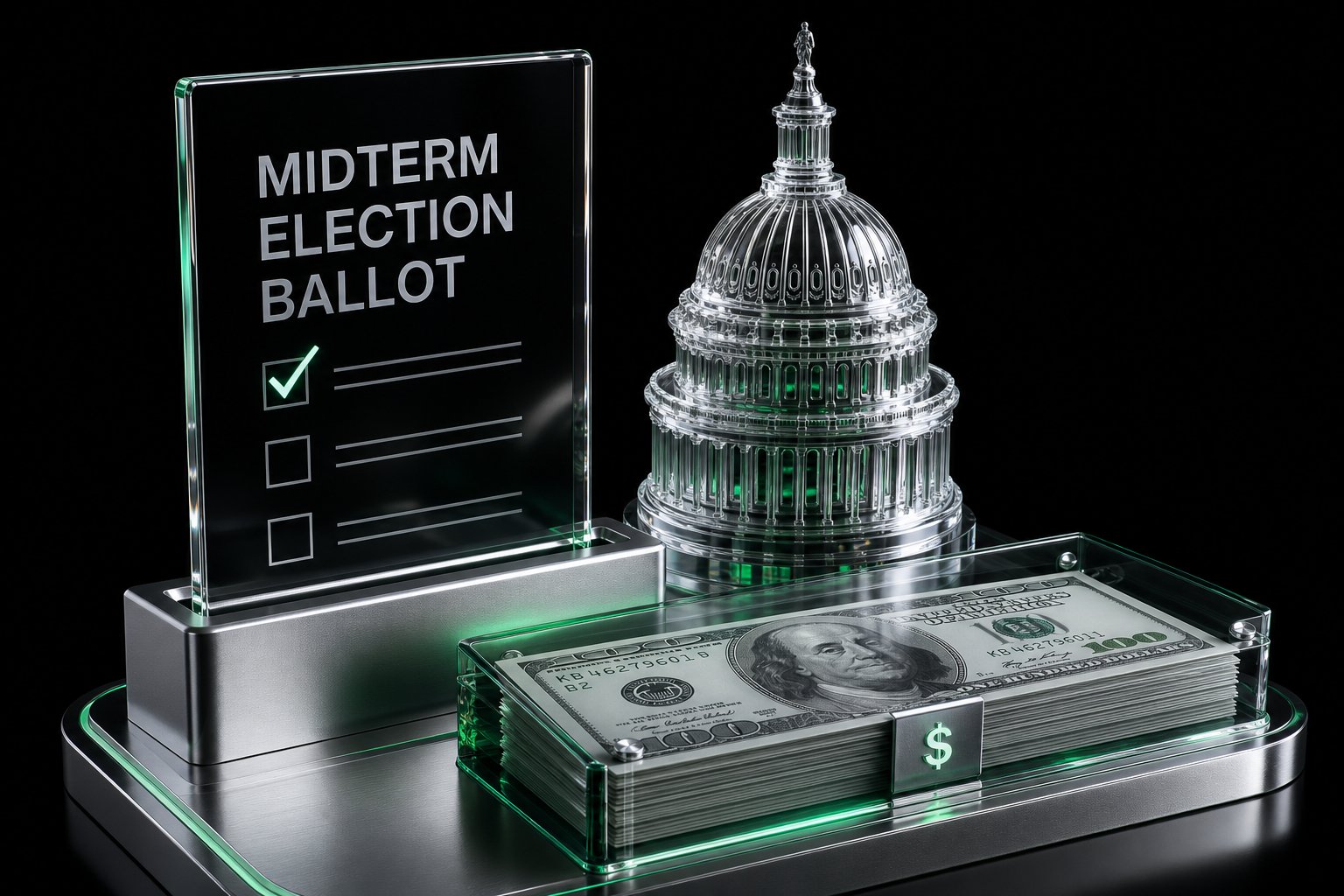
    On November 3, American voters will decide all 435 House seats and 35 Senate seats. The crypto industry has poured more than $200 million into the campaign, the largest single-issue super PAC effort in history. At stake is the fate of the CLARITY Act, and whether agency rules can be made permanent by the next Congress.

    Key Takeaways

    The November 3 US midterms see the crypto industry deploy more than $200 million in political spending, the largest single-issue super PAC cohort in history, with Fairshake and its affiliates spending roughly $154 million and the Ohio race alone drawing about $63 million. The CLARITY Act failed 49-50 in the Senate on September 15, and Tillis has filed a motion to reconsider, leaving a 61-day window in the 119th Congress. The 60-vote Senate threshold does not change regardless of the election outcome; even all 53 Republicans fall seven votes short. Agency rules from the SEC and CFTC can be issued, but the next administration can reverse them. Other major financial centers, including the UK FCA, the EU under MiCA, Japan and Hong Kong, China, have already written their rules into law; only the United States still depends on the administrative path and an election gamble to shape the next five years.

    The Largest Single-Issue PAC in History: $200 Million on Congress

    On November 3, American voters decide all 435 House seats and 35 Senate seats. For the crypto industry, this is more than an election; it is the biggest test yet of its influence in Washington. According to Public Citizen, crypto-affiliated organizations have donated more than $200 million in this election cycle, outspending online betting and data center development groups, making them the largest single-issue super PAC cohort in US history. The industry is trying to repeat its 2024 playbook, when super PACs spent $250 million to help elect pro-crypto lawmakers and reshape the balance of power in Congress.

    Fairshake and its affiliated super PACs remain the main force, spending about $154 million this cycle and keeping $56 million for the next election. It backs 33 House candidates, including 19 Republicans and 14 Democrats, and has directed at least $1 million each to six incumbents in both parties. Coinbase contributed $79 million to federal races in 2024 and donated $25 million to Fairshake’s midterm efforts in 2025; Ripple gave $25 million as well. Coinbase co-founder Brian Armstrong personally donated $1 million to Fairshake in 2023. The industry frames the spending as bipartisan, aimed at electing crypto-friendly candidates rather than betting on a single party.

    The investment is not without results to point to. Ripple Chief Legal Officer Stu Alderoty told CNBC, “I think compared to where the industry was two years ago to where the industry is today, yes, I would say that that is a very good return.” He cited the GENIUS Act, signed by President Trump in July 2025 as America’s first standalone crypto law, establishing a federal framework for dollar-pegged stablecoins. He also noted Ripple’s final OCC approval this week for Ripple National Trust Bank. But Alderoty acknowledged that agency guidance is not a substitute for congressional legislation, and the window for new laws is closing. Former New York governor Andrew Cuomo, now an OKX board member, put it bluntly: if Congress changes hands in January, “you’re going to have a Democratic Congress overseeing an administration, the Trump administration, where the regulators are making decisions under the scrutiny of a hostile Congress, and that is not a good place to be.”

    Ohio: A $63 Million Fight for One Seat

    The most-watched battleground is Ohio’s Senate seat, pitting Democratic nominee and former Senator Sherrod Brown against crypto-friendly Republican incumbent Jon Husted. Brown has long criticized the crypto industry, chaired the Senate Banking Committee, and in 2024 pushed tougher crypto regulation while stalling the House-passed market structure bill. Fairshake spent about $40 million to defeat him in 2024 and has poured $55 million into opposing his return this cycle. Adding about $7.2 million from the Winklevoss-backed Digital Freedom Fund, the industry has spent roughly $63 million in the state, more than $100 million over two years.

    Entity Amount Purpose / Context
    Fairshake & affiliates ~$154M Total midterm spending; $56M kept for next cycle
    Fairshake (Ohio) $55M Opposing Sherrod Brown; ~$40M spent in 2024
    Digital Freedom Fund $8M+ Winklevoss-backed; blocking Dems in OH/TX/IA Senate races
    Coinbase $25M 2025 donation to Fairshake midterms; $79M federal in 2024
    Ripple $25M 2025 donation to Fairshake midterms; $63.65M federal in 2024

    Polls show Brown with a narrow four-point lead over Husted, within the 4.5-point margin of error. Prediction market Kalshi gives Brown a 68% win probability and also prices a 68% chance that Democrats retake the Senate. If Democrats take the chamber, Brown could chair the Agriculture Committee and Elizabeth Warren could lead the Banking Committee, both key gateways for crypto market structure legislation. In 2024, defeating Brown was Fairshake’s highest-profile win; this year it is spending even more to repeat the result.

    The CLARITY Act: A 61-Day Window and a 60-Vote Threshold

    The election outcome will directly shape the fate of the CLARITY Act. The market structure bill, which would define the regulatory boundary for digital commodities and split jurisdiction between the SEC and the CFTC, failed on a 49-50 procedural vote in the Senate on September 15, falling short of the 60-vote cloture threshold. Republicans hold 53 seats, so even a unanimous vote falls seven short; the House passed the bill 294-134 on July 17, 2025, but no Democrat in the Senate voted to proceed. The bill is not formally dead. Senator Thom Tillis has filed a motion to reconsider, allowing leadership to call another vote. But the 119th Congress ends at noon on January 3, 2027, leaving a 61-day window after election day, with Thanksgiving and Christmas inside it.

    The two disputes that stalled the bill have nothing to do with the technology: ethics provisions addressing federal officials’ personal crypto holdings, and stablecoin yield language that regional banks argue would accelerate deposit outflows. Four law enforcement organizations, representing more than 70,000 members, also wrote to the White House in June expressing concern about regulatory gaps for mixers, Tornado Cash and DeFi under the BRCA exemption. These disagreements are political, not technical. If the bill does not advance by year-end, the next Congress will have to restart market structure legislation from scratch, beginning again with a House vote.

    “At Treasury, we have a lot of convening powers.”
    — Scott Bessent, US Treasury Secretary, at Ripple’s Swell conference, October 27, 2026

    How Far Can the Administrative Path Go: Rules Can Be Rewritten, Only Law Lasts

    With legislation stalled, the agencies are stepping in. Treasury Secretary Scott Bessent said at Ripple’s Swell conference on October 27 that Treasury has “broad convening powers” and will push the SEC and CFTC to close the gaps through regulation. CFTC Chairman Michael Selig said in August that the agency would write crypto rules if the bill died, and that is the path Treasury now backs. The SEC’s Regulation Crypto Assets (proposed in August, comment period closed October 20) and the CFTC’s Regulation CTX/CAM (ANPR published in the Federal Register in October, comments due mid-December) are both moving forward.

    But the fragility of the administrative path is structural. JPMorgan analysts warn that without a statute, agency rules made under the Trump administration can be reversed by the next one. 21Shares notes that the SEC’s existing interpretive and exemptive positions rest on existing statutory authority rather than new legislation, so a change in congressional control will not automatically undo them; the real threat is a change in the Commission’s own composition, which depends on the timing of appointments and resignations, not the midterms. Adrian Wall of the Digital Sovereignty Alliance wrote in The National Interest that a framework signed by three officials at the SEC and CFTC is only a “draft” that successors can rewrite, and only an act of Congress can make it permanent. More practically, the CFTC cannot force spot platforms to register without new legislation, nor can it amend the bankruptcy code to put customers first in line when a platform fails, the protection FTX customers lacked in 2022.

    Global Comparison: Others Wrote It Into Law, America Is Still Betting on an Election

    While the United States stakes its crypto rules on an election outcome, other major financial centers have already written theirs into law. The UK’s FCA opened its authorization gateway for crypto firms on September 30, with applications due by February 28 and the full regime taking effect in October 2027. The EU’s ESMA told licensed firms on October 8 to stop servicing stablecoins that do not comply with MiCA, with a final deadline of January 8. Japan has enacted a law moving crypto assets under its Financial Instruments and Exchange Act, effective in 2027. Hong Kong, China has issued its first stablecoin licenses to some of Asia’s largest banks. Each regime comes with dates a company can plan around.

    By contrast, America’s key dates are either still open for comment or shift with each administration. The OCC finalized the first GENIUS Act rule on October 21, effective January 18, 2027, but the Fed’s proposal remains open for comment until November 30, and Treasury’s Section 3 rule is still in progress; SEC and CFTC rules can both be rewritten by the next commission. A company choosing where to build over the next decade is weighing those fixed timelines against American proposals that are still open for comment and could change with the next administration. The election outcome will decide whether the United States can close this gap.

    Key Takeaways for Industry Professionals

    1
    $200 million buys time, not certainty
    Whatever the election result, the Senate’s 60-vote threshold does not change, and passing the CLARITY Act in the 119th Congress remains extremely difficult. The industry’s election spending is aimed more at securing a friendlier committee structure in the new Congress convening in 2027 than at passing legislation this year. Practitioners should not build compliance plans on the assumption of near-term legislation; agency rules are the framework that will actually apply for the next 12 to 24 months.

    2
    Agency rules are living documents; compliance plans must be able to switch quickly
    SEC and CFTC rules rest on existing statutory authority and can be rewritten at any time by a new commission. Firms should design compliance architecture on the premise that the rules will change: track the SEC Regulation Crypto Assets and CFTC Regulation CTX/CAM comment windows (the SEC window closed October 20; the CFTC window runs to mid-December), put positions on the public record, and prepare contingency plans for the most likely changes rather than betting on a single version of the rules.

    3
    Ohio is the litmus test for the industry’s political influence
    $63 million invested in a single Senate seat is a public test of whether crypto money can change policy. If Brown returns to chair the Agriculture Committee and Warren takes the Banking Committee, market structure legislation faces a completely different committee ecosystem in 2027. This reminds practitioners that the pace of US crypto policy depends heavily on a handful of elections and committee seats; cross-border planning should treat American legislative uncertainty as a long-term variable, not a one-time risk event.

    4
    Global regulatory timelines are diverging
    The UK FCA’s October 2027, the EU MiCA deadline of January 8, Japan’s 2027, and Hong Kong, China’s stablecoin licenses are dates written into law. America’s key frameworks still exist as agency rules that can change with each administration. For firms planning cross-border operations, prioritizing jurisdictions with legislative certainty as the compliance baseline, while treating the United States as a high-risk, high-reward market where the rules are still evolving, is the more prudent path.

  • 2 亿美元买一个国会:加密行业的中期选举豪赌

    2 亿美元买一个国会:加密行业的中期选举豪赌

    2 亿美元买一个国会:加密行业的中期选举豪赌

    11 月 3 日,美国选民将决定全部 435 个众议院席位和 35 个参议院席位。加密行业已投入超过 2 亿美元,这是史上最大规模的单议题超级 PAC 资金,去影响这场投票。赌注是 CLARITY 法案的生死,以及行政规则能否被下一代国会永久化。

    文章解读

    11 月 3 日美国中期选举,加密行业以超过 2 亿美元的政治投入成为史上最大单议题超级 PAC 阵营,Fairshake 及关联组织本轮支出约 1.54 亿美元,俄亥俄州一役就烧掉约 6,300 万美元。CLARITY 法案 9 月 15 日在参议院以 49:50 折戟,Tillis 已提出重新审议动议,但 119 届国会只剩 61 天窗口。无论谁赢得选举,参议院 60 票门槛都不变,共和党 53 席全票也差 7 票。行政规则(SEC 与 CFTC 的提案)可以落地,但下届政府随时可以逆转;全球其他地区(英国 FCA、欧盟 MiCA、日本、中国香港)都已把规则写进法律,只有美国还在靠行政路径与选举赌局决定未来五年。

    史上最大单议题 PAC:2 亿美元押注国会

    11 月 3 日,美国选民将决定全部 435 个众议院席位和 35 个参议院席位。对加密行业而言,这不仅仅是一次选举,更是对华盛顿影响力的一次最大测试。据 Public Citizen 统计,加密相关组织在本轮选举周期已捐资逾 2 亿美元,超过在线博彩和数据中心开发团体,成为美国历史上规模最大的单议题超级 PAC 阵营。行业想复制 2024 年的剧本,那一年超级 PAC 花费 2.5 亿美元帮助选出亲加密的议员,重塑了国会力量对比。

    Fairshake 及其关联超级 PAC 仍是主力,本轮支出约 1.54 亿美元,还保留 5,600 万美元用于下一轮选举。它正支持 33 名众议院候选人,包括 19 名共和党人和 14 名民主党人,并向六名两党在任议员各注入至少 100 万美元。Coinbase 2024 年向联邦选举投入 7,900 万美元,2025 年又向 Fairshake 的中期选举捐款 2,500 万美元;Ripple 同样捐赠 2,500 万美元。Coinbase 联合创始人 Brian Armstrong 曾个人向 Fairshake 捐款 100 万美元。行业把这次投入定位为跨党派,目标是选出加密友好候选人,而非单纯押注某个政党。

    投入的逻辑并非没有回报的实绩支撑。Ripple 首席法务官 Stu Alderoty 对 CNBC 表示,”与两年前相比,我认为这是一个很划算的回报”。他指向 GENIUS 法案(2025 年 7 月特朗普签署的美国首部独立加密立法),为美元挂钩稳定币建立了首个联邦框架。他还提到 Ripple 本周刚获得 OCC 对 Ripple National Trust Bank 的最终批准。但 Alderoty 也承认,行政机构的指导不能替代国会立法,而立法窗口正在关闭。前纽约州州长、现任 OKX 董事会成员 Andrew Cuomo 说得更直白:如果国会在明年 1 月易手,”你将看到一个民主党国会对特朗普政府进行监督,监管机构在一群敌对的国会面前做决策,这不是一个好位置”。

    俄亥俄州:6,300 万美元的单席战役

    这场选举中最受关注的战场是俄亥俄州参议院席位,民主党候选人、前参议员 Sherrod Brown 对阵亲加密的共和党在任议员 Jon Husted。Brown 曾长期批评加密行业,担任过参议院银行委员会主席,2024 年推动更严格的加密监管并阻碍众议院通过的市场结构法案。Fairshake 2024 年花了约 4,000 万美元帮助击败他,本轮又投入 5,500 万美元反对他回归。加上 Winklevoss 兄弟旗下 Digital Freedom Fund 投入的约 720 万美元,行业在该州的总投入约 6,300 万美元,两年累计超过 1 亿美元。

    主体 投入金额 用途与背景
    Fairshake 及关联 PAC 约 1.54 亿美元 本轮中期选举总支出,保留 5,600 万美元备用
    Fairshake(俄亥俄州) 5,500 万美元 反对 Sherrod Brown,2024 年已投入约 4,000 万美元
    Digital Freedom Fund 约 800 万美元+ Winklevoss 兄弟支持,阻止民主党赢下俄亥俄/得州/爱荷华参院席
    Coinbase 2,500 万美元 2025 年向 Fairshake 中期选举捐款;2024 年联邦投入 7,900 万美元
    Ripple 2,500 万美元 2025 年向 Fairshake 中期选举捐款;2024 年联邦投入 6,365 万美元

    民调显示 Brown 以 4 个百分点微弱领先 Husted,但差距在 4.5 个百分点误差范围内。预测市场 Kalshi 给 Brown 68% 的胜选概率,同时预测民主党夺回参议院控制权的概率为 68%。若民主党拿下参议院,Brown 有望出任农业委员会主席,Elizabeth Warren 则有望执掌银行委员会,两个委员会正是加密市场结构立法的关键入口。2024 年,Fairshake 击败 Brown 被视为其最高调的战绩;今年它正在用更多钱试图复制这一结果。

    CLARITY 法案:61 天窗口与 60 票门槛

    选举结果将直接决定 CLARITY 法案的命运。这项旨在界定数字商品监管边界、划分 SEC 与 CFTC 管辖权的市场结构法案,9 月 15 日在参议院以 49:50 的程序性表决折戟,未能达到 60 票的终结辩论门槛。共和党目前拥有 53 席,即使全票支持也差 7 票;众议院 2025 年 7 月 17 日以 294:134 通过该法案,但参议院没有任何民主党人投赞成票。法案并非正式死亡。参议员 Thom Tillis 已提交重新审议动议,允许领导层再次发起表决。但 119 届国会将在 2027 年 1 月 3 日中午结束,选举日之后只剩 61 天窗口,其中还夹着感恩节和圣诞节。

    导致法案搁浅的两大争议与加密技术无关:一是针对联邦官员个人加密持仓的道德条款,二是稳定币收益条款,区域性银行认为该条款会加速存款流出。四家执法组织(代表 7 万多名成员)也曾在 6 月致信白宫,对 BRCA 豁免条款中混币器、Tornado Cash 和 DeFi 的监管空白表示关切。这些分歧是政治性的而非技术性的。若法案未能在年底前推进,新一届国会将不得不从头重启市场结构立法,从众议院投票开始,回到起点。

    “At Treasury, we have a lot of convening powers.”
    — Scott Bessent, US Treasury Secretary, at Ripple’s Swell conference, October 27, 2026

    行政路径能走多远:规则可以重写,法律才是终点

    立法受阻后,行政机构正在接棒。财长 Scott Bessent 10 月 27 日在 Ripple Swell 会议上明确表示,财政部拥有”广泛的召集权”,将推动 SEC 与 CFTC 通过监管弥合立法缺口。CFTC 主席 Michael Selig 8 月就表示,若法案夭折,该机构将自行制定加密规则,这正是财政部现在支持的路径。SEC 的 Regulation Crypto Assets(8 月提案,10 月 20 日意见期关闭)和 CFTC 的 Regulation CTX/CAM(10 月联邦公报发布 ANPR,意见截止 12 月中旬)都在推进中。

    但行政路径的脆弱性是结构性的。JPMorgan 分析师警告,没有法律依据,特朗普治下制定的机构规则会被下届政府逆转。21Shares 也指出,SEC 的现有解释性和豁免性立场基于既有法定权力,而非新立法,国会构成变化不会自动撤销这些立场;真正的威胁在于委员会自身构成的变化,那取决于任命与辞职的时机,而非中期选举。Digital Sovereignty Alliance 的 Adrian Wall 在《国家利益》撰文指出,SEC 与 CFTC 三位官员签署的框架只是一份”草稿”,继任者随时可以重写,只有国会法案才能使其永久化。更现实的问题是,CFTC 无法在没有新立法的情况下强制现货平台注册,也无法修改破产法让客户在平台倒闭时优先受偿,这正是 FTX 客户 2022 年缺乏的保护。

    全球对照:别人写进法律,美国还在赌选举

    就在美国把加密规则押在选举结果上的时候,其他主要金融中心已经把规则写进了法律。英国 FCA 9 月 30 日开放加密公司授权通道,申请截止 2027 年 2 月 28 日,完整制度 2027 年 10 月生效;欧盟 ESMA 10 月 8 日指示持牌公司停止服务不合规稳定币,最终期限 2027 年 1 月 8 日;日本已立法把加密资产纳入《金融工具与交易法》,2027 年生效;中国香港已向亚洲最大银行发放首批稳定币牌照。每个制度都有企业可以规划的确切日期。

    对比之下,美国的关键日期要么还在征求意见,要么随行政当局更替而变化。OCC 10 月 21 日敲定 GENIUS 法案首份最终规则,2027 年 1 月 18 日生效,但 Fed 的提案意见截止 11 月 30 日,Treasury 的 Sec 3 规则还在推进中;SEC 与 CFTC 的规则都会被下届委员会重写。一家企业若要在未来十年选择在何处建设,比较的是这些固定的时间表与美国仍开放征求意见、会随下届政府改变的提案。选举结果将决定美国能否把这个差距缩小。

    对从业者的一些启示

    1
    2 亿美元买不来确定性,但买得到时间
    无论选举结果如何,参议院 60 票门槛不变,CLARITY 法案在 119 届国会内通过的难度极高。行业在选举上的投入更多是在为 2027 年新一届国会争取更友好的委员会构成,而非今年内促成立法。从业者不应把监管计划建立在短期立法通过的假设上,行政规则才是未来 12 到 24 个月实际执行的框架。

    2
    行政规则是”活文档”,合规计划要能快速切换
    SEC 与 CFTC 的规则基于既有法定权力,可以随时被新一届委员会重写。企业应按”规则会变”的前提设计合规架构:保持对 SEC Reg Crypto Assets、CFTC Regulation CTX/CAM 意见期的关注,在公开记录中留下立场(10 月 20 日 SEC 意见期已关闭,CFTC 窗口持续到 12 月中旬),同时为最可能出现的变化准备预案,而不是一次性押注某个版本的规则。

    3
    俄亥俄州是行业政治影响力的试金石
    6,300 万美元投在一个参议院席位,是加密行业”钱能否换政策”的公开检验。Brown 若回归并执掌农业委员会,Warren 若执掌银行委员会,市场结构法案在 2027 年将面临完全不同的委员会生态。这提醒从业者:美国加密政策的节奏高度依赖少数选举与委员会席位,跨境布局时要把美国的立法不确定性当作长期变量,而非一次性风险事件。

    4
    全球监管的时间表正在拉开差距
    英国 FCA 2027 年 10 月、欧盟 MiCA 2027 年 1 月 8 日、日本 2027 年、中国香港稳定币牌照,这些是写进法律的确切日期。而美国的关键框架仍以行政规则形式存在,会随政府更替而改变。对计划跨境运营的企业,优先选择立法确定性高的辖区作为合规基准,再把美国视为”规则仍在演化”的高风险高回报市场,是更稳妥的路径。

  • First Nasdaq Stock Trades 24/7 Onchain as Asian Central Banks, Stablecoins Accelerate

    First Nasdaq Stock Trades 24/7 Onchain as Asian Central Banks, Stablecoins Accelerate

    A
    Aurellix
    November 2, 2026
    1 min read

    Today’s Focus
    The first Nasdaq-listed stock, CNTN, begins 24/7 onchain trading on Canton Network today, using an issuer-led model to bypass the 30-day objection window and landing the first SEC innovation exemption trade ahead of the OKXICE joint venue. Ondo’s USDY overtakes BUIDL to top tokenized treasuries at $2.37B, Malaysia’s central bank launches a three-year RWA exploration, and Asian central banks and stablecoin payment use cases accelerate in tandem.

    Industry Flash

    10 items

  • CNTN Becomes First Tokenized Stock, Trading 24/7 Onchain From Today — Nasdaq-listed Canton Strategic Holdings goes live on Canton Network, with TSV operating the venue and Fairmint keeping official ownership records, beating OKXICE to the first SEC innovation exemption trade.
  • Ondo USDY Overtakes BUIDL to Top Tokenized Treasuries — USDY’s $2.37B market cap passes BUIDL’s $2.16B, resetting the race at the top of tokenized Treasuries as institutional capital keeps flowing into onchain yield products.
  • Malaysia’s Central Bank Launches Three-Year RWA Tokenization Exploration — BNM solicits use cases through its digital asset innovation hub and industry working group, pushing POC pilots in 2026 and expanding in 2027, with supply chain finance and Islamic finance as signature scenarios.
  • Hong Kong Fintech Week Opens With Tokenized Deposits and Settlement in Focus — BlackRock, ChinaAMC (HK), HSBC and Standard Chartered share Project Ensemble progress on tokenized deposits and money market funds, as the agenda shifts from issuance to settlement.
  • Japan’s JPYC Stablecoin Goes Live for Departure Tax Refunds — Tourist refunds flow straight to onchain wallets via Avalanche smart contracts, putting a regulated yen stablecoin in high-frequency cross-border consumption for the first time.
  • Walmart-Backed OnePay Launches Stablecoin Deposits — Stripe-powered conversion brings USDC from 12 chains straight into Checking accounts, moving stablecoins from trading tools to retail banking on-ramps.
  • BlackRock, SBI and Startale Explore Yen Stablecoin Link to Money Funds — A three-way MoU studies how tokenized money market funds and JPYSC could interconnect, bringing Japan’s traditional investment products closer to onchain payment rails.
  • Ethereum-Tokenized Equities Surge 170% in a Year — Onchain volume hits $827M while Hyperliquid-linked perp open interest reaches $1.76B, forming a two-layer spot and derivatives market.
  • OKX Flash Adds “Hold to Earn” Mode — A 400K USDT prize pool covers 10 tokenized assets including xNVDA, xTSLA and xQQQ, paying out on holdings alone as exchanges compete for RWA retention.
  • Hong Kong-Regulated Tokenized Gold XAUa Debuts on Sui — Issued by AlphaToken and distributed by TBook, backed by physical gold vaulted in Hong Kong, with PAS permission standards embedding compliance at the transfer layer.
  • 首只美股 24/7 链上交易落地,亚洲央行与稳定币支付场景加速铺开

    首只美股 24/7 链上交易落地,亚洲央行与稳定币支付场景加速铺开

    A
    Aurellix
    2026年11月2日
    1 分钟阅读

    今日焦点
    首只纳斯达克公司股票 CNTN 今日在 Canton Network 开启 24/7 链上交易,以发行人主导模式绕开 30 天异议期,抢在 OKXICE 合资平台之前落地 SEC 创新豁免首单。Ondo USDY 以 $2.37B 反超 BUIDL 登顶代币化美债,马来西亚央行正式启动三年期 RWA 探索,亚洲央行与稳定币支付场景同步加速铺开。

    行业速报

    共 10 条

  • CNTN 成首只代币化美股,今日起 24/7 链上交易 — 纳斯达克公司 Canton Strategic Holdings 在 Canton Network 开启交易,TSV 提供交易场所、Fairmint 维护官方所有权记录,抢在 OKXICE 前落地 SEC 创新豁免首单。
  • Ondo USDY 反超 BUIDL,登顶最大代币化美债 — USDY 市值 $2.37B 超过 BUIDL 的 $2.16B,代币化国债头部之争进入新阶段,机构资金持续涌向链上收益产品。
  • 马来西亚央行启动三年期 RWA 代币化探索 — 依托数字资产创新中心与行业工作组征集用例,2026 年推进 POC 试点、2027 年扩大范围,供应链金融与伊斯兰金融为特色场景。
  • 香港金融科技周开幕,代币化存款与结算成主线 — Project Ensemble 场次由 BlackRock、华夏基金(香港)、汇丰、渣打披露代币化存款与货基互联进展,议题重心从资产发行转向结算落地。
  • 日本 JPYC 稳定币退税上线 — 游客离境退税经 Avalanche 智能合约直达链上钱包,合规日元稳定币首次切入高频跨境消费场景,链上审计特性获监管认可。
  • 沃尔玛系 OnePay 推出稳定币存款 — Stripe 驱动转换、覆盖 12 条链的 USDC 直存 Checking 账户,稳定币从交易工具走向零售银行入口。
  • BlackRock×SBI×Startale 探索日元稳定币连接货基 — 三方 MoU 研究代币化货币基金与 JPYSC 互联的技术与分发路径,日本市场传统投资产品与链上支付基建加速融合。
  • 以太坊代币化股票一年增 170% — 链上量达 $8.27 亿,Hyperliquid 相关永续合约持仓达 $17.6 亿,现货与衍生品双层市场格局成型。
  • OKX 闪赚新增「持币赚币」 — 40 万 USDT 奖池覆盖 xNVDA、xTSLA、xQQQ 等 10 种代币化资产,仅持有即按份额分奖,交易所争夺 RWA 留存入口。
  • 香港代币化黄金 XAUa 上线 Sui — AlphaToken 发行、TBook 分发,实物黄金托管于香港,PAS 权限标准在转账层内嵌合规控制,代币化贵金属进入亚洲生态。
  • First Tokenized US Equity Goes Live as Asia Central Banks Advance RWA

    VOL. 2026.11.02

    First Tokenized US Equity Goes Live as Asia Central Banks Advance RWA

    CNTN Tokenized Equity
    $170M
    First 24/7 onchain listing

    Onchain RWA Value
    $39.0B
    RWA.xyz · +0.9% 30d

    Represented Asset Value
    $389B
    +8.0% 30d

    Stablecoin Market Cap
    $289B
    301M holders

    Canton Strategic Holdings Becomes First Tokenized US Equity, Trading 24/7 From November 2

    October 29, 2026 · SEC 8-K / CoinDesk
    Nasdaq-listed Canton Strategic Holdings (CNTN, formerly Tharimmune) announced it will tokenize its common shares and begin trading as early as November 2 on the Canton Network. This marks the first tokenized US equity trade under the SEC’s Innovation Exemption, with TSV LLC operating the venue and SEC-registered onchain transfer agent Fairmint issuing tokens and maintaining official ownership records, beating the OKX-ICE joint platform to launch.
    • Tokenized shares carry identical shareholder rights to CNTN’s Nasdaq stock, using an issuer-sponsored model that bypasses the 30-day objection window for third-party tokenization
    • 24/7 trading with atomic instant settlement (DvP) via the Tradecraft protocol AMM, versus the traditional T+1 settlement cycle for US equities
    • Participants must pass pre-approval including identity verification and sanctions screening, with smart contracts enforcing compliance on transfers; CNTN market cap is roughly $170M with shares near $2.13
    • The company raised $545M in November 2025 to pivot toward the Canton Coin ecosystem and is now a Super Validator and governance participant on the Canton Network
    Market Impact
    The first Nasdaq-listed company trades its own stock onchain, validating the issuer-driven 24/7 path

    Regulatory Signal
    A live first use case under the Innovation Exemption, offering a compliance template for larger issuers

    Competitive Race
    TSV beats OKXICE to the first trade, pushing tokenized-stock venue competition into live operation

    Sources: SEC 8-K · CoinDesk via PANews · October 29, 2026

    Bank Negara Malaysia Launches Three-Year RWA Tokenization Exploration, Pilots in 2026

    November 1, 2026 · Bank Negara Malaysia / Ledger Insights
    Bank Negara Malaysia (BNM) launched a three-year real-world asset tokenization exploration program on November 1, building on the Digital Asset Innovation Hub (DAIH) and Asset Tokenisation Industry Working Group (IWG) established in 2025. Using a co-creation approach, the central bank is seeking feedback on use cases from supply-chain finance to Islamic finance products, with proof-of-concepts and pilots in 2026 and expanded testing in 2027.
    • Exploration must not compromise the singleness of money, financial stability or financial integrity, with scrutiny on leverage, operational fragilities and complex interdependencies
    • The industry working group focuses on banking institutions, with consideration of a controlled environment for live experimentation of digital asset solutions
    • BNM also published the “Asset Tokenisation in the Malaysian Financial Sector” discussion paper as the basis for policy direction and feedback
    Regional Signal
    After Singapore and Hong Kong, another Southeast Asian central bank formalizes a tokenization roadmap

    Use-Case Focus
    Supply-chain finance and Islamic finance stand out as locally relevant use cases

    Pace
    POCs and pilots in 2026, expansion in 2027, with regulatory feedback informing policy

    Sources: BNM Discussion Paper · Ledger Insights via PANews · November 1, 2026

    Hong Kong FinTech Week Opens With Tokenized Deposits and RWA Settlement in Focus

    November 2, 2026 · HKFTW 2026 / TokenPost
    Hong Kong FinTech Week 2026 (November 2-6) opened at the Hong Kong Convention and Exhibition Centre, with the Digital Assets and Web3 Forum centered on regulated stablecoins, RWA tokenization and liquidity, and Agentic AI. The HKMA’s Project Ensemble session features BlackRock, China Asset Management (HK), HSBC and Standard Chartered sharing commercialization progress on tokenized deposits interoperating with tokenized money market funds, while SlowMist and JunHe LLP host an RWA tokenization compliance summit the same day covering issuance workflows, cross-border stablecoin settlement and onchain risk monitoring.
    • Hong Kong’s agenda shifts from issuance to settlement: how tokenized assets pay, deliver and plug into corporate treasury
    • Ensemble TX pilots focus on subscribing tokenized money market funds with tokenized deposits, instant liquidity and treasury management
    • The event expects over 45,000 attendees from 120+ economies, with 1,000+ speakers and 800+ exhibitors and sponsors
    Ecosystem Focus
    With licensed stablecoins and tokenized deposits approved, Hong Kong moves into settlement and interoperability

    Institutional Depth
    BlackRock, China AMC, HSBC and StanChart disclose Ensemble commercialization progress

    Compliance Layer
    SlowMist and JunHe summit adds issuance and onchain risk workflows for institutions

    Sources: HKFTW 2026 · TokenPost · Cryptowesearch · November 2, 2026

    Japan Debuts JPYC Stablecoin Tax Refunds Paid Directly Onchain

    November 1, 2026 · Japan Tax-Free / KuCoin
    Japan Tax-Free, in partnership with UPBOND, began paying departing tourists their tax refunds in JPYC, a yen-denominated stablecoin, via Avalanche C-Chain smart contracts directly into personal digital wallets starting November 1. The launch coincides with Japan’s tax-free system fully shifting to a post-departure refund model, where tourists must first pay the full price including tax and receive the refund after verification upon departure, creating real demand for an efficient digital refund channel.
    • Onchain settlement eliminates weeks of waiting and layered intermediary fees in traditional cross-border refunds, and merchants no longer need to store customers’ card details
    • JPYC is a legally recognized electronic payment method under Japan’s Fund Settlement Act, pegged 1:1 to the yen and clearly distinct from high-volatility crypto assets
    • The full refund flow is transparently recorded on Avalanche, letting customs and tax authorities verify fund authenticity in real time and curb refund fraud
    • Tourists can keep JPYC for future payments when revisiting Japan or instantly swap it for other stablecoins like USDC
    Real-World Use Case
    A compliant fiat-backed stablecoin enters the high-frequency cross-border retail refund scenario

    Industry Significance
    Stablecoins extend beyond payments into government tax processes, with onchain auditability gaining regulatory recognition

    Consumer Adoption
    Tens of millions of international tourists come into direct contact with stablecoin settlement

    Sources: CoinPost via KuCoin · Japan Tax-Free · November 1, 2026

    Walmart-Backed OnePay Launches Stripe-Powered Stablecoin Deposits Across 12 Chains

    November 1, 2026 · PANews
    OnePay, a fintech backed by Walmart, launched a Stripe-powered stablecoin deposit service on November 1. Some US users can now deposit stablecoins from external wallets into their OnePay Checking accounts, with funds automatically converted to US dollars and credited instantly, free of conversion fees during the initial launch period. The service currently supports USDC across 12 blockchains including Tempo, Base, Solana and Ethereum, with more stablecoins under evaluation.
    • Stablecoins are automatically converted to USD and credited instantly, opening an onramp from onchain assets into traditional bank accounts
    • Stripe provides the underlying conversion and compliance capability, lowering the barrier for stablecoins to enter daily payment accounts
    • Multi-chain USDC support across 12 networks reflects the trend of aggregated onramp infrastructure
    Consumer Reach
    Stablecoin deposits connect directly to Checking accounts, bringing onchain assets into everyday payments

    Infrastructure
    Stripe-driven conversion plus multi-chain support gives stablecoin onramps a compliant backbone

    Industry Trend
    Stablecoins move from trading tools to retail banking entry points as traditional finance plugs into onchain liquidity

    Sources: PANews · November 1, 2026

  • RWA 早报 | 2026年11月2日

    VOL. 2026.11.02

    首只美股 24/7 链上交易落地,亚洲央行与稳定币支付场景加速铺开

    CNTN 代币化美股
    $1.7亿
    首只 24/7 链上交易

    RWA 链上价值
    $390亿
    RWA.xyz · 30天 +0.9%

    代表资产价值
    $3,893亿
    30天 +8.0%

    稳定币总市值
    $2,892亿
    持有者 3.01 亿

    Canton Strategic Holdings 成首只代币化美股,11月2日起 24/7 链上交易

    2026年10月29日 · SEC 8-K / CoinDesk
    纳斯达克上市公司 Canton Strategic Holdings(CNTN,前身 Tharimmune)宣布将自家普通股代币化,最早于 11 月 2 日在 Canton Network 上启动交易。这将是 SEC「创新豁免」框架下首笔代币化美股交易,由 TSV LLC 提供交易场所、SEC 注册链上过户代理 Fairmint 发行代币并维护官方所有权记录,抢在 OKX 与 ICE 合资平台之前落地。
    • 代币化股票与纳斯达克股票享有完全相同的股东权利,采用发行人主导模式,绕开第三方代币化所需的 30 天异议期
    • 通过 Tradecraft 协议 AMM 实现 24/7 交易与原子即时结算(DvP),对比传统美股 T+1 结算周期
    • 交易者需事前审批(身份验证与制裁筛查),智能合约在转账层面执行合规控制;CNTN 市值约 $1.7 亿、近期股价约 $2.13
    • 公司 2025 年 11 月融资 $5.45 亿转向 Canton Coin 生态,现为 Canton Network 超级验证者与治理参与方
    市场影响
    首只纳斯达克公司股票原生上链交易,验证「发行人以自身股票开启 24/7」路径

    监管含义
    创新豁免下首个真实用例,为后续大市值发行人提供合规模板

    竞争格局
    TSV 先于 OKXICE 完成首单,代币化股票交易场所之争进入实战阶段

    来源:SEC 8-K · CoinDesk via PANews · 2026年10月29日

    马来西亚央行启动三年期 RWA 代币化探索计划,2026 试点 2027 扩围

    2026年11月1日 · Bank Negara Malaysia / Ledger Insights
    马来西亚央行(Bank Negara Malaysia)11 月 1 日宣布启动为期三年的现实世界资产代币化探索计划,依托 2025 年设立的数字资产创新中心(DAIH)与资产代币化行业工作组(IWG),以「共同创造」方式向供应链金融、伊斯兰金融产品等场景征询用例反馈,2026 年推进概念验证与试点,2027 年扩大试验范围。
    • 探索目标强调不损害货币单一性、金融体系稳健与金融诚信,重点审视杠杆、运营脆弱性与复杂相互依赖
    • 行业工作组聚焦银行业机构,后续考虑建立受控环境支持真实场景的数字化资产解决方案实盘测试
    • 央行同步发布《马来西亚金融业资产代币化》讨论文件,作为政策框架与反馈收集基础
    区域信号
    继新加坡、香港后,东南亚又一央行以正式路线图探索代币化

    场景方向
    供应链金融与伊斯兰金融为特色用例,契合本地产业结构

    落地节奏
    2026 POC 与试点、2027 扩大,监管反馈将反哺政策框架

    来源:BNM 讨论文件 · Ledger Insights via PANews · 2026年11月1日

    香港金融科技周开幕:代币化存款与 RWA 结算成主论坛核心议题

    2026年11月2日 · HKFTW 2026 / TokenPost
    香港金融科技周 2026(11 月 2 日至 6 日)于会展中心开幕,数字资产与 Web3 论坛聚焦受监管稳定币、RWA 代币化与流动性、Agentic AI 三大主线。金管局 Project Ensemble 场次由 BlackRock、华夏基金(香港)、汇丰、渣打分享代币化存款与代币化货币基金互联的商业化进展;慢雾与君合律师事务所同日举办 RWA 代币化合规峰会,覆盖发行流程、跨境稳定币结算与链上风险监控。
    • 香港议题重心从「发行端」转向「结算端」:资产上链之后如何完成支付、交割与企业财资接入
    • Ensemble TX 试点聚焦代币化存款申赎代币化货币基金、即时流动性与财资管理场景
    • 活动预计吸引逾 120 个经济体、4.5 万人参与,千余位讲者、800 余家参展与赞助企业
    生态聚焦
    持牌稳定币与代币化存款获批后,香港转入结算与互操作落地期

    机构参与
    BlackRock、华夏、汇丰、渣打集中披露 Ensemble 商业化进展

    来源:HKFTW 2026 · TokenPost · 每日币研 · 2026年11月2日

    日本 JPYC 稳定币退税上线:游客离境退税直达链上钱包

    2026年11月1日 · Japan Tax-Free / KuCoin
    日本免税服务商 Japan Tax-Free 与 UPBOND 合作,11 月 1 日起支持访日游客通过 Avalanche C-Chain 智能合约以日元稳定币 JPYC 收取离境退税,资金直达个人数字钱包。当日恰逢日本免税制度全面转向「离境后退税」模式,游客需先全额含税支付、离境核验后再获退税,为高效数字化退税通道创造真实需求。
    • 链上结算消除传统跨境退税的数周等待与多层中间行费用,商户无需留存游客卡号信息
    • JPYC 依据日本《资金结算法》为合法电子支付手段,1:1 锚定日元,与高风险加密资产明确区分
    • 退税全流程在 Avalanche 上透明记录,支持海关与税务机关实时核验资金真实性、防范退税欺诈
    • 游客可留存 JPYC 用于再次访日支付,或即时兑换 USDC 等稳定币
    落地场景
    合规法币锚定稳定币首次切入高频跨境消费退税场景

    行业意义
    稳定币从支付延伸至政府税务流程,链上审计特性获监管认可

    消费级采用
    数千万国际游客直接接触稳定币结算,Web3 用户基本盘扩大

    来源:CoinPost via KuCoin · Japan Tax-Free · 2026年11月1日

    沃尔玛投资 OnePay 上线稳定币存款:Stripe 驱动、12 条链支持 USDC

    2026年11月1日 · PANews
    沃尔玛投资的金融科技公司 OnePay 11 月 1 日推出由 Stripe 驱动的稳定币存款服务。部分美国用户现可将外部钱包的稳定币存入 OnePay Checking 账户,资金自动转换为美元并即时到账,上线初期不收取转换费用。目前支持 USDC,覆盖 Tempo、Base、Solana、Ethereum 等 12 条区块链,未来将评估增加更多稳定币。
    • 稳定币存入即自动转美元并即时到账,打通链上资产与传统银行账户的入金通道
    • Stripe 提供底层转换与合规能力,降低稳定币进入日常消费账户的门槛
    • 覆盖 12 条链的 USDC 支持,体现多链聚合的入金基础设施趋势
    消费场景
    稳定币存款直连 Checking 账户,链上资产进入日常支付生态

    基础设施
    Stripe 驱动转换+多链支持,支付巨头为稳定币入金提供合规底座

    行业趋势
    稳定币从交易工具走向零售银行入口,传统金融接入链上流动性

    来源:PANews · 2026年11月1日

  • $1 Billion Frozen in 37 Minutes: The $6.3B Binance Hack Puts Stablecoin Freeze Power Under Scrutiny

    $1 Billion Frozen in 37 Minutes: The $6.3B Binance Hack Puts Stablecoin Freeze Power Under Scrutiny

    $1 Billion Frozen in 37 Minutes: The $6.3B Binance Hack Puts Stablecoin Freeze Power Under Scrutiny

    Late on October 29, attackers emptied Binance hot wallets in about 20 minutes, taking $6.3 billion in the largest crypto heist on record. Thirty-seven minutes later, Tether froze $970 million in USDT. That same day, Tether reported excess reserves nearly doubling to $7.95 billion. Freeze speed and reserve size arrived on stage together, shifting the stablecoin debate from “are reserves enough” to “who holds freeze power, and what constrains it”.

    Key Takeaways

    At 20:24 UTC on October 29, an attacker emptied Binance’s main Ethereum hot wallet, moving about $6.36 billion across ten blockchains in roughly 20 minutes, four times the size of the Bybit heist in 2025, which TRM Labs attributed with high confidence to North Korea’s TraderTraitor unit. Stablecoin issuers froze about $970 million in USDT within 37 minutes and $820 million in USDC, putting roughly $3 billion under control, but about $2.4 billion had already been converted into ETH and BTC beyond any issuer’s reach. On the same day, Tether published its Q3 attestation showing excess reserves up from $4.1 billion to $7.95 billion. The first large-scale deployment of freeze power put “who may trigger preservation, on what evidence, and under what judicial review” on the regulatory agenda, a question neither the GENIUS Act nor EU Directive (EU) 2024/1260 fully answers.

    $6.3 Billion Gone in 20 Minutes: The Fall of Signing Infrastructure

    At 20:24 UTC on October 29, an attacker drained Binance’s main Ethereum hot wallet, moving 14,167,464 ETH and 63 tokens in one sweep, including about $1.615 billion in USDT. According to TRM Labs, funds flowed from Binance-controlled wallets to attacker addresses across ten blockchains, totaling roughly $6.36 billion, most of it within about 20 minutes. That is roughly four times the $1.5 billion taken from Bybit in February 2025, making it the largest crypto theft on record. TRM Labs attributed the attack with high confidence to TraderTraitor, a hacking unit linked to North Korea; the FBI publicly named the same unit on October 31.

    What makes this breach unusual is that the failure was in signing infrastructure, not a single private key. Wallets on multiple chains, using different keys and signing methods, all produced valid signatures for transactions the attacker wanted. TRM concluded that the attacker had taken control of Binance’s own signing system, enabling it to approve arbitrary transactions. On Ethereum, the attacker exploited the account-delegation feature introduced by the recent EIP-7702 upgrade, preparing 50 pre-signed authorizations from a Binance hot wallet and relying on the nonce batching mechanism to ensure one would be valid on submission, then taking over the wallet and sweeping its funds. Binance’s initial investigation pointed to a compromised DevOps engineer’s laptop; co-CEO Richard Teng later revised the account, describing a complex attack involving malware designed to erase traces, rather than the misuse of a single engineer’s permissions.

    Binance suspended withdrawals and launched the largest asset-remediation effort on record. By October 31 it had replenished 90 to 95 percent of the stolen assets (about $6 billion), drawing on its $1 billion Secure Asset Fund for Users (SAFU), part of its Futures Insurance Fund and corporate treasury, with 50 percent of SAFU deployed and a commitment to refill it to about $1 billion. Withdrawals resumed in phases from 6:00 UTC on November 1, with the first wave covering 15 networks including BTC, ETH, BNB, SOL, XRP, DOGE, TRON, AVAX and stablecoins USDT and USDC. Binance has pledged to absorb the full financial impact and plans to publish a technical report once its investigation concludes. In markets, Bitcoin briefly fell below $79,000 on October 29 and traded at $77,315 on October 31, below its 50-day average of $81,893; Coinbase shares slid from $183.81 to $143.54 in two weeks, and Moody’s warned that the concentration risk of hot wallets had been exposed again.

    The 37-Minute Freeze Race: Stablecoins Act as Law-Enforcement Tools for the First Time

    The most striking part of this heist is not the amount stolen, but the speed of recovery. Stablecoin issuers exercised freeze powers collectively at scale for the first time, measured in minutes.

    Time (UTC) Actor Action / Scope
    20:24 Attacker Drains Binance Ethereum hot wallet (incl. $1.615B USDT)
    21:01 Tether Blacklists main receiving address, freezing about $971M USDT; 4 more addresses restricted within 17 min
    21:04 Circle Freezes about $823M USDC in the same address
    22:01 Ripple Restricts address holding stolen RLUSD, about $40.5M
    22:10 World Liberty Financial Restricts USD1, about $27.8M
    00:08 (next day) Arbitrum Security Council Emergency powers move 8,425 ETH and about 74.56M ARB
    00:30 (next day) TRM Labs snapshot About $6.36B stolen; about $2.7B beyond attacker’s reach

    Tether froze about $1.77 billion in USDT in total (including later expansions), Circle about $825 million in USDC; with Ripple’s RLUSD, World Liberty’s USD1 and the Arbitrum Security Council’s emergency transfers, Binance said roughly $3 billion had been brought under control. But a freeze is not a refund. TRM Labs’ head of policy Ari Redbord told CNBC: “A freeze stops the money from moving, and recovery follows through legal process.” Chainalysis’ Eric Jardine added that returning funds “can take months or years.” The attacker had already started converting before the freezes arrived: about $325 million in USDT was sold to professional market makers through UniswapX at a discount of more than 10 percent for ETH, USDT was pledged on Aave to borrow about 19,760 ETH, and a “peel chain” technique was used to split the stolen BTC into small tranches. TRM estimates that about $2.4 billion has become ETH and BTC, beyond the reach of any issuer’s freeze list.

    Speed is not the most intriguing part of this episode, timing is. When Tether acted at 21:01, no institution had publicly attributed the attack to North Korea; TRM’s attribution analysis came hours later. No court order could have been obtained within the hour, Tether did not disclose receiving a law-enforcement request, and Circle said it coordinated with law enforcement but identified no order. On the public record, close to $1 billion was frozen before any court had ruled on ownership, supported only by evidence that a theft was in progress and, possibly, unpublicized informal official contacts. That is the core question the EFRI briefing raised: an intervention capability of this power has now been demonstrated at scale, with no published trigger standard.

    Who Can Trigger a Freeze: Gaps and Fault Lines in the Regulatory Framework

    Issuers do not behave consistently, and the inconsistency had already surfaced in another incident a year earlier. In the April 1, 2026 Drift Protocol exploit, Circle declined to freeze the stolen USDC, with CEO Jeremy Allaire saying at the time that Circle only freezes assets at the direction of law enforcement or courts, and that unilateral intervention would constitute “a significant moral quandary.” In the Binance case, Circle froze $820 million in USDC 40 minutes after the attack. The same company, two modes of behavior, separated by a much larger heist and explicit law-enforcement coordination. New York Attorney General Letitia James and four district attorneys wrote to senators in January noting that Tether would freeze, destroy and reissue USDT at law-enforcement request but does not acknowledge a legal obligation to do so; Circle acts only on signed court orders or search warrants.

    The regulatory texts leave the same gap. Section 4(a)(6)(B) of the US GENIUS Act requires issuers to have the technical capability to comply with lawful orders, where “lawful order” is defined as a final court or agency order naming specific stablecoins; Section 4(a)(5) directs the Treasury to establish procedures for blocking, freezing and rejecting unlawful transactions. But the Congressional Research Service notes that the Act does not specify whether issuers should act proactively or only on lawful orders; “who can trigger preservation” is left open. On the EU side, Articles 48, 49 and 55 of MiCA have no equivalent to the GENIUS capability rule, and Article 94(3) only allows supervisors to request freezes for market-abuse tasks; Directive (EU) 2024/1260 (asset recovery and confiscation) Article 11 allows member states to take immediate preservation measures before a freezing order, with asset recovery offices able to act for up to 7 days, transposition due November 23, 2026. But the Directive operates through national bodies, leaving victims no direct channel to issuers, and whether an asset recovery office can reach a foreign issuer’s token contract within hours has not been tested.

    “A freeze stops the money from moving, and recovery follows through legal process.”
    – Ari Redbord, Global Head of Policy, TRM Labs, to CNBC, October 30, 2026

    $7.95 Billion in Excess Reserves: Tether Delivers Its Strongest Report on the Same Day

    On October 30, the day after the heist, Tether published its Q3 attestation prepared by BDO: total reserve assets of $191.5 billion against liabilities of $183.5 billion, leaving $7.95 billion in excess reserves, nearly double the $4.1 billion at the end of June; third-quarter net operating profit of $1.5 billion, bringing the first nine months of 2026 to $4.5 billion. Direct and indirect holdings of US Treasury bills totaled $132.4 billion with a weighted average maturity below 90 days, a footprint comparable to South Korea’s $134.2 billion in US government debt and above the UAE’s $116.1 billion. The portfolio also included $19.08 billion in physical gold, $8.37 billion in directly held Bitcoin (valued at $83,621.23 on September 30), $14.18 billion in secured loans and $4.18 billion in public equities. CEO Paolo Ardoino tied profitability and the growing cushion to keeping USDT dependable under market stress, and noted that USDT’s user base had surpassed 700 million.

    The attestation and the freeze action surfaced on the same day, making a telling comparison. Roughly half of the increase in excess reserves came from valuation gains on the Bitcoin position, which rose from $5.8 billion to $8.4 billion, with about $2.6 billion of that from price appreciation rather than new inflows. The most liquid reserve category actually shrank: cash, cash equivalents and short-term deposits fell from $140.6 billion to $139.58 billion, with the share of total reserves dropping from 74.9 percent to 72.9 percent, as overnight reverse repos fell from $18.6 billion to $9.5 billion while directly held T-bills rose from $115.0 billion to $122.8 billion. In other words, the buffer grew while the most liquid portion of it declined in share, and Bitcoin and gold occupy a larger share of reserves.

    The boundaries of the attestation matter as much as the headline. A BDO attestation is a point-in-time assessment, not a full audit; the report states valuations assume normal market conditions and may not reflect realizable value during extraordinary disruptions or counterparty illiquidity. Tether completed its first full independent financial-statement audit by KPMG US in August, but the audited statements were not made public. The report also lists one pending lawsuit, a New York class action tied to Bitcoin’s 2017 and 2018 price decline, for which no provision has been recognized and whose outcome management says cannot yet be reliably estimated. The fastest large-scale freeze in history and a balance sheet that has not yet been fully audited arrived on the same stage; together they make the complete picture of this event.

    Implications for Practitioners

    1
    Freeze power is a new systemic risk that belongs in contracts and risk controls
    Issuers froze close to $1 billion within 37 minutes, proving that “freezability” is not a theoretical risk but a mechanism that runs every day. USDT and USDC balances held by any business can in principle be locked unilaterally by the issuer, even if the business has nothing to do with the attack. Contracts and risk processes should treat freeze risk as part of counterparty risk, define how to evidence the provenance of funds and how to request unfreezing in extreme scenarios, and prepare alternative settlement channels.

    2
    Whoever has a freeze channel holds an asymmetric preservation advantage
    Binance is the first partner of the T3+ program and has direct operational contact with issuer compliance teams, with freeze reports promised within 24 hours of an official request. Ordinary victims face a drawn-out judicial path: an Ohio Bitcoin theft case took nearly six months from theft to freezing order. Fast preservation was delivered to the party least in need of it (Binance, which covers losses from its own funds), while victims most in need lack the same channel. Practitioners holding large on-chain positions should assess whether they can reach an issuer’s emergency response mechanism before a loss occurs, rather than discovering there is no door after the fact.

    3
    Regulatory texts do not cover trigger standards; this is a legislative window
    The GENIUS Act requires issuers to have the capability to execute lawful orders but does not answer whether issuers may freeze proactively before an order; the EU Directive (EU) 2024/1260 emergency measures operate through state bodies and have not reached token contracts. This event turns “who may trigger preservation, on what evidence, and under what judicial review” into a concrete compliance question. For issuers, publicly publishing freeze trigger standards and appeal procedures is both a first move in responding to the regulatory gap and a way to lower their own legal risk.

    4
    Read reserve numbers and freeze capability together
    A $7.95 billion cushion sounds ample, but the same attestation shows the most liquid reserve category declining in share, Bitcoin and gold rising, and the document is an attestation, not an audit. Tether’s freeze capability and balance sheet were exposed on the same day, a reminder that when evaluating a stablecoin issuer, practitioners should look at reserve coverage, the liquidity and volatility of the reserves, and the issuer’s emergency response and governance processes. The largest issuer now also holds the strongest freeze capability; that combination defines the most central trust question for the stablecoin market going forward.

  • 37 分钟冻结近 10 亿美元:币安 63 亿劫案把稳定币监管推向新焦点

    37 分钟冻结近 10 亿美元:币安 63 亿劫案把稳定币监管推向新焦点

    37 分钟冻结近 10 亿美元:币安 63 亿劫案把稳定币监管推向新焦点

    10 月 29 日深夜,攻击者用约 20 分钟从币安热钱包转走 63 亿美元,创下加密史上最大劫案。37 分钟后,Tether 冻结了 9.7 亿 USDT。同一天,Tether 公布超额储备翻倍至 79.5 亿美元。冻结速度与储备规模同台亮相,稳定币监管的争议点从”储备够不够”转向”冻结权归谁、如何约束”。

    文章解读

    10 月 29 日 20:24 UTC,攻击者清空币安主以太坊热钱包,10 条链上合计约 63.6 亿美元被转走,规模为 2025 年 Bybit 劫案的四倍,TRM Labs 以高置信度归因朝鲜 TraderTraitor。稳定币发行方在 37 分钟内冻结约 9.7 亿 USDT、8.2 亿 USDC,累计约 30 亿美元被控制,但约 24 亿美元已换成 ETH 与 BTC 逃脱冻结。同日 Tether 发布 Q3 认证,超额储备从 41 亿美元增至 79.5 亿美元。冻结能力第一次大规模实战,把”谁有权触发保全””证据标准””司法审查”摆上监管议程,GENIUS 法案与欧盟指令 (EU) 2024/1260 都没有给出完整答案。

    20 分钟盗走 63 亿:签名基础设施的沦陷

    10 月 29 日 20:24 UTC,攻击者清空了币安的主以太坊热钱包,一次性转走 14,167,464 ETH 与 63 种代币,其中包括约 16.15 亿 USDT。据 TRM Labs 统计,资金从币安控制的钱包流向攻击者地址,横跨 10 条区块链,合计约 63.6 亿美元,大部分在约 20 分钟内完成。这一规模相当于 2025 年 2 月 Bybit 劫案(15 亿美元)的四倍,成为有记录以来最大的加密盗窃事件。TRM Labs 以高置信度将攻击归因于朝鲜支持的黑客组织 TraderTraitor,FBI 在 10 月 31 日正式点名同一单位。

    攻击方式的特殊性在于,问题出在签名基础设施而非单一私钥。多个链上钱包使用不同的密钥与签名方式,却都产出了攻击者想要的合法签名,TRM 据此判断攻击者控制了币安自身的签名系统,使其能够批准任意交易。在以太坊上,攻击者利用近期升级 EIP-7702 的委托授权特性,预先准备 50 份来自币安热钱包的签名授权,借助 nonce 批量机制确保其中一份在提交时有效,随后接管钱包并清空资金。币安最初的调查指向一名 DevOps 工程师的笔记本被入侵,联席 CEO Richard Teng 随后修正口径,称这是涉及恶意软件清除痕迹的复杂攻击,而非单个工程师权限被滥用。

    币安随即暂停提现,并启动有史以来最大规模的资产修复。截至 10 月 31 日,被盗资产已补足 90% 至 95%(约 60 亿美元),动用的资金来自 10 亿美元的用户安全资产基金(SAFU)、期货保险基金与公司金库,其中 SAFU 动用 50%,公司将回补至约 10 亿美元。11 月 1 日 6 时 UTC 起,提现分阶段恢复,首批覆盖 15 条网络,包括 BTC、ETH、BNB、SOL、XRP、DOGE、TRON、AVAX 及 USDT、USDC 等稳定币。币安承诺全额承担财务损失,并计划在调查完成后公布技术报告。市场层面,比特币 10 月 29 日盘中一度跌破 79,000 美元,10 月 31 日报 77,315 美元,低于 50 日均线 81,893 美元;Coinbase 股价两周内从 183.81 美元跌至 143.54 美元,穆迪提醒热钱包的集中风险再次暴露。

    37 分钟冻结竞赛:稳定币第一次当上执法工具

    这场劫案中最值得关注的不是被盗金额,而是追回速度。稳定币发行方第一次在大规模攻击中集体行使冻结权,过程以分钟计。

    时间 (UTC) 行动方 冻结范围
    20:24 攻击者 清空币安以太坊热钱包(含 16.15 亿 USDT)
    21:01 Tether 黑名单主接收地址,冻结约 9.71 亿 USDT,17 分钟内再限制 4 个地址
    21:04 Circle 冻结同一地址约 8.23 亿 USDC
    22:01 Ripple 限制持有被盗 RLUSD 的地址,约 4,050 万
    22:10 World Liberty Financial 限制 USD1,约 2,780 万
    次日 00:08 Arbitrum 安全理事会 动用紧急权力转移 8,425 ETH 与约 7,456 万 ARB
    次日 00:30 TRM Labs 统计 约 63.6 亿美元被盗,约 27 亿美元已脱离攻击者控制

    Tether 合计冻结约 17.7 亿 USDT(含后续扩展),Circle 冻结约 8.25 亿 USDC,加上 Ripple 的 RLUSD、World Liberty 的 USD1 与 Arbitrum 安全理事会的紧急转移,币安宣称约 30 亿美元已被控制。但冻结不是终点。TRM Labs 的政策主管 Ari Redbord 对 CNBC 说:”冻结阻止资金流动,追回则要通过法律程序。”Chainalysis 的 Eric Jardine 补充说,资金返还”可能需要数月乃至数年”。攻击者在冻结到来前已经开始兑换:约 3.25 亿 USDT 经 UniswapX 以超过 10% 的折扣卖给做市商换成 ETH,又在 Aave 上抵押 USDT 借出约 19,760 ETH,还使用”peel chain”手法把 BTC 层层拆分。TRM 估计约 24 亿美元已变成 ETH 与 BTC,超出任何发行方的冻结范围。

    速度并不是这次事件最耐人寻味的部分,时机才是。Tether 在 21:01 行动时,还没有任何机构公开把攻击归因于朝鲜;TRM 的归因分析在数小时后才发布。一小时内拿不到任何法院命令,Tether 未披露收到执法请求,Circle 称与执法部门协调但未指明具体命令。依据公开记录,近 10 亿美元在法院对所有权作出裁定之前就被冻结了,支撑冻结的只是”盗窃正在进行”的证据,以及未被公开的非正式官方接触。这正是 EFRI 简报提出的核心问题:如此强大的干预能力,第一次大规模展现在公众面前,却没有任何已公布的触发标准。

    谁能触发冻结:监管框架的留白与裂缝

    发行方之间的做法并不一致,这种不一致在一年前的另一场事故中已经显露。2026 年 4 月 1 日 Drift Protocol 漏洞利用事件中,Circle 拒绝了冻结被盗 USDC 的请求,CEO Jeremy Allaire 当时表示,Circle 只在执法部门或法院指示下冻结资产,单方面干预”构成严重的道德困境”。而在此次币安事件中,Circle 在攻击后 40 分钟就冻结了 8.2 亿 USDC。同一家公司,两种行为模式,中间隔着一场规模大得多的劫案和明确的执法协调。纽约州总检察长 Letitia James 与四位地区检察官今年 1 月致信参议员,指出 Tether 会在执法要求下冻结、销毁和重发行 USDT,但不承认存在法律义务;Circle 则仅依据签署的司法命令或搜查令行事。

    监管文本也留下了同样的空白。美国 GENIUS 法案第 4(a)(6)(B) 条要求发行方具备遵守合法命令的技术能力,其中”合法命令”被定义为明确指明特定稳定币的联邦法院或机构最终命令;第 4(a)(5) 条指示财政部制定阻止、冻结和拒绝非法交易的程序。但国会研究服务指出,法案没有明确发行方应当主动行动还是仅依据合法命令行事,”谁可以触发保全”是开放的。欧盟一侧,MiCA 第 48、49、55 条没有与 GENIUS 能力规则对应的条款,第 94(3) 条只允许监管机构为市场滥用任务请求冻结;指令 (EU) 2024/1260(资产追回与没收)第 11 条允许成员国在冻结令下达前采取立即保全措施,资产追回办公室可执行最长 7 天的紧急措施,转置截止 2026 年 11 月 23 日,但该指令经由国家机构运作,受害者没有直达发行方的通道,办公室能否在数小时内触达外国发行方的代币合约,尚未经过测试。

    “A freeze stops the money from moving, and recovery follows through legal process.”
    , Ari Redbord, Global Head of Policy, TRM Labs, to CNBC, October 30, 2026

    79.5 亿超额储备:Tether 在同一天发布最强答卷

    10 月 30 日,也就是劫案发生的第二天,Tether 发布了由 BDO 出具的第三季度认证:总储备资产 1,915 亿美元,负债 1,835 亿美元,超额储备 79.5 亿美元,较 6 月末的 41 亿美元几乎翻倍;第三季度净营业利润 15 亿美元,2026 年前三季度累计 45 亿美元。储备构成中,直接与间接持有的美国国库券合计 1,324 亿美元,加权平均久期低于 90 天,规模接近韩国持有的 1,342 亿美元美国国债,超过阿联酋的 1,161 亿美元。其余包括 190.8 亿美元实物黄金、83.7 亿美元直接持有的比特币(9 月 30 日价格 83,621.23 美元)、141.8 亿美元担保贷款与 41.8 亿美元公开上市股票。CEO Paolo Ardoino 称,保持盈利与超额储备的目的,是让 USDT 在市场承压时仍然可靠,并提到 USDT 用户数突破 7 亿。

    这份认证与冻结行动在同一天曝光,构成了一组耐人寻味的对照。超额储备的翻倍,一半来自比特币持仓的估值上涨:直接持有的比特币从 58 亿美元升至 84 亿美元,其中约 26 亿美元来自币价上涨而非新增资金。最流动的储备类别反而缩水,现金、现金等价物与短期存款从 1,406 亿美元降至 1,395.8 亿美元,占储备比例从 74.9% 降至 72.9%,原因是隔夜逆回购从 186 亿美元减至 95 亿美元,转向直接持有的国库券(从 1,150 亿增至 1,228 亿美元)。换言之,缓冲增厚的同时,最流动部分的比例在下降,而比特币与黄金在储备中的占比在上升。

    更值得留意的是认证的边界。BDO 的认证是时点评估而非全面审计,报告注明估值基于正常市场条件,在极端扰动或对手方流动性枯竭时,资产可实现价值与账面价值存在差距。Tether 在 8 月完成了由 KPMG US 出具的首份全面独立审计,但审计后的财务报表没有公开。同时,Tether 披露了一起尚未计提准备金的纽约集体诉讼,指控涉及 2017 至 2018 年比特币价格下跌,管理层表示无法可靠估计结果。一边是史上最快的大规模冻结,一边是尚未完全经审计的资产负债表,这两件事同时发生,才是这次事件完整的面貌。

    对从业者的一些启示

    1
    冻结权是新的系统风险,需要写进合约与风控
    稳定币发行方在 37 分钟内冻结近 10 亿美元,说明”可被冻结”不是理论风险,而是每天都在运转的机制。企业持有的 USDT、USDC 余额,理论上随时会被发行人单方锁定,即使企业自身与攻击无关。合约与风控流程应把冻结风险当作对手方风险的一部分评估,明确在极端情形下如何证明资金来源、如何向发行方申请解冻,并准备应急替代结算通道。

    2
    谁有冻结通道,谁就拥有不对称的保全优势
    币安是 T3+ 计划的首个合作伙伴,与发行方合规团队有直接运营联系,官方请求后 24 小时内可获冻结报告。相比之下,普通受害者的保全请求要经过漫长的司法流程,俄亥俄州一桩比特币盗窃案从报案到冻结令用了近半年。快速保全给了最不需要它的一方(币安用自有资金覆盖损失),最需要的受害者却没有同等通道。从业者若持有大量链上资产,应提前评估自己能否触达发行方的应急响应机制,而不是在损失发生后才发现没有入口。

    3
    监管文本没有覆盖”触发标准”,这是立法窗口
    GENIUS 法案要求发行方具备执行合法命令的能力,但没有回答发行方能否在命令下达前主动冻结;欧盟指令 (EU) 2024/1260 的紧急措施经国家机构运作,尚未触达代币合约。此次事件把”谁可以触发保全、基于何种证据、如何获得司法审查”变成真实的合规问题。对发行方而言,主动公布冻结触发标准与申诉程序,既是回应监管留白的先手,也是降低自身法律风险的方式。

    4
    储备数字与冻结能力要放在一起看
    79.5 亿超额储备听起来充足,但同一份认证显示最流动储备占比下降、比特币与黄金占比上升,且认证不是审计。Tether 的冻结能力与资产负债表在同一天曝光,提醒从业者评估稳定币发行方时,既要看储备覆盖率,也要看储备的流动性与波动性,还要看其应急响应与治理流程。规模最大的发行方同时拥有最强的冻结能力,这个组合决定了稳定币市场未来最核心的信任命题。

  • Corporate Treasuries Move Cash Onchain for Weekend Yield as Tether’s Cushion Nearly Doubles

    Corporate Treasuries Move Cash Onchain for Weekend Yield as Tether’s Cushion Nearly Doubles

    A
    Aurellix
    November 1, 2026
    1 min read

    Focus of the Day
    Corporate treasury cash is turning “weekend yield” into an onchain reality: Uber joined an HSBC and Franklin Templeton pilot to buy a tokenized money-market fund via HSBC tokenized deposits, capturing roughly 1.5 days of extra return while markets are closed. Tether’s excess reserves nearly doubled to $7.95B in Q3 with $132.4B in US Treasury exposure, as stablecoin issuers keep moving toward bank-grade balance sheets. The industry’s revenue engine is shifting from infrastructure rents to economic applications, with tokenized stocks taking 55% of perpetual volume — surpassing gold for the first time.

    Industry Wire

    10 items

  • Uber Pilots Weekend Yield as Tokenized Deposits Capture 1.5 Extra Days — HSBC and Franklin Templeton lead a pilot in which Uber buys a tokenized money-market fund via HSBC tokenized deposits on Canton Network, buying Thursday and selling Sunday to fill the gap between Friday’s close and Monday’s open
  • Tether Q3 Excess Reserves Nearly Double to $7.95B — Net operating profit of $1.5B, $132.4B in US Treasury exposure, roughly $191.5B in total assets, and USDT users topping 700M, as reserve transparency moves toward bank grade
  • NEAR Integrates Ondo’s Tokenized Stocks and ETFs — The 1Click Swap API brings RWA products to NEAR’s application layer; the news drove NEAR up 3.8% in 32 hours and about 5.6% in 24 hours, independent of the broader market
  • 1KX: Tokenized Stocks Take 55% of Perpetual Volume, Surpassing Gold — Blockchain revenue falls about 30% to $100B in 2026, but institutional adoption and RWA account for 30% of revenue, with Robinhood Chain tokenized stock volume topping $13B in Q3
  • Latvia Plans RWA Tokenization Rules by H1 2027 — Commercial real estate could be the first application, with government bonds also prioritized; the economy ministry is drafting a framework with the central bank and finance ministry
  • Shopify Integrates USDC Payments via Base — Stablecoin payments move from trading desks to everyday e-commerce, with businesses involved in roughly 60% of stablecoin transfers
  • RWA Market Hits $46.3B as Ethereum Continues to Lead — RWA.xyz shows $39.56B in distributed asset value; Ethereum dominates tokenized funds as institutional capital keeps concentrating on top chains
  • DBS Survey: 88% of Large Firms Deploy or Pilot Tokenized Money — Surveying 422 finance leaders, stablecoins lead at 63% adoption, tokenized deposits at 53% and tokenized money-market funds at 52%, as treasuries rewrite liquidity rails
  • Solana Leads RWA Inflows — Institutional and retail capital keeps shifting to the Solana ecosystem, with tokenized assets posting the top weekly inflows across chains as chain abstraction plus RWA narratives heat up
  • Prediction Markets Grow from Near Zero to About $4B Annualized Revenue — 1KX reports economic adoption revenue rose $2.9B in H1 2026 and overtook infrastructure revenue in Q3 for the first time, with user-paid transaction fees under 3% of total revenue
  • 企业金库现金上链捕捉周末收益,稳定币巨头储备近乎翻倍

    企业金库现金上链捕捉周末收益,稳定币巨头储备近乎翻倍

    A
    Aurellix
    2026年11月1日
    1 分钟阅读

    今日焦点
    企业司库资金正把「周末收益」变成链上现实:Uber 试点通过汇丰代币化存款在公链购买富兰克林邓普顿货基,休市期间捕获约 1.5 天额外收益。Tether Q3 超额储备近乎翻倍至 $79.5 亿,美债敞口 $1,324 亿,稳定币发行人持续「类银行」化。行业收入引擎正从基础设施租金切换至经济应用,代币化股票占永续交易量 55% 首度超越黄金。

    行业速报

    共 10 条

  • Uber 试点周末理财,代币化存款捕获 1.5 天额外收益 — 汇丰与富兰克林邓普顿牵头,Uber 通过 HSBC 代币化存款在 Canton Network 购买代币化货基,周四买入周日卖出,填补周五收盘至周一开市的收益空白
  • Tether Q3 超额储备近翻倍至 $79.5 亿 — 净营业利润 $15 亿,美债敞口 $1,324 亿,总资产约 $1,915 亿,USDT 用户数突破 7 亿,储备透明度向银行级靠拢
  • NEAR 接入 Ondo 代币化美股与 ETF — 1Click Swap API 将 RWA 产品下放至 NEAR 生态应用层,消息驱动 NEAR 单币 32 小时涨 3.8%,24 小时涨约 5.6%,独立于大盘
  • 1KX:代币化股票占永续交易量 55%,首度超越黄金 — 区块链收入 2026 年降至 $1000 亿(-30%),但机构采用与 RWA 占收入 30%,Robinhood Chain 代币化股票 Q3 交易量破 $130 亿
  • 拉脱维亚拟 2027 上半年出台 RWA 代币化监管规则 — 商业地产或为首批应用领域,政府债券列入优先范围,经济部正与央行、财政部制定框架
  • Shopify 集成 USDC 支付 — 通过 Base 为主流电商提供稳定币收款,稳定币支付从交易台走向日常消费场景,企业参与约 60% 稳定币转账
  • RWA 总市值 $46.3B,以太坊继续领跑 — RWA.xyz 显示分布式资产价值 $39.56B,以太坊主导代币化基金市场,机构资金集中度持续向头部链收拢
  • DBS 调查:88% 大型企业已部署或试点代币化货币 — 覆盖 422 位财务高管,稳定币采用率最高 63%,代币化存款 53%,代币化货基 52%,司库重构流动性轨道
  • Solana 领跑 RWA 资金流入 — 机构与零售资金持续向 Solana 生态转移,代币化资产周流入居各链之首,链抽象叠加 RWA 的叙事继续升温
  • 预测市场从近零成长为约 $40 亿年化收入 — 1KX 报告显示 2026 年经济应用收入上半年增 $2.9B,Q3 首度反超基础设施收入,用户付费交易费不足总收入 3%