Singapore Writes Stablecoin Rules Into Law: No Interest, Foreign Access, Freeze-and-Burn
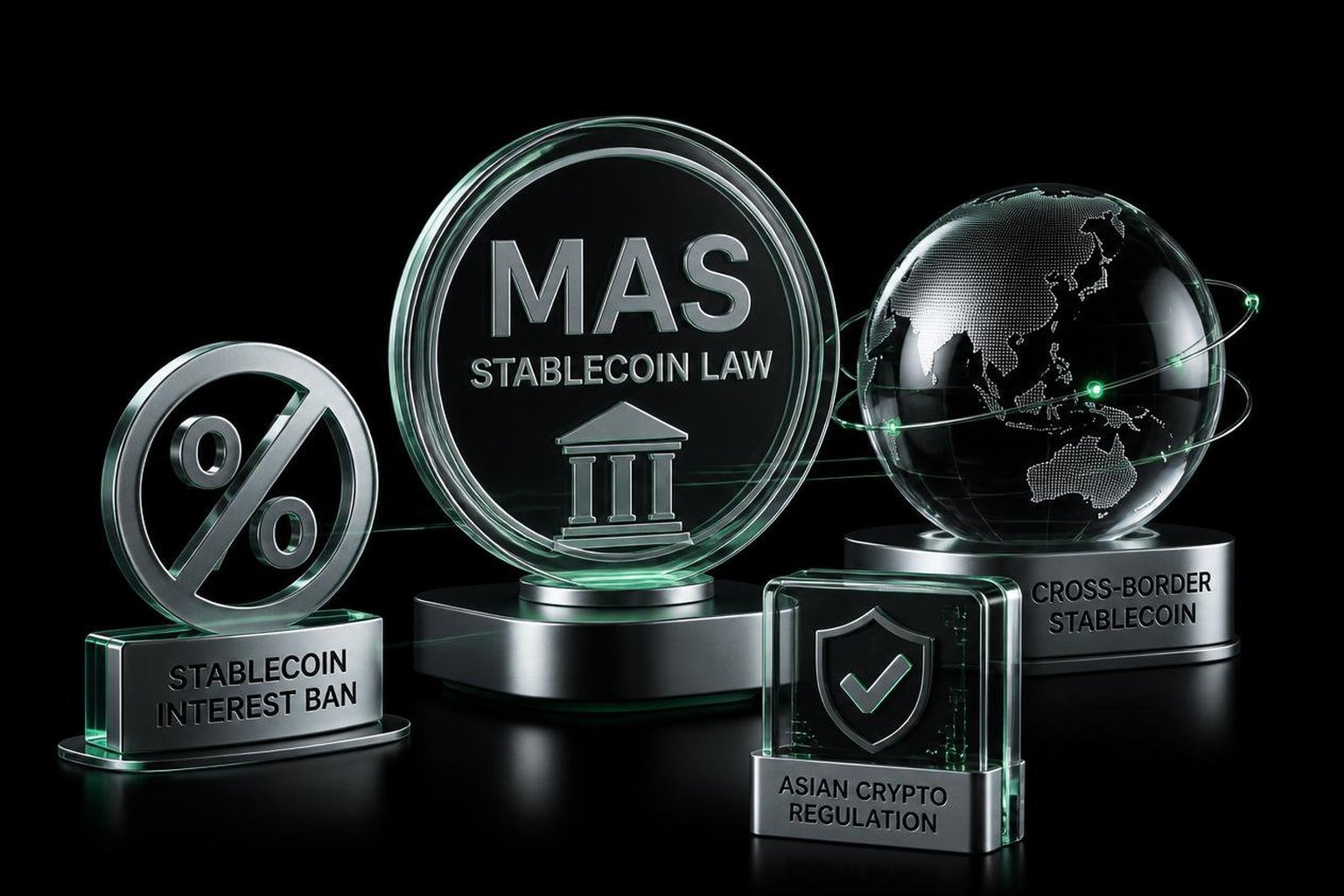
MAS is turning its 2023 stablecoin blueprint from stated policy into enforceable statute, adding three hard pieces in one go: an interest ban, cross-border recognition, and a freeze-and-burn anti-money-laundering requirement. Asian stablecoin regulation is no longer a blank slate.
On September 1, the Monetary Authority of Singapore (MAS) published a consultation paper to amend the Payment Services Act 2019, upgrading its single-currency stablecoin framework from policy to enforceable law. Three new requirements stand out: a ban on interest paid to holders of MAS-regulated stablecoins, limited recognition of jointly issued and foreign stablecoins, and an obligation for issuers to demonstrate the ability to trace, freeze, and burn tokens linked to illicit activity. The consultation closes on October 16.
The significance runs beyond Singapore. It is the moment Asian stablecoin regulation first lands on the same rulebook as the US and Europe. The GENIUS Act, MiCA, and now MAS have independently converged on one line: full reserves, no interest, licensed issuance. The global definition of the stablecoin as a payment instrument is rapidly consolidating into a single standard answer.
I. The Interest Ban: Why It Is the Hardest Piece
The sharpest constraint is the interest ban. MAS proposes prohibiting issuers from paying interest, or any holding-based benefit, to holders of regulated stablecoins. The rationale is direct: a stablecoin should carry payment and settlement functions, not become a yield-bearing vehicle that drains bank deposits. This mirrors the US GENIUS Act and the EU MiCA exactly, three regimes that reached the same conclusion independently.
But the ban carries a real cost. Over the past year, many issuers drove supply growth precisely by offering holding-based yield. Once this is cut off, yield-seeking capital will be pushed toward tokenized funds and other assets. MAS simultaneously requires mandatory stress testing, recovery and orderly wind-down plans, and protection of customer monies received before tokens are issued. These clauses push stablecoin issuance from a lightly regulated product into bank-grade operations.
II. Cross-Border Access: Reversing the Three-Year-Old “Singapore-Only” Stance
The most unexpected shift is in cross-border recognition. In 2023, MAS ruled that qualifying stablecoins must be issued solely in Singapore, citing the difficulty of assessing overseas regulatory equivalence and reserve safety. MAS now proposes to open two doors: allowing stablecoins jointly issued by a Singapore and a foreign entity to carry the MAS-regulated label, and recognizing a limited number of foreign-issued stablecoins supervised under comparable overseas regimes.
The driver is wholesale use. Deputy Managing Director Ho Hern Shin stressed that stablecoins are becoming a credible settlement asset in tokenized financial markets, and cross-border wholesale settlement requires acknowledging external issuers. But the opening is deliberately limited, not an open door to every overseas licence. MAS will assess regimes case by case and control how many foreign stablecoins carry regulatory status in Singapore. Tokens outside the framework continue to be treated as digital payment tokens under consumer protection rules.
III. Freeze-and-Burn: Making AML Capability a Licence Condition
The most Singapore-specific feature is the anti-money-laundering clause. MAS proposes requiring issuers to have the technical capability to trace, freeze, and even burn tokens linked to illicit activity. Centralized control is no longer an implicit expectation but an explicit licensing condition. When problems arise, regulators can order issuers to dispose of problem tokens on-chain rather than relying solely on law enforcement.
This design is more direct than the US or EU approaches. The US leans on enforcement and sanctions lists, the EU on issuer obligations; Singapore writes on-chain disposal capability straight into the rules. For compliant issuers, this is added infrastructure cost; for regulators, it is an enforceable ex-ante constraint. Reserves still must cover 100% of outstanding tokens, be valued on a daily mark-to-market basis, carry independent monthly attestation and annual audit, and support redemption at par within five business days.
IV. Four Asian Regimes Converge: Hong Kong Has Licenced, Korea Still Legislates
Zooming out, Asian stablecoin regulation is moving in step. Hong Kong’s Stablecoins Ordinance took effect on August 1, 2025, and the HKMA issued its first two licences to HSBC and Anchorpoint in April 2026, with the first compliant HKD stablecoin HKDAP entering beta in August. Japan reclassified fiat stablecoins as electronic payment instruments on August 3 and removed the 1 million yen per-transaction cap on August 24. Singapore is now enshrining its framework in law.
Korea, by contrast, is still in its legislative marathon. On September 2, Korea’s Financial Services Commission said it would run a virtual-asset task force until 2028 to prepare for the Digital Asset Basic Act, aiming to finalize its main contents within 2026; the security-token regime is not due to take effect until February 2027. So while Singapore, Hong Kong, and Japan are already enforcing stablecoin rules, Korea is still drafting its comprehensive law.
V. Conclusion: The Stablecoin Enters Its “Payment Tool” Era
The deeper meaning of this MAS consultation is a redefinition of the stablecoin. It is no longer a yield-bearing crypto asset; it is a payment and settlement tool with reserves, redemption rights, no interest, and the ability to be disposed of. As seven major economies adopt the same standard, the “asset” attribute of stablecoins is being systematically stripped away, leaving only the “payment medium” path.
For practitioners, two lines are worth watching. First, the pace after the October 16 consultation closes, and which foreign stablecoins actually gain recognition. Second, where yield-seeking capital flows after the interest ban, and how that reshapes stablecoin supply. With this move, Singapore has pushed Asian stablecoin markets formally into the enforcement phase.
- MAS — MAS Consults on Legislative Amendments to Implement Stablecoin Regulatory Framework
- FinanceX Magazine — Singapore Stablecoin Regulation Gains Legal Teeth Under MAS Plan
- Stablecoin Insider — Singapore Opens Its Stablecoin Label to Foreign Issuers While Banning Interest
- Coinlive — MAS Proposes New Singapore Stablecoin Rules With Interest Ban And Cross-Border Recognition
- Altcoinvest — Singapore Stablecoin Rules Show Global Regulatory Convergence
- KuCoin — Asia’s Major Financial Centers Enforce Stablecoin Regulations
- BlockBeats — Korea’s FSC to run virtual asset task force until 2028 (September 2)
发表回复