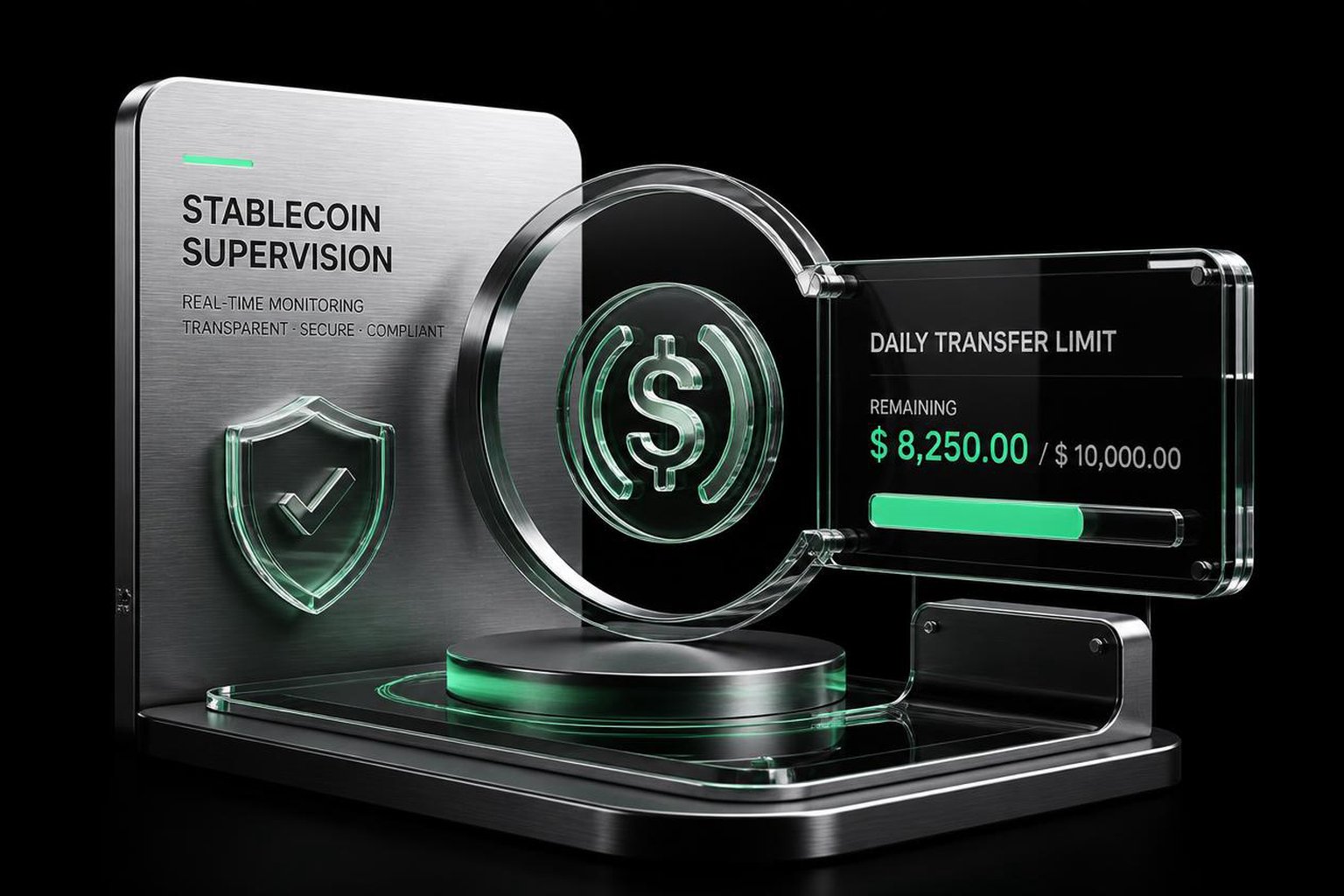
A 5 Million Baht Daily Cap: Thailand Moves Stablecoin Oversight from Licensing to Policing the Money Flow
Thailand’s SEC sets per-person daily transfer caps and wallet self-verification on USDT flows, as the global stablecoin battle shifts from “who may issue” to “how the money moves through the on- and off-ramps.”
Article Summary
On September 3, the Thai SEC board approved principles for supervising stablecoin transactions, imposing a daily 5 million baht (about $150,000) cap on inbound and outbound transfers per person per licensed digital-asset operator, and requiring that the wallets on either side of a transfer be verified as belonging to the customer, layered with Travel Rules, customer profiling, and blockchain analytics. Almost simultaneously, the G20’s Asheville Chair’s Statement reserved judgment on stablecoins pending FSB findings on cross-border data gaps and monitoring visibility. Both point to the same shift: regulators are no longer deciding only who may issue stablecoins, but tightening how the money flows through on- and off-ramps, and how much of that flow they can see.
Thailand Gets Tough: A Daily Per-Person 5 Million Baht Cap and Wallet Self-Verification
Thailand’s Securities and Exchange Commission (SEC) published Announcement No. 183/2026 on September 3, with the board formally approving a new set of principles for supervising stablecoin transactions. The targets are not issuers but licensed digital-asset (DA) operators, meaning exchanges and brokers. Secretary-General Pornanong Budsaratragoon said stablecoin supervision has become a top priority, after a significant rise in USDT transaction volume and value and the emergence of patterns that could be linked to money laundering, cybercrime, and the circumvention of cross-border remittance rules.
The core of the four measures is to pull the entire on- and off-ramp into the compliance framework. First, any transfer of stablecoins from another person’s account into a customer’s account, or out of a customer’s account to another person’s account, is prohibited; the wallets on either side must be verified as belonging to the customer, and must comply with Travel Rules, customer profiling, and screening to rule out “mule accounts” or high-risk and watchlist wallets, using blockchain analytics. Second, the value of stablecoins transferred in or out through a single operator must not exceed 5 million baht (about $150,000) per day per person; transfers between customer accounts within the same operator’s supervised system are exempt from the cap, though both sides must still meet Travel Rules.
— Pornanong Budsaratragoon, SEC Secretary-General, September 3, 2026
The third set of measures aligns the rules for market makers (MMs) on digital-asset exchanges with those applied in the securities business, and adds supervision of liquidity providers (LPs) that supply digital-asset brokers, requiring LPs and the source exchanges they connect to be under the jurisdiction of a regulator (for example, anti-money-laundering or business-conduct oversight). The fourth set sets out transparency guidelines for off-platform and big-lot transactions. All the principles will be finalized after a public hearing in September 2026. The Bank of Thailand has said that about 40% of USDT sellers on local platforms are foreigners, and is stepping up source checks on large cash deposits and withdrawals above 5 million baht.
Read across the four measures, the regulator’s intent is clear. The 5 million baht per-day, per-person cap draws a dividing line between retail and institutional flow; it does not stop inter-customer transfers within the same operator’s system, but it cuts off the “external wallet” channels that bypass platform identity verification. The combination of wallet-ownership verification and Travel Rules excludes anonymous wallets from on- and off-ramps, pushing stablecoin flows back into a traceable account system. Aligning MM and LP oversight with the securities business means liquidity models that rely on gray-market market-making networks in Southeast Asia face a shake-out. And the transparency guidance for OTC and big-lot trades closes the exit that let large blocks clear outside an exchange’s matching engine. All four cuts aim at one target: making every stablecoin movement in Thailand land on a ledger the regulator can see.
Looked at regionally, Thailand is not acting in isolation. Singapore’s MAS opened consultation P015-2026 on September 1 to turn its stablecoin guidance into binding, licensing-based law and to bar interest on regulated stablecoins; Hong Kong, China’s stablecoin ordinance took effect in August 2025, and Japan’s FSA is advancing a bank- and trust-led stablecoin framework. As issuer-side frameworks land across major Asian markets, Thailand’s decision to aim at on- and off-ramps and the distribution layer is effectively closing the “last mile” of regional stablecoin governance. For institutions doing stablecoin business in Thailand or Southeast Asia, the compliance center of gravity is moving from “getting a licence” to “whether the operations layer can keep pace with per-person caps and wallet-verification rollouts.”
The G20’s Reservation: Cross-Border Stablecoin Data Gaps Come to the Fore
Even as Thailand lands concrete numbers, the language at the global level is converging in the same direction. US Treasury Secretary Scott Bessent released the G20 Asheville Chair’s Statement on September 1 after finance ministers and central bank governors met on August 31 to September 1, acknowledging that digital assets “can contribute to broad-based economic growth” and committing to regulatory frameworks that both “preserve financial stability” and “establish clear pathways for sound digital financial and digital assets innovation.” Fed Chair Kevin Warsh attended the meeting, returning to the G20 for the first time since the financial crisis, which gave the wording added weight.
But stablecoins were carved out for special treatment: the G20 said it expects the Financial Stability Board to publish findings on the cross-border implications of global stablecoin arrangements, along with work on stablecoin data sources, their availability, and the gaps in what regulators can currently see, before deciding on further action. The group also reaffirmed support for FATF’s virtual-asset standards and asked that priority be given to effective implementation in jurisdictions with significant virtual-asset activity. In effect, “data visibility” is being established as a shared agenda item for the next phase of international supervision: regulators concede that the information they can currently see is not enough to judge the full picture of cross-border stablecoin flows.
Put the two together and the center of gravity of global stablecoin oversight has moved. Over the past two years, the US GENIUS Act, the EU’s MiCA, and Singapore’s MAS have answered issuer-side questions: who may issue, how reserves are held, and whether interest can be paid. Now Thailand is setting per-person caps at the retail and on-ramp layer, and the G20/FSB is pursuing cross-border visibility at the data layer. Regulators are reaching into the distribution layer where money moves. Issuer-side licensing and distribution-side data demands are advancing at the same time.
Two Generations of Regulatory Agendas: Issuance vs Distribution
Some Takeaways for Practitioners
Sources
- 1. SEC Board approves principles for enhancing the supervision of stablecoin transactions — Thailand SEC, September 3, 2026
- 2. SEC limits Stablecoin transfers to 5 million baht per day — Thailand Edition, September 3, 2026
- 3. Thailand’s $150K Cash Trap: Why USDT Flow Just Got Hotter — AInvest, 2026
- 4. G20 Pledges to Clarify Digital Asset Regulatory Pathways — IDN Financials, September 2, 2026
- 5. G20 pledges clearer digital asset rules — FinWire, September 2026
- 6. What did the G20 say on digital assets in 2026? — Issuant, September 2026
- 7. Crypto Brief, September 3, 2026 — Lowenstein Sandler LLP
发表回复