作者: MzaZobV4JT53byg

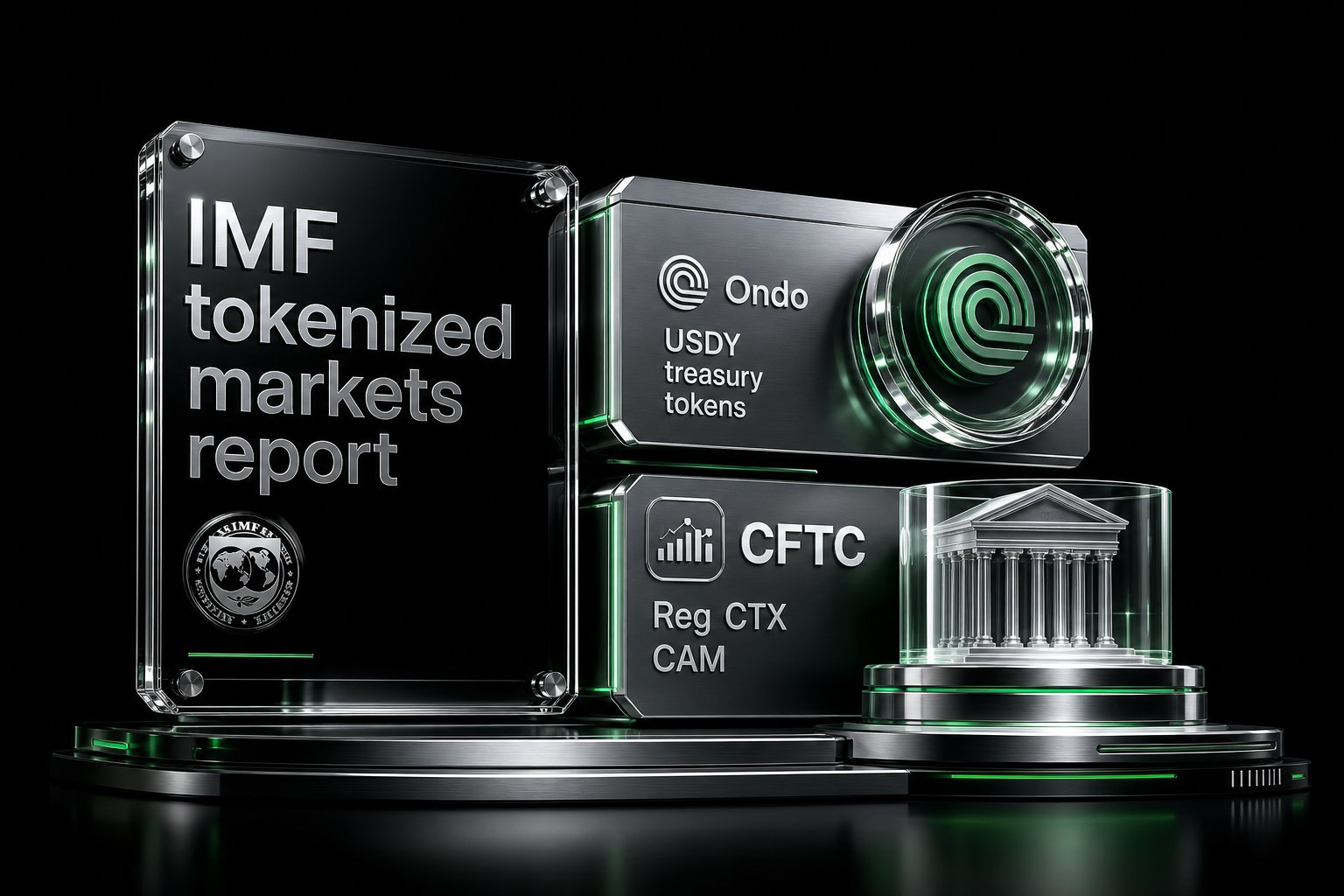
  • IMF’s First Chapter Puts Tokenized Markets at $65B as Ondo Tops Treasuries

    IMF’s First Chapter Puts Tokenized Markets at $65B as Ondo Tops Treasuries

    IMF’s First Chapter Puts Tokenized Markets at $65B as Ondo Tops Treasuries

    Public tokenized RWA market
    $65B
    IMF first dedicated assessment · ex-repo, ex-stablecoins

    Tokenized Treasuries market
    $14.91B
    Ondo tops at $3B · USDY passes BUIDL

    Tokenized repo daily volume
    $303B
    30-day average · IMF data

    Global RWA market cap
    $39.2B
    Up from $25.5B · +50% in 10 months

    IMF’s First Dedicated Chapter Assesses Tokenized Markets at ~$65B, Warns of Leverage and Liquidity Risks

    October 13, 2026 · IMF / Foresight News / Yahoo Finance
    The International Monetary Fund (IMF) has dedicated a full chapter to tokenized markets for the first time in its October 2026 Global Financial Stability Report. As of end-July, excluding repos and stablecoins, the public tokenized RWA market stood at roughly $65 billion — about $30.4 billion in credit, $17.5 billion in money market funds and $2.3 billion in equities. Tokenized repo averaged $303 billion in daily transaction volume over 30 days. The IMF cautioned that while small, tokenized assets could become a new channel for leverage build-up and liquidity and maturity mismatches.
    • Tokenized equity issuance is highly concentrated: Ondo Finance and Backed Finance (xStocks) together account for over 70% of the market, underscoring fragmentation
    • More than 50% of tokenized equity trading occurs outside regular US market hours, and about 80% of trades are smaller than a single share, with volatility roughly 1.5x traditional markets
    • The report identifies four constraints: legal certainty, regulatory clarity, platform interoperability, and the availability of safe settlement money
    • The IMF names Ondo alongside Securitize, Circle, Tether and Bridgetower among the world’s major tokenized-asset issuance platforms
    Macro signal
    A systemically important institution has established official statistical baselines for tokenization, with $65B as the reference point

    Risk call
    Without interoperable central bank money, stablecoins and tokenized deposits could become the primary settlement tools, creating issuer credit and concentration risks

    Structural read
    Fractional trading and off-hours price discovery are now empirically confirmed, with efficiency gains and fragility accumulating in tandem

    Source: Yahoo Finance · Foresight News · October 13, 2026

    Ondo Tokenized Treasuries Pass $3B as USDY Overtakes BlackRock’s BUIDL

    October 13, 2026 · TokenPost / RWA.xyz
    Ondo Finance’s tokenized US Treasury products have surpassed $3 billion in total value, claiming the top spot on RWA.xyz’s tokenized-Treasuries leaderboard. USDY reached approximately $2.328 billion, ahead of BlackRock’s BUIDL at $2.204 billion, making it the largest single crypto-native Treasury token; OUSG contributed about $319 million. The broader tokenized Treasury market stood at roughly $14.91 billion, with Circle’s USYC still the largest individual product at about $2.384 billion.
    • Ondo’s combined line-up (USDY + OUSG + tokenized Treasury ETFs) took the RWA.xyz top spot, with the top three issuers holding roughly 46% of the market
    • A crypto-native issuer has overtaken the world’s largest asset manager in a flagship RWA product, signaling a shift in category leadership
    • USYC remains the largest single product, with the top three (USYC / USDY / BUIDL) now within $130 million of each other
    Competitive shift
    Treasury tokenization is moving from a BlackRock-centric market to a three-way race, intensifying pricing and liquidity competition

    Product validation
    USDY’s growth proves real institutional demand for 24/7 subscriptions, redemptions and yield-bearing digital dollars

    Market headroom
    $14.91B versus a multi-trillion-dollar traditional Treasury market implies penetration below 0.1%

    Source: TokenPost · Phemex · October 13, 2026

    CFTC Crypto Market Rules Land in the Federal Register: Reg CTX/CAM Open for Comment Until December 14

    October 13, 2026 · Federal Register / Sidley Austin
    The Commodity Futures Trading Commission (CFTC) published its advanced notice of proposed rulemaking for “Regulation Crypto Asset Transactions” (Reg CTX) and “Regulation Crypto Asset Markets” (Reg CAM) in the Federal Register on October 13, opening a public comment period through December 14. The proposal centers on Section 2(c)(2)(D) of the Commodity Exchange Act: retail crypto transactions conducted on a margined, leveraged or financed basis would be treated “as if” they were futures and must trade on a designated contract market (DCM), while crypto exchanges willing to operate under a single federal regime gain a voluntary compliance path.
    • Except for “payment stablecoins” as defined under the GENIUS Act, crypto assets could generally qualify as commodities under CFTC jurisdiction
    • The notice acknowledges that US retail participants currently rely on a patchwork of state money-transmission licenses, and a federal framework would provide more consistent protections
    • It is the latest piece of the CFTC-SEC dual-track response after the CLARITY Act stalled in the Senate (the SEC’s Reg Crypto Assets comment period closes October 20)
    • Chairman Selig stressed the rules would not force crypto assets onto DCMs, but would create a federal option for exchanges seeking to offer leveraged retail trading
    Regulatory path
    With CLARITY stalled, the CFTC/SEC dual track is taking shape and a federal crypto market framework is coming into view

    Market impact
    A voluntary DCM channel could draw leading exchanges away from state-level patchwork rules and reshape competition

    Timeline
    Comments are due December 14, with the SEC side closing October 20; rule direction should be clearer by year-end

    Source: Federal Register · Sidley Austin · October 13, 2026

    Bitget Launches rToken Transfer: 3,000+ US Stocks and ETFs Can Move Straight From Brokerage Accounts

    October 13, 2026 · Bitget / CoinTrust
    Bitget launched rToken Stock Transfer on October 13, allowing users to move eligible US-listed stocks and ETFs from traditional brokerage accounts directly into the platform as tokenized stocks (rTokens), covering more than 3,000 assets. The two-step process starts with a Free of Payment (FOP) transfer from the external broker to Bitget’s designated account, after which the In-Kind Tokenization Network (ITN) automatically converts the shares into rTokens credited to the user’s spot account. Transfers in are free, with an estimated processing time of about 10 business days.
    • As of July 6, Bitget’s rToken assets under management reached about $114 million, with cumulative transactions surpassing two million
    • Transferred rTokens can be used for spot trading, margin, borrowing and lending, and yield products, sharply expanding asset utility
    • To mark the launch, Bitget is offering $1 million in SpaceX stock tokens (rSPCX) airdrop rewards, with the top single reward at $2,000
    • CEO Gracy Chen: tokenization is only step one; making capital more mobile and efficient is the real next step
    Bridge building
    A two-way channel from brokerage holdings to exchange tokenization is forming, widening the on-ramp for TradFi assets

    Competitive signal
    Leading exchanges are racing to lower the barrier to tokenized equities and compete for existing securities holdings

    Industry read
    Consistent with the IMF’s findings: fractional trading and cross-market migration are becoming the core tokenized-equity narrative


    Source: Bitget · CoinTrust · October 13, 2026

  • RWA 早报 | 2026年10月14日

    RWA 早报 | 2026年10月14日

    IMF 首份专章审视 650 亿美元代币化市场,Ondo 登顶美债赛道

    代币化 RWA 公开市场
    $650亿
    IMF 首次专章评估 · 不含回购与稳定币

    代币化美债总市值
    $14.91亿
    Ondo 系 $30 亿登顶 · USDY 超 BUIDL

    代币化回购日交易量
    $3,030亿
    30 日日均 · IMF 数据

    全球 RWA 市值
    $392亿
    较年初 $255 亿 · 10 个月 +50%

    IMF 首份专章评估代币化市场:公开规模约 650 亿美元,警示杠杆与流动性风险

    2026年10月13日 · IMF / Foresight News / Yahoo Finance
    国际货币基金组织(IMF)在 10 月《全球金融稳定报告》中首次以专门章节系统评估代币化市场。报告显示,截至 7 月底,剔除回购与稳定币后,代币化 RWA 公开市场规模约 650 亿美元,其中信贷约 304 亿美元、货币市场基金约 175 亿美元、股票约 23 亿美元;代币化回购 30 日平均日交易量高达 3,030 亿美元。IMF 同时警告,代币化资产虽小,却可能成为杠杆积累、流动性与期限错配的新渠道。
    • 代币化股票发行高度集中:Ondo Finance 与 Backed Finance(xStocks)合计占比超过 70%,市场碎片化明显
    • 超过 50% 的代币化股票交易发生在美股常规交易时段之外,约 80% 的交易规模不足一股,波动率约为传统市场 1.5 倍
    • 报告识别四大制约:法律确定性、监管清晰度、平台间互操作性,以及安全结算货币的可得性
    • IMF 点名 Ondo 与 Securitize、Circle、Tether、Bridgetower 并列全球主要代币化资产发行平台
    宏观定调
    全球系统重要性机构首次为代币化建立统计口径,650 亿美元成官方基准

    风险提示
    若缺可互操作的央行货币,稳定币与代币化存款或成主要结算工具,带来信用与集中度风险

    结构观察
    碎片化交易 + 场外时段定价已实证存在,效率提升与脆弱性同步累积

    来源:Yahoo Finance · Foresight News · 2026年10月13日

    Ondo 代币化美债突破 30 亿美元,USDY 超越贝莱德 BUIDL 登顶

    2026年10月13日 · TokenPost / RWA.xyz
    Ondo Finance 的代币化美国国债产品总规模突破 30 亿美元,位列 RWA.xyz 代币化美债排行榜首位。其中 USDY 规模约 23.28 亿美元,超越贝莱德 BUIDL 的 22.04 亿美元,成为最大的单一加密原生美债代币;OUSG 贡献约 3.19 亿美元。整体代币化美债市场约 149.1 亿美元,Circle USYC 以约 23.84 亿美元仍居单一产品第一。
    • Ondo 合计口径(USDY + OUSG + 代币化美债 ETF)首登 RWA.xyz 榜首,三家头部合计约占市场 46%
    • 加密原生发行人在旗舰 RWA 产品上反超全球最大资管公司,标志赛道主导权正在迁移
    • USYC 保持单产品第一,头部三强(USYC / USDY / BUIDL)差距收窄至 1.3 亿美元以内
    竞争格局
    美债代币化从「贝莱德一家独大」转向三强并立,定价与流动性争夺加剧

    产品验证
    USDY 的增长证明 24/7 申赎与收益型数字美元存在真实机构需求

    市场容量
    $149.1 亿 vs 数万亿级传统美债市场,渗透率仍不足 0.1%

    来源:TokenPost · Phemex · 2026年10月13日

    CFTC 加密市场规则正式刊入联邦公报:Reg CTX/CAM 征询至 12 月 14 日

    2026年10月13日 · Federal Register / Sidley Austin
    美国商品期货交易委员会(CFTC)于 10 月 13 日将「Regulation Crypto Asset Transactions(Reg CTX)」与「Regulation Crypto Asset Markets(Reg CAM)」预提案正式刊入《联邦公报》,公开征询至 12 月 14 日。提案聚焦《商品交易法》2(c)(2)(D) 条款:零售端以保证金、杠杆或融资方式开展的加密交易将「视为」期货,须在指定合约市场(DCM)执行;同时为愿接受单一联邦监管的加密交易所提供自愿合规路径。
    • 除 GENIUS 法案定义的「支付稳定币」外,加密资产原则上可被认定为商品,纳入 CFTC 管辖
    • 提案承认当前美国散户依赖各州资金转移牌照的拼凑式监管,联邦框架将提供更一致的保护
    • 这是 CLARITY 法案在参议院受阻后,CFTC 与 SEC 双轨补位的最新一环(SEC 侧 Reg Crypto Assets 10/20 截止)
    • 主席 Selig 强调:规则不强制加密资产上 DCM,但为希望开展杠杆零售交易的交易所提供单一联邦监管选项
    监管路径
    CLARITY 受阻后 CFTC/SEC 双轨推进,联邦加密市场框架轮廓渐明

    市场影响
    DCM 自愿通道或吸引头部交易所脱离州级牌照拼凑,重塑竞争格局

    时间窗口
    征询至 12 月 14 日,SEC 侧 10/20 截止,年底前规则走向将明朗

    来源:Federal Register · Sidley Austin · 2026年10月13日

    Bitget 上线 rToken 转入功能:3000+ 美股 ETF 可从券商账户直接迁入

    2026年10月13日 · Bitget / CoinTrust
    Bitget 于 10 月 13 日推出 rToken Stock Transfer,允许用户将传统券商账户中符合条件的美股与 ETF 直接转入平台,转化为代币化股票(rToken),首批覆盖 3,000 余只标的。转入流程为两步式:用户先从外部券商发起 FOP 免支付转入至 Bitget 指定账户,平台再通过实物代币化网络(ITN)自动转化为对应 rToken 并计入现货账户。转入免费,处理周期约 10 个工作日。
    • 截至 7 月 6 日,Bitget rToken AUM 约 1.14 亿美元,累计交易量超 200 万笔
    • 转入的 rToken 可用于现货交易、保证金、借贷与收益产品,资产实用性显著提升
    • 为庆祝上线,Bitget 提供 100 万美元 SpaceX 股票代币(rSPCX)空投激励,最高单笔奖励 2,000 美元
    • CEO Gracy Chen:代币化只是第一步,让资本更高效流动才是下一步
    资产打通
    券商持仓 → 交易所代币化的双向通道成型,TradFi 资产向链上迁移的入口扩容

    竞争信号
    头部交易所竞相降低代币化股票准入门槛,争夺存量证券资产

    行业验证
    与 IMF 观察一致:碎片化交易 + 跨市场迁移正成为代币化股票主叙事

    来源:Bitget · CoinTrust · 2026年10月13日

  • EU Evicts Non-Compliant Stablecoins and Wires the Digital Euro for AI Payments

    EU Evicts Non-Compliant Stablecoins and Wires the Digital Euro for AI Payments

    EU Evicts Non-Compliant Stablecoins and Wires the Digital Euro for AI Payments

    ESMA has given non-compliant stablecoins a three-month eviction order, EU ministers have moved the biggest crypto platforms under ESMA’s direct supervision, and the European Central Bank has written “AI agent payments” into its digital euro innovation agenda — Europe is drawing the lines for who owns the money, and which rail it runs on, in the AI-native payments era.

    Deadline for non-compliant stablecoins
    3 months
    Hard cap Jan 8, 2027

    CASPs moved to ESMA direct oversight
    10-15
    Top of ~360 providers

    Digital euro pilot PSPs
    36
    8 Italian institutions

    BTC in exposed-key addresses
    ≈30%
    ~6-6.9M coins

    On October 8, ESMA published an opinion requiring MiCA-authorised crypto-asset service providers (CASPs) to stop offering services related to non-compliant stablecoins to EU clients, with existing exposures to be wound down within three months (hard deadline January 8, 2027), singling out USDT as a case in point. Two days later, on October 9, the EU Council (ECOFIN) agreed key elements of its negotiating position on the Market Integration and Supervision Package (MISP), proposing to place the most significant cross-border crypto platforms under ESMA’s direct supervision while broadening the DLT pilot regime. Around the same time, the European Central Bank selected 36 payment service providers for the digital euro pilot in the second half of 2027 and launched a call for its innovation platform focused on AI payments and AI agents.

    The three tracks point to one strategy: Europe is using a dual approach of clearing out private stablecoins and building a sovereign payment rail to claim the groundwork for the AI-native payments era. Europol’s quantum threat report on October 7 adds a layer of foundational security to the main story.

    1. Why It Matters: The Stablecoin Cleanup Is Not an Endpoint but the Opening Move in a Battle Over “AI Money” Sovereignty

    ESMA’s opinion targets a structural risk: non-compliant stablecoins lack issuer-level reserve, redemption, governance and supervision safeguards, and no amount of risk warnings or client acknowledgements at the service-provider level can substitute for them. Continuing to offer such services would undermine MiCA’s coherence, distort competition between compliant and non-compliant issuers, and weaken investor confidence. The requirement therefore spans nearly every crypto-asset service, from trading platforms to custody, transfers and investment advice.

    Deeper still, this is synchronised with Europe’s AI agenda: as machine-to-machine payments become the norm, stablecoins are the de facto settlement currency of AI agents. Whoever controls the compliance definition and issuance licences of stablecoins controls the “currency gate of the machine economy.” Europe has chosen not to leave that gate to private dollar stablecoins — it is clearing the field first, then entering it itself.

    2. State of Play: Three European Tracks Advancing at Once

    The first track is the stablecoin cleanup. ESMA’s October 8 opinion names USDT and other dollar tokens without MiCA authorisation, requiring national regulators to ensure CASPs clear remaining exposure within three months of publication; transitional services are limited to orderly wind-down functions such as liquidation, conversion, withdrawal, transfer and custody. Circle’s USDC (via its French e-money licence) and the euro stablecoin EURC sit on the compliant side, and the ESMA register of authorised issuers becomes the criterion for whether a token can reach EU clients.

    The second track is ESMA direct supervision. On October 9, ECOFIN agreed a position on MISP: ESMA will directly supervise the most significant cross-border trading venues, clearing houses and crypto platforms, but the scope is narrower than the Commission’s original proposal — only 10-15 of roughly 360 CASPs, the “significant cross-border” operators, would move to ESMA in the first wave, triggered by 15 million active users or meeting three of five significance criteria (over 1 million active users, over €1 billion in crypto assets under custody, over €4 billion in annual client transactions). During a two-year transition ESMA works with national authorities, most smaller platforms stay with home regulators, and the same package broadens the DLT pilot regime.

    The third track is the digital euro and AI payments. The ECB has selected 36 payment service providers for the digital euro pilot in H2 2027 (Italy accounts for 8: UniCredit, Banca Sella, Poste Italiane, Nexi Payments, Satispay and others), with 5,000-10,000 central bank staff testing real payments using beta wallets. At the same time, the ECB opened a second call for its innovation platform (closing November 9): the experimentation workstream covers electronic receipts, multi-party transactions and conditional payments, while the exploration workstream focuses squarely on “AI-driven payment experiences, interactions between AI agents, micropayments and privacy by design.” ECB Executive Board member Piero Cipollone has been blunt: without the digital euro, Europe would over-rely on foreign payment infrastructure, and both “monetary sovereignty and the singleness of money” would suffer.

    3. The Dual-Track Logic: Clear the Field, Claim the Territory, Set the Standard

    Read together, Europe’s playbook is clear: clear the field first (evict non-compliant stablecoins), then claim the territory (ESMA direct supervision of top platforms plus a broader DLT pilot), then set the standard (the digital euro as the compliant rail for AI agent payments). The underlying logic is that AI agent payments will rewrite who issues money, who settles it and who bears liability, and Europe does not want to hand monetary sovereignty to private dollar stablecoins at that inflection point.

    The sequencing is telling: the ESMA opinion (10/8) and the ECOFIN position (10/9) came one day apart, while the ECB’s digital euro application windows (closing 10/27 and 11/9) opened in parallel. This is not a coincidence but a three-sided push of one agenda: regulators clearing the old order, market oversight consolidating authority, and the payments layer laying down the new rail.

    For practitioners there are three implications: compliant stablecoins (USDC, EURC and others) gain an institutional dividend, and “who issues” gives way to “under whose supervision you issue”; ESMA direct supervision raises compliance costs and liability for top platforms while shrinking cross-border regulatory arbitrage; and if the digital euro lands, it will compete head-on with compliant stablecoins in machine-payment scenarios, giving European firms an alternative rail that does not depend on US card networks or dollar stablecoins.

    Key signal: Europe’s triple move of evicting non-compliant stablecoins, placing ESMA in direct supervision, and piloting AI payments on the digital euro lifts the groundwork competition of the AI-native payments era from “technical rails” to “monetary sovereignty.” For practitioners, compliant stablecoins and the digital euro are not an either-or but the new normal of regulatory compliance plus multi-rail coexistence.

    4. Investment Perspective: Regulatory Dividend Tilts Toward the Compliant Side, Quantum Threats Open a New Track

    ESMA’s eviction order directly benefits MiCA-authorised issuers and CASPs: Circle’s USDC/EURC (French EMI licence) and European bank-issued euro stablecoins will earn a “regulatory certainty premium” in institutional allocations, while large dollar stablecoin issuers without authorisation will be forced to hand over EU market share — not by market choice but by regulatory fiat.

    Europol’s quantum report on October 7 points to new opportunity from the other side: roughly 30% of Bitcoin (6-6.9 million coins) sits in addresses with exposed public keys, from which a sufficiently powerful quantum computer could derive private keys; although no such machine exists today, a full UTXO migration would take at least 76 days of block space (about 300 days at 25% reserved per block), and post-quantum signature sizes are 10-120 times larger than ECDSA. Wallet quantum migration, post-quantum signatures and key management are moving from academic topics to compliance necessities with real willingness to pay.

    5. Conclusion: Opportunity Points

    The clearest opportunity signals this week: compliant stablecoins gain a structural dividend in the EU, opening integrated opportunities around “compliant stablecoin x institutional custody x machine payments”; the digital euro pilot and AI payment experiments provide the first regulated testing ground for “AI agents paying with sovereign money,” where service providers and market makers can position early; and the quantum-security grey rhino is starting to be taken seriously by regulators and institutions, with wallet migration, post-quantum cryptography and key management forming a new track.

    1
    The eviction order is enforced tiering of stablecoinsESMA anchors the criterion of “whether a token can reach EU clients” to the register of authorised issuers, and USDT’s liquidity on EU exchanges will gradually go to zero. Compliant stablecoins gain an institutional dividend, and institutional allocation logic shifts from market-cap-first to licence-first.

    2
    ESMA direct supervision rewrites the compliance cost function of top platforms10-15 significant cross-border CASPs will face centralised oversight and stronger enforcement tools; the two-year transition means leading players must restructure governance and reporting early, while smaller platforms gain short-term certainty by staying under national supervision.

    3
    The digital euro puts AI agent payments on the sovereign agendaThe ECB innovation platform’s exploration workstream explicitly covers AI agent interactions and micropayments, making it the first major central bank to formally include machine spending in CBDC experiments. European firms will gain an alternative machine-payment rail independent of US card networks and dollar stablecoins.

    4
    Quantum threat shifts from far-off concern to near-term riskEuropol’s report quantifies migration costs (76-300 days of block space) and signature size expansion (10-120x). Wallet quantum migration and post-quantum signatures will form a market before quantum computers arrive, as regulators and institutions start pricing in uncertainty.

  • 欧盟一手清退不合规稳定币,一手用数字欧元接住AI支付:主权轨道的攻防战

    欧盟一手清退不合规稳定币,一手用数字欧元接住AI支付:主权轨道的攻防战

    欧盟一手清退不合规稳定币,一手用数字欧元接住AI支付:主权轨道的攻防战

    ESMA 给不合规稳定币下达三个月清退令、欧盟理事会把头部加密平台收归 ESMA 直接监管,同期欧洲央行把”AI 代理支付”写进数字欧元创新议程——欧洲正在用一套组合拳,为 AI 原生支付时代划定”谁的钱、走哪条轨”。

    不合规稳定币清退期限
    3个月
    硬期限2027年1月8日

    收归ESMA直接监管CASPs
    10-15家
    约360家中的头部

    数字欧元试点支付服务商
    36家
    含8家意大利机构

    公钥暴露的BTC占比
    ≈30%
    约600-690万枚

    10月8日,ESMA 发布意见,要求 MiCA 授权下的加密资产服务商(CASP)停止向欧盟客户提供与不合规稳定币相关的服务,现存敞口须在三个月内(硬期限 2027年1月8日)清退,USDT 成为被点名代表。两天后的 10月9日,欧盟理事会(ECOFIN)就市场一体化与监管包(MISP)达成谈判立场,提出把最重大的跨境加密平台收归 ESMA 直接监管,同时扩容 DLT 试点机制。同期,欧洲央行一边为 2027 下半年数字欧元试点选定 36 家支付服务商,一边启动聚焦”AI 支付与 AI 代理”的创新平台征集。

    三件事指向同一个战略:欧洲正用”清理私人稳定币 + 建设主权支付轨道”双轨,抢占 AI 原生支付时代的地基;Europol 10月7日的量子威胁报告则为这条主线加上”底层安全”注脚。

    一、为什么关注:稳定币清退不是终点,而是”AI 货币”主权争夺的起点

    ESMA 的意见直指结构性风险:不合规稳定币缺少发行方层面的储备、赎回权、治理与监督保护,CASP 无法用风险提示与客户确认替代这些保障。继续提供这类服务会破坏 MiCA 的一致性、扭曲合规与不合规发行方之间的竞争,并削弱投资者信心。因此,从交易平台到托管、转账、投资建议,几乎全部加密资产服务都被纳入要求范围。

    更深一层,这与欧洲的 AI 议程同频:当机器与机器之间的支付成为常态,稳定币就是 AI 代理的事实结算货币,谁掌握合规定义与发行许可,谁就掌握”机器经济的货币闸门”。欧洲选择先清场、再自己上场。

    二、行业现状:三条欧洲主线同时推进

    第一条主线是稳定币清退。ESMA 10月8日意见点名 USDT 等未获 MiCA 授权的美元代币,要求各国监管机构督促 CASP 在意见发布后三个月内清退存量敞口,过渡期服务仅限清算、兑换、提现、转账与托管等有序退出功能。Circle 的 USDC(通过法国电子货币牌照)与欧元稳定币 EURC 则属于合规侧,ESMA 维护的授权发行方登记册成为”能否触达欧盟客户”的判据。

    第二条主线是 ESMA 直接监管。10月9日 ECOFIN 就 MISP 达成立场:ESMA 将直接监管最重大的跨境交易场所、清算机构与加密平台,但范围比欧委会原案收窄——约 360 家 CASP 中仅 10-15 家”重大跨境”运营商首批划归 ESMA,触发门槛为 1500 万活跃用户,或”100万+用户、托管超10亿欧元、年客户交易额超40亿欧元”三项中满足三项;两年过渡期内 ESMA 与成员国协同,多数中小平台仍留母国监管,同时扩容 DLT 试点机制。

    第三条主线是数字欧元与 AI 支付。ECB 选定 36 家支付服务商参与 2027 下半年数字欧元试点(意大利占 8 家:UniCredit、Banca Sella、Poste Italiane、Nexi Payments、Satispay 等),5,000-10,000 名央行员工将用测试钱包测试真实支付。同时 ECB 启动创新平台第二轮征集(11月9日截止),实验工作流覆盖电子收据、多方支付、条件支付;探索工作流直接聚焦”AI 驱动的支付体验、AI 代理之间的交互、微支付与隐私设计”。ECB 执委 Cipollone 直言:没有数字欧元,欧洲将过度依赖他国支付基础设施,”货币主权与货币单一性”都会受损。

    三、双轨逻辑:先清场、再圈地、后定标

    把三条线并起来看,欧洲的策略非常清晰:先清场(清退不合规稳定币),再圈地(ESMA 直接监管头部平台 + 扩容 DLT 试点),后定标(数字欧元成为 AI 代理支付的合规轨道)。这套组合拳的底层逻辑是:AI 代理支付将重构”谁发行货币、谁清算、谁担责”,欧洲不想在这个拐点上把货币主权让渡给私人美元稳定币。

    值得玩味的是时序:ESMA 意见(10/8)与 ECOFIN 立场(10/9)相隔一天,而 ECB 的数字欧元试点征集窗口(10/27、11/9 截止)同期开放。这不是巧合,而是同一议程的三面推进——监管层清理旧秩序,市场层收拢话语权,支付层布局新轨道。

    对从业者的含义有三层:合规稳定币(USDC、EURC 等)获得制度性红利,”能不能发币”让位于”在谁的监管下发行”;ESMA 直接监管抬升头部平台合规成本,跨境监管套利空间收窄;数字欧元若落地,将与合规稳定币在”机器支付”场景正面竞争,欧洲企业将拥有一条不依赖美国卡组织与美元稳定币的备选轨道。

    关键信号:欧洲用”清退不合规稳定币 + ESMA 直接监管 + 数字欧元 AI 支付试点”三连招,把 AI 原生支付时代的地基竞争从”技术轨道”抬升到”货币主权”层面。对从业者而言,合规稳定币与数字欧元不是二选一,而是”监管合规 + 多轨并行”的新常态。

    四、投资视角:监管红利向合规侧倾斜,量子威胁打开新赛道

    ESMA 清退令直接利好持 MiCA 授权的发行方与 CASP:Circle(法国 EMI 牌照)的 USDC/EURC 与欧洲本土银行系欧元稳定币,将在机构配置中获得”监管确定性溢价”;未获授权的大型美元稳定币发行方在欧盟的市场份额将被强制让渡。

    Europol 10月7日的量子报告则从另一侧提示新机会:约 30%(600-690万枚)的 BTC 存放在公钥已暴露的地址,量子计算机可从公钥反推私钥;虽然当前尚无此类机器,但全量 UTXO 迁移需至少 76 天区块空间(按每区块预留 25% 则约 300 天),且后量子签名体积是 ECDSA 的 10-120 倍。钱包抗量子迁移、后量子签名方案与密钥管理,正在从学术议题变成有付费意愿的合规刚需。

    五、结论:机会点

    本周最清晰的机会信号有三个:合规稳定币在欧盟获得结构性红利,”合规稳定币 × 机构托管 × 机器支付”的集成机会显现;数字欧元试点与 AI 支付实验为”AI 代理用主权货币付钱”提供首个受监管试验场,服务商与做市商可提前卡位;量子安全的”灰犀牛”开始被认真对待,钱包迁移、后量子密码学与密钥管理将形成新赛道。

    1
    清退令是”稳定币分层”的强制执行ESMA 把”能否触达欧盟客户”的判据锚定在授权发行方登记册上,USDT 在欧盟交易所的流动性将逐步归零。合规稳定币获得制度性红利,机构资金配置的逻辑从”市值优先”转向”牌照优先”。

    2
    ESMA 直接监管改写头部平台的合规成本函数10-15 家重大跨境 CASP 将面临中央化监督与更严的执法工具,两年过渡期意味着头部玩家需要提前重构治理与报告体系;对中小平台而言,留在母国监管反而获得短期确定性。

    3
    数字欧元把”AI 代理支付”写进主权议程ECB 创新平台的探索工作流明确涵盖 AI 代理交互与微支付,这是第一家主要央行把”机器花钱”正式纳入 CBDC 实验。欧洲企业将拥有一条不依赖美国卡组织与美元稳定币的机器支付备选轨道。

    4
    量子威胁从”远虑”变成”近忧”Europol 报告给出可计算的迁移成本(76-300 天区块空间)与签名体积放大(10-120 倍),钱包抗量子迁移与后量子签名将先于”量子计算机问世”形成市场,监管与机构开始为不确定性定价。

  • The Year Tokenized Securities Went Institutional: Korea Legislates, the EU Centralizes, IMF Cools the Hype

    The Year Tokenized Securities Went Institutional: Korea Legislates, the EU Centralizes, IMF Cools the Hype

    The Year Tokenized Securities Went Institutional: Korea Legislates, the EU Centralizes, IMF Cools the Hype

    South Korea is formally moving stocks, bonds and funds onto the tokenized-securities track; the EU Council has decided to put the largest crypto platforms under direct ESMA supervision; and the IMF warns that a $65 billion market is amplifying a new risk of “fast collapse.” Global tokenization is moving from pilots to institutions.

    Article Analysis

    In the second week of October, three events pushed tokenized securities from “pilot projects” toward “institutional frameworks.” South Korea’s Financial Services Commission (FSC) published the implementing rules under the Electronic Securities Act and the Capital Markets Act (comment period Oct 2 – Nov 11), scheduled to take effect on February 4, 2027, bringing stocks, bonds and funds into tokenized issuance and circulation for the first time, while tightening VASP leverage and cold-wallet requirements in parallel; EU finance ministers reached a political agreement on October 9 to put the 10-15 most significant cross-border firms among roughly 360 crypto-asset service providers under direct ESMA supervision, closing the regulatory gap of MiCA’s passport regime where “one license serves 27 countries”; and in Chapter 3 of its October 8 Global Financial Stability Report, the IMF warned that the tokenized market has reached $65 billion, but its instant settlement, automated trading and deep interconnectivity could amplify fire sales, liquidity runs and contagion in stress periods. Together, the three signal a regulatory shift in tokenization from “can it run” to “how to run it safely.”

    Korea: Putting Stocks, Bonds and Funds on the Blockchain

    On October 2, the South Korean Financial Services Commission formally launched the legislative pre-announcement (입법예고) of implementing rules under the Electronic Securities Act and the Capital Markets Act, with a public comment window running to November 11 and the implementing statutes scheduled to take effect on February 4, 2027. This is the first time Korea has set out written rules governing the issuance and circulation of “securities-right tokens,” and marks the formal extension of tokenization beyond the 2025 fragmented-investment-securities pilots (real estate, art) to traditional securities including stocks, bonds and funds.

    The framework rests on a two-track judgment: crypto exchanges, custodians and transfer service providers remain within the virtual asset service provider (VASP) registration and anti-money-laundering regime, while tokens representing securities rights fall under the Capital Markets Act and the Electronic Securities Act. The underlying logic is clear: a blockchain record does not by itself change the legal nature of an asset. A stock is a stock, a bond is a bond; tokenization changes the method of record-keeping, not the content of the rights.

    Dimension Korea FSC Rules – Key Points Effective / Timing
    Tokenizable scope Stocks, bonds, funds, non-monetary trust beneficiary certificates, investment-contract securities 2027/2/4
    Phase-one opening Institutional private money market funds, private bonds, trust-based unlisted stocks, public fractional investment securities Institutions first
    Ledger requirements Shared distributed ledger among at least 2 account-management entities + Korea Securities Depository (KSD) From effective date
    Issuer entities Account-management entities need minimum equity capital of KRW 4 billion, plus designated account-management, internal-control and IT staff From effective date
    Retail OTC New OTC licensing unit for debt securities; retail annual net purchase cap of KRW 100 million per platform To be phased in

    The phase-one opening follows an “institutions first, retail later” cadence: private money market funds, private bonds, trust-based unlisted stocks and publicly offered fractional investment securities go first; public bonds and funds for retail investors will only open after the market has operated for a while and demand has been assessed. Retail entry is capped by a hard limit: an annual net purchase cap of KRW 100 million (about $74,000) per bond OTC platform. Settlement initially relies on the existing cash settlement system through the Korea Securities Depository, while on-chain delivery (stablecoin settlement) awaits further legislation.

    In parallel with the tokenization framework, Korea is tightening VASP admission standards. Since August 20, Korean VASPs must keep their debt ratio at or below 200%, applicants must show no default record in the past three years and pass eligibility reviews for executives and major shareholders; customer assets must be segregated from the firm’s own funds, with at least 80% of customers’ virtual-asset value held in cold wallets, and providers must obtain insurance, mutual-aid coverage or reserves against hacking and system failures. On the AML side, the travel rule is being extended from “transfers above KRW 100 million between registered VASPs” to “all transfers between registered VASPs”; transfers of KRW 10 million or more to an overseas VASP or wallet provider must be reported to the Korea Financial Intelligence Unit (KFIU), regardless of risk rating.

    The EU: ESMA Centralizes Power, the Passport Shows Its Cracks

    On October 9, EU finance ministers (ECOFIN) agreed a negotiating position on the Market Integration and Supervision Package, consenting to let the European Securities and Markets Authority (ESMA) directly supervise the EU’s most significant cross-border crypto-asset service providers (CASPs). This is the core legislation of the Savings and Investments Union, aimed squarely at a structural flaw in MiCA’s passport regime: a firm licensed in any single member state can serve all 27 countries, with its home regulator as the only primary supervisor.

    “Europe has the savings. Now it’s time to put them to work.”
    – Simon Harris, Ireland’s Tanaiste and Minister for Finance, EU Council, October 9, 2026

    The Council’s position is more restrained than the European Commission’s original proposal. The Commission initially wanted all CASP supervision moved to ESMA; the Council version adopts a “two-tier supervisory model”: only the most significant cross-border platforms come under direct ESMA supervision, while the rest stay with national authorities. By one estimate, only 10-15 of roughly 360 CASPs would fall under ESMA’s direct remit. The threshold: at least 15 million active EU users, or meeting three of five significance criteria (over 1 million active users, over EUR 1 billion in crypto assets under custody, over EUR 4 billion in annual client transactions, and others). ESMA would gain powers to request information, conduct on-site inspections, investigate breaches and impose financial penalties.

    The trigger for this reform was ESMA’s July 2025 public criticism of the Malta Financial Services Authority (MFSA) authorization review: the review found insufficient evidence that a crypto service provider’s licensing assessment adequately addressed governance, conflicts of interest, technology infrastructure, custody arrangements and certain anti-money-laundering risks. Malta opposed centralizing supervision at the time, arguing MiCA was too new to justify another regulatory layer. But the case proved that regulatory arbitrage under the passport regime was not hypothetical: the quality of a single license depends on the enforcement rigor of the issuing state.

    Complementary reforms include: a new full-time ESMA executive board; a two-year transition during which joint teams of ESMA and national experts support supervision, with final supervisory assessments and decisions resting with ESMA; and existing MiCA licenses for firms brought under direct supervision remain valid, with no reauthorization needed. It should be noted that the Council agreement does not take direct effect: trilateral negotiations can only begin after the European Parliament adopts its own position. But the direction is clear: the EU is moving crypto regulation from “the licensing state decides everything” toward “the scale determines the supervisor.”

    The IMF: A $65 Billion Market, and the “No-Buffer” Worry

    On October 8, the IMF published Chapter 3 of its October 2026 Global Financial Stability Report, “Scaling Tokenization: New Efficiencies, New Vulnerabilities,” giving the tokenized market its first systematic assessment. As of July 2026, the public tokenized real-world asset market (excluding stablecoins and repos) totaled roughly $65 billion, of which bonds and money market funds accounted for about $48 billion and tokenized equities only about $2.3 billion – a sliver of the roughly $300 trillion global capital market. But tokenized repo now averages $300-350 billion in daily transaction volume, a “shadow-banking-scale” figure that can no longer be ignored.

    Market Tokenized size Traditional comparison
    Tokenized repo Daily $300-350 billion US repo market ~$13 trillion daily
    Tokenized RWA (ex-stablecoin/repo) ~$65 billion Global capital market ~$300 trillion
    Of which bonds + MMFs ~$48 billion Fixed income dominates
    Tokenized equities ~$2.3 billion Global listed equities ~$151.9 trillion

    The IMF acknowledges tokenization’s real efficiencies: atomic settlement (both sides of a trade complete at the same instant or not at all), 24/7 operations, and less reliance on intermediaries. More than half of tokenized trading happens outside traditional market hours, and about 80% of tokenized equity trades are smaller than one full share, showing retail investors are voting with their feet. But the report’s warning focuses on the other side: instant settlement means a market can also unwind instantly; interconnected platforms mean a tokenized Treasury and a tokenized money market fund are only a smart contract apart; automated trading means sell decisions are executed by code written months earlier, not by a person watching a screen.

    Traditional settlement delays, manual reconciliation and next-day settlement look inefficient but are in fact the buffers the financial system uses to absorb shocks. Tokenization strips those buffers away: margin calls are automatic, settlement is atomic, and a failed trade does not sit waiting to be unwound – it immediately pulls liquidity out of the system. The IMF therefore warns that as the tokenized market scales, fire sales, liquidity runs and contagion could be amplified through tighter interconnection and leverage. The more efficient the market, the faster the collapse. The report recommends a technology-neutral regulatory approach: countries should clarify the legal rights attached to tokenized assets, regulate similar activities consistently regardless of technology, and support interoperability between tokenized platforms and traditional financial systems.

    “Countries should clarify the legal rights linked to tokenized assets, ensure that similar activities are regulated consistently regardless of technology, and support interoperability between tokenized platforms and traditional financial systems.”
    – IMF, Global Financial Stability Report, October 2026, Chapter 3

    Takeaways for Practitioners

    1
    “Legal nature first” is becoming a global consensus for tokenized securities
    The Korea FSC and the IMF report share the same core logic: an on-chain record does not change the legal nature of an asset, and regulation is divided by activity and risk rather than by technology. Any team moving assets on-chain must first answer a set of questions: what rights does the token represent, who controls customer assets, and which regulated activity does the business perform. Legal questions precede technical ones; that is the real threshold of institutionalization.

    2
    The passport dividend is fading; “where you are licensed” no longer decides everything
    The EU is moving from “which country grants the license” toward “scale decides the supervisor.” For crypto platforms operating cross-border, license quality matters more than license count: the enforcement capacity of the home regulator will determine whether you face a lenient or a strict supervisor. The Malta case is a cautionary tale: a lenient license can be directly challenged down the road.

    3
    The “efficiency narrative” needs a “resilience narrative”
    The IMF’s warning adds the missing page to tokenization’s commercial story: settlement delay is not a bug but a feature. Institutions doing RWA tokenization should design buffers for stress scenarios from day one – liquidity guardrails, circuit breakers, human intervention channels – rather than telling only the “24/7 atomic settlement” speed story. Regulators evaluating tokenization projects are now placing resilience metrics on par with efficiency metrics.

    4
    Asia’s institutional window has opened
    Korea has pinned the effective date to February 4, 2027, with the public comment window open to November 11 – this is the industry’s last chance to shape the rules. Asian jurisdictions are moving in parallel on an “institutions first, retail later” cadence. For institutions seeking to enter Asian tokenized markets, now is the time to submit comments and engage in rulemaking, not to wait passively for the rules to land.

  • 代币化证券的制度化元年:韩国立法、欧盟集权、IMF 泼冷水

    代币化证券的制度化元年:韩国立法、欧盟集权、IMF 泼冷水

    代币化证券的制度化元年:韩国立法、欧盟集权、IMF 泼冷水

    韩国把股票、债券、基金正式纳入代币化证券轨道,欧盟理事会决定让 ESMA 直接监管头部加密平台,IMF 则警告 650 亿美元的市场正在放大”快速崩塌”的新风险。全球代币化正从试点走向制度。

    文章解读

    10 月的第二周,三件事件把代币化证券从”试点项目”推向”制度框架”。韩国金融服务委员会(FSC)公布电子证券法与资本市场法配套细则(意见征集 10/2-11/11),计划 2027 年 2 月 4 日生效,首次把股票、债券、基金纳入代币化发行与流通范围,并同步收紧 VASP 的负债率与冷钱包要求;欧盟财长 10 月 9 日达成政治协议,让 ESMA 直接监管约 360 家加密资产服务商中最重要的 10-15 家跨域头部平台,堵住 MiCA 护照制度”一个牌照通行 27 国”的监管裂缝;IMF 在 10 月 8 日《全球金融稳定报告》第三章中警告,代币化市场已达 650 亿美元,但其即时结算、自动化交易与高度互联的特性,会在压力时期放大抛售、流动性挤兑与传染风险。三者叠加,勾勒出代币化从”能不能跑”到”怎么安全地跑”的监管转向。

    韩国:把股票债券基金装进区块链

    10 月 2 日,韩国金融服务委员会正式启动电子证券法与资本市场法配套细则的立法预告(입법예고),公开征集意见至 11 月 11 日,配套法律计划于 2027 年 2 月 4 日生效。这是韩国首次以成文细则明确”证券权利代币”的发行与流通规则,也是继 2025 年碎片化投资证券(房产、艺术品)试点之后,把代币化的边界正式扩展到股票、债券、基金等传统证券。

    这套框架的核心是一个双轨判断:加密资产交易所、托管商与转账服务商继续留在虚拟资产服务提供商(VASP)注册与反洗钱框架内;而代表证券权利的代币,则落入资本市场法与电子证券法的管辖。底层逻辑清晰:区块链上的记录本身不改变资产的法律属性,股票就是股票,债券就是债券,代币化只改变记账方式,不改变权利内容。

    维度 韩国 FSC 细则要点 生效/时间
    可代币化范围 股票、债券、基金、非货币信托受益凭证、投资合同证券 2027/2/4
    首期开放 机构私募货币市场基金、私募债券、信托式未上市股票、公开发行碎片化投资证券 先机构后零售
    账本要求 至少 2 个账户管理实体 + 韩国证券存管所(KSD)共享分布式账本 生效起适用
    发行人实体 账户管理实体最低股本 40 亿韩元,配备指定账户管理、内控与 IT 人员 生效起适用
    零售 OTC 新增债券 OTC 许可单元,零售投资者单平台年净买入上限 1 亿韩元 配套推进

    首期开放遵循”先机构、后零售”的渐进节奏:私募货币市场基金、私募债券、信托式未上市股票与公开发行碎片化投资证券先行;面向零售的公募债券与基金,要等市场运行一段、评估需求后再放开。零售端的入场被一道硬门槛管住:债券 OTC 平台单平台年净买入上限 1 亿韩元(约 7.4 万美元)。结算初期沿用韩国证券存管所的现金结算系统,链上交割(稳定币结算)则要等待后续立法。

    与代币化框架同步收紧的是 VASP 本身的准入门槛。8 月 20 日起,韩国 VASP 负债率不得超过 200%,申请者须出具过去三年无违约记录,并满足高管与大股东适格审查;客户资产须与自有资金分离,且至少 80% 的客户虚拟资产市值存入冷钱包,另须就黑客与系统故障投保或提取互助基金。反洗钱侧,travel rule 从”1 亿韩元以上 VASP 间转账”扩展为”VASP 间所有金额”,向境外 VASP 或钱包服务商转账达 1,000 万韩元以上须报告韩国金融情报机构(KFIU),不再看风险评级。

    欧盟:ESMA 集权,护照制度露出裂缝

    10 月 9 日,欧盟财长(ECOFIN)就”市场整合与监管一揽子方案”(Market Integration and Supervision Package)达成谈判立场,同意让欧洲证券与市场管理局(ESMA)直接监管欧盟最重要的跨境加密资产服务商(CASP)。这是储蓄与投资联盟(Savings and Investments Union)的核心立法,目标直指 MiCA 护照制度的结构性缺陷:一家企业在任一成员国取得牌照,即可服务全部 27 国,而其母国监管机构是唯一的主要监管者。

    “Europe has the savings. Now it’s time to put them to work.”
    — Simon Harris, Ireland’s Tánaiste and Minister for Finance, EU Council, October 9, 2026

    理事会的立场比欧盟委员会原提案更克制。委员会最初主张把所有 CASP 监管权上收 ESMA;理事会版采用”双层监管”:只有最重要的跨境平台由 ESMA 直接监管,其余继续留在各国当局手中。按估计,约 360 家 CASP 中只有 10-15 家会进入 ESMA 的直接管辖。门槛为:至少 1,500 万活跃欧盟用户,或满足五项重要性标准中的 3 项(活跃用户超 100 万、托管加密资产超 10 亿欧元、年客户交易额超 40 亿欧元等。ESMA 将获得索取信息、现场检查、调查违规与施加罚款的权力。

    这一改革的导火索是 2025 年 7 月 ESMA 对马耳他金融服务局(MFSA)授权审查的公开批评:审查发现某加密服务商的牌照评估在治理、利益冲突、技术基础设施、托管安排与部分反洗钱风险上证据不足。马耳他当时反对把监管权上收,理由是 MiCA 太新,不应再加一层监管。但正是这一案例坐实了”护照制度下的监管套利”并非假设,同一张牌照的质量,取决于发牌国的执法松紧。

    配套改革还包括:ESMA 设立全职执行委员会,过渡期为两年,期间由 ESMA 与各国专家组成联合团队支持监管,最终监管评估与决策权归 ESMA;被纳入直接监管的机构,现有 MiCA 牌照继续有效,无需重新授权。还需说明,理事会协议不直接生效,要等欧洲议会通过自身立场后,三方谈判才能启动。但方向已经清晰:欧盟正在把加密监管从”发牌地决定一切”推向”规模决定监管者”。

    IMF:650 亿美元的市场,与”没有缓冲”的隐忧

    10 月 8 日,IMF 发布 2026 年 10 月《全球金融稳定报告》第三章《扩大代币化:新的效率与新的脆弱性》,首次对代币化市场给出系统性评估。截至 2026 年 7 月,公开的代币化现实世界资产(不含稳定币与回购)总值约 650 亿美元,其中债券与货币市场基金占约 480 亿美元,代币化股票仅约 23 亿美元,对比全球约 300 万亿美元的资本市场规模,仍是九牛一毛。但代币化回购(repo)的日均交易量已达 3,000-3,500 亿美元,这已经是一个不容忽视的”影子银行化”量级。

    市场 代币化规模 对照传统市场
    代币化回购 日均 3,000-3,500 亿美元 美国回购市场日均约 13 万亿美元
    代币化 RWA(不含稳定币/回购) 约 650 亿美元 全球资本市场约 300 万亿美元
    其中债券+货币市场基金 约 480 亿美元 固定收益产品占绝对多数
    代币化股票 约 23 亿美元 全球上市股票约 151.9 万亿美元

    IMF 承认代币化的真实效率:原子结算(交易与清算在同一瞬间完成)、7×24 小时运营、减少中介依赖。超过一半的代币化交易发生在传统市场时段之外,约 80% 的代币化股票交易是小于 1 股的零碎交易,说明散户确实在用脚投票。但报告的警告集中在另一面:即时结算意味着一个市场的崩塌也可以即时发生;互联平台意味着代币化国库券与代币化货币市场基金之间只隔一个智能合约;自动化交易意味着卖出决策由几个月前写好的代码执行,而非盯盘的人。

    传统市场的结算延迟、人工核对、隔日结算,看起来是低效,实际是金融体系吸收冲击的缓冲带。代币化把这些缓冲全部抽走:保证金追缴是自动的,结算原子化,一场失败交易不是躺在那里等人处理,而是立刻把流动性抽出系统。IMF 因此警告,代币化市场的规模一旦扩大,抛售、流动性挤兑与传染将通过更紧密的互联与杠杆被放大。市场越高效,崩塌越快。报告建议技术中立的监管方法:各国应明确代币化资产的法律权利,无论技术如何都应对类似活动施以一致监管,并支持代币化平台与传统金融系统的互操作。

    “Countries should clarify the legal rights linked to tokenized assets, ensure that similar activities are regulated consistently regardless of technology, and support interoperability between tokenized platforms and traditional financial systems.”
    — IMF, Global Financial Stability Report, October 2026, Chapter 3

    对从业者的一些启示

    1
    代币化证券的”法律属性优先”原则正在成为全球共识
    韩国 FSC 与 IMF 报告的核心逻辑高度一致:链上记录不改变资产的法律属性,监管按活动与风险而非技术划分。任何把资产搬上链的团队,第一要务是回答一组问题:代币代表什么权利、谁控制客户资产、业务属于哪类受监管活动。法律问题先于技术问题,这是制度化的真正门槛。

    2
    护照制度红利退潮,”发牌地决定一切”走向终结
    欧盟正在从”在哪个国家拿牌照”转向”规模决定监管者”。对跨域运营的加密平台,牌照质量比牌照数量更重要,母国监管机构的执法能力,将决定你未来面对的是宽松还是严格的监督者。马耳他案例就是前车之鉴:一张宽松牌照会在未来被直接质疑。

    3
    “效率叙事”要加上”韧性叙事”
    IMF 的警告给代币化的商业故事补上了缺失的一页:结算延迟不是bug而是feature。做 RWA 代币化的机构,应从第一天就设计压力场景下的缓冲机制:流动性护栏、熔断机制、人工干预通道,而非只讲”7×24 原子结算”的速度故事。监管者在评估代币化项目时,正在把韧性指标放在与效率指标同等的位置。

    4
    亚洲的制度窗口已经打开
    韩国把生效日钉在 2027 年 2 月 4 日,公开意见征集到 11 月 11 日,这是行业塑造规则的最后机会窗口。亚洲各司法管辖区正在以”先机构后零售”的节奏同步推进,对希望进入亚洲代币化市场的机构,现在正是提交意见、参与细则谈判的时间点,而不是等规则落地后再被动适应。

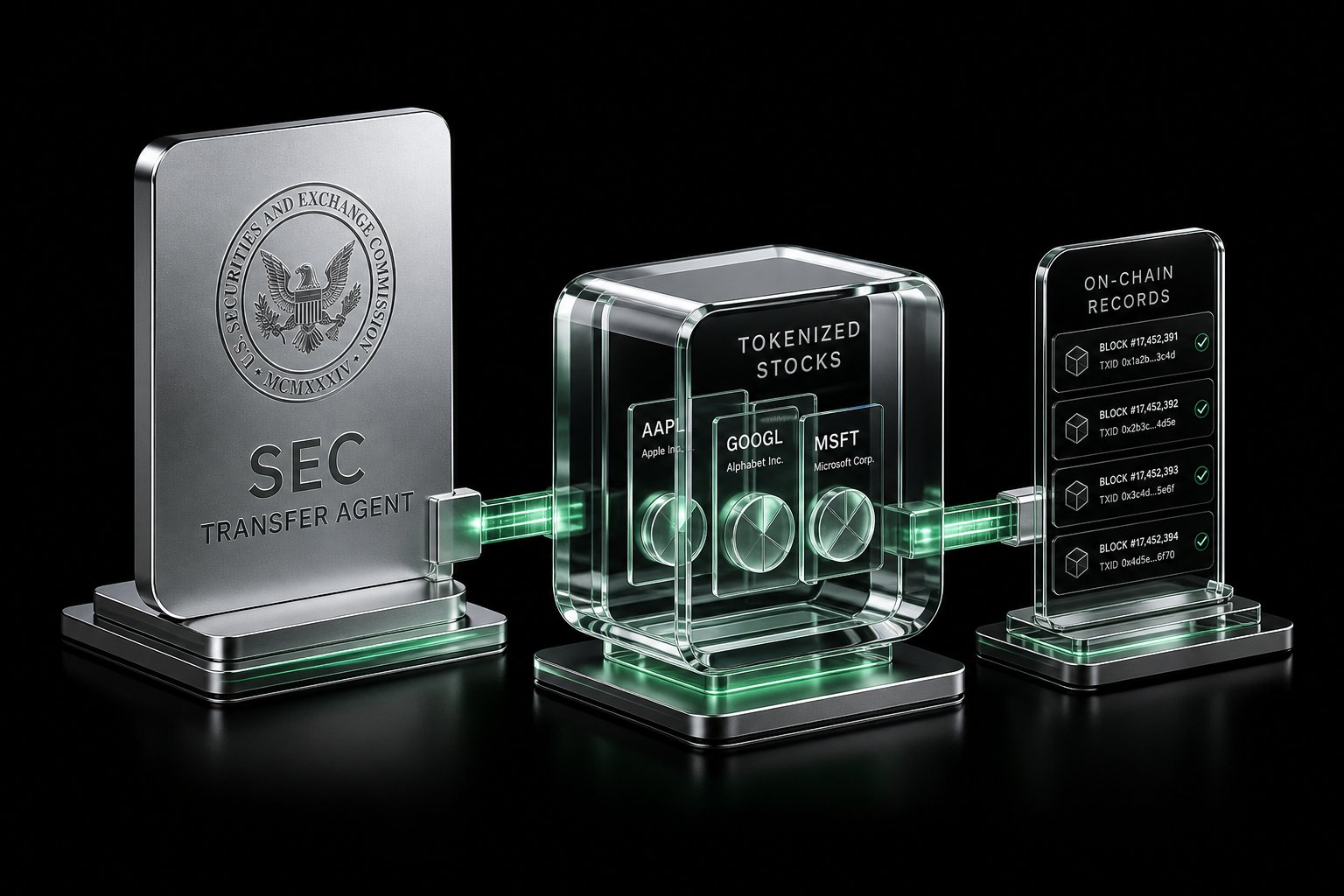
  • First Layer 1 Wins SEC Transfer-Agent License as Tokenized Stocks Near Meme Coin Heat

    First Layer 1 Wins SEC Transfer-Agent License as Tokenized Stocks Near Meme Coin Heat

    A
    Aurellix
    October 13, 2026
    1 min read

    Today’s Focus
    Injective’s institutional arm secured SEC-registered transfer-agent status, making it the first Layer 1 with regulated securities record-keeping and putting on-chain ledgers directly inside U.S. securities law. Robinhood’s chain crossed $15B in tokenized stock volume in its first 100 days, while tokenized stocks took an 11% share of DEX volume — closing the gap to meme coins to 6 points.

    Industry Flash

    10 items

  • Injective becomes the first SEC-registered transfer agent among L1 blockchains — its institutional entity won Form TA-1 status (No. 084-07096), letting an on-chain ledger serve as the official securities holder record and rewriting how tokenized-asset ownership is confirmed
  • Robinhood’s chain hits 100 days: $15B in volume, 200K holders — the self-built Layer 2 sees roughly $150M in daily volume, and users are already putting tokenized positions to work as collateral and yield assets, validating RWA composability
  • Tokenized stocks near meme coin heat: 11% of DEX volume — a Binance Research report shows Q3 on-chain transfer volume jumping from $6B to over $100B, with market cap crossing $3B in the fourth week of September, making it the fastest-growing RWA category of 2026
  • Morgan Stanley reaffirms $3-10 trillion RWA by 2030 — its digital-asset strategy head spoke at TOKEN2049 with the market now near $39.19B; the ATS tokenized-stock venue slips to Q1 2027, mainly due to a shortage of tokenizable supply
  • UniCredit closes its first tokenized Schuldschein — arranging a three-year tokenized mini-loan for Germany’s OSMAB, with documents stored and verified on-chain, bringing blockchain rails to a traditional Mittelstand financing instrument
  • Fidelity International and Sygnum bring tokenized liquidity to Singapore — the Fidelity USD Digital Liquidity Fund is issued on the Desygnate platform with a Moody’s AAA-mf rating and J.P. Morgan custody, moving institutional dollar liquidity fully on-chain
  • Tokenized credit market hits $6.2B as holders jump 12.1% in a quarter — the RWA Foundation Q3 report counts 64 assets from 13 issuers across 16 chains; Tradable and Maple hold over 60% combined, with Hastra and USDai leading growth
  • DTCC tokenization service goes commercial in October — the DTC Tokenization Service covers Russell 1000, major ETFs and U.S. Treasuries, bringing $114 trillion in custodied securities onto blockchain rails under a three-year SEC no-action letter
  • Hong Kong’s tokenized retail products reach $1.3B AUM, up 78% — the SFC disclosed 17 tokenized retail products and, under the Ensemble project, is exploring tokenized-deposit investment in tokenized funds with the HKMA
  • Stablecoin regulation shifts focus to “yield” — interest-bearing stablecoins could trip securities, deposit or derivatives classifications, and since neither the GENIUS Act nor MiCA draws the line, yield stablecoins are already being explored in DeFi with a widening compliance gap
  • 公链首获美国过户代理人资质,代币化股票逼近 Meme 币交易热度

    公链首获美国过户代理人资质,代币化股票逼近 Meme 币交易热度

    A
    Aurellix
    2026年10月13日
    1 分钟阅读

    今日焦点
    Injective 旗下机构实体获 SEC 注册过户代理人资质,成为首个具备受监管证券记录能力的 Layer 1,链上记录首次可直通美国证券法体系。Robinhood 链百天累计 $150 亿代币化股票交易量,9 月代币化股票占 DEX 交易量 11%,与 Meme 币的差距收窄至 6 个百分点。

    行业速报

    共 10 条

  • Injective 成首个获 SEC 注册过户代理人资质的 L1 公链 — 机构实体 Injective Institutional Services 拿下 Form TA-1 资质(编号 084-07096),链上账本可作证券官方持有人记录,代币化资产法律所有权确认路径被改写
  • Robinhood 链百天:$150 亿交易量、20 万持有者 — 自建 Layer 2 日均成交约 $1.5 亿,用户已把代币化持仓投入抵押与收益场景,验证 RWA 可组合性价值主张
  • 代币化股票逼近 Meme 币热度:DEX 占比 11% — Binance Research 报告显示 Q3 链上转移量从 $60 亿飙升至逾 $1,000 亿,市值 9 月第四周突破 $30 亿,成 2026 年增长最快 RWA 品类
  • 摩根士丹利重申 2030 年 RWA 达 $3-10 万亿 — 数字资产策略主管 TOKEN2049 表态,当前市场总值约 $391.9 亿;ATS 代币化股票交易推迟至 2027 Q1,可上链产品供给不足是主因
  • UniCredit 落地首笔代币化 Schuldschein — 为德国 OSMAB 安排三年期代币化迷你贷款融资,文档上链存储与验证,把区块链基建引入德国 Mittelstand 传统融资工具
  • Fidelity International 联手 Sygnum 上线新加坡代币化流动性 — Fidelity USD Digital Liquidity Fund 在 Desygnate 平台发行,Moody’s AAA-mf 评级,J.P. Morgan 提供托管,机构美元流动性全面上链
  • 代币化信贷市场 $6.2B,持有者单季 +12.1% — RWA Foundation Q3 报告:64 个资产、13 家发行商、16 条链;Tradable 与 Maple 合计占逾 60% 份额,Hastra、USDai 领跑增长
  • DTCC 代币化服务 10 月商业上线 — DTC Tokenization Service 覆盖 Russell 1000、主要 ETF 与美国国债,$114 万亿托管证券首次接入区块链轨道,SEC 3 年无异议函背书
  • 香港代币化零售产品 AUM 达 $13 亿,年增 78% — 证监会披露已推出 17 个零售代币化产品,与金管局在 Ensemble 项目下推进代币化存款投资代币化基金
  • 稳定币监管焦点转向「收益」 — 附息稳定币可能触发证券、存款或衍生品多重分类,GENIUS 法案与 MiCA 均未明确划分,DeFi 已现收益型稳定币探索,合规缺口凸显
  • Layer 1 Wins SEC Transfer Agent Status as Tokenized Stocks Near Meme Coins

    Layer 1 Wins SEC Transfer Agent Status as Tokenized Stocks Near Meme Coins

    Layer 1 Wins SEC Transfer Agent Status as Tokenized Stocks Near Meme Coins

    Tokenized Equity Market Cap
    $3.9B
    ▲ 5x growth (YTD)

    Sept DEX Volume Share
    11%
    Meme coins 17% · gap just 6pct

    Robinhood Chain 100 Days
    $15B
    200K holders · $150M daily

    RWA Market Value
    $39.2B
    Morgan Stanley sees $3-10T by 2030

    Injective Becomes the First Layer 1 with SEC-Registered Transfer Agent Status

    October 12, 2026 · Injective / OurCryptoTalk
    On October 12, Injective officially announced that its institutional arm, Injective Institutional Services LLC, has been registered with the SEC as a transfer agent (file number 084-07096; Form TA-1 filed July 16, effective August 19). The designation means a blockchain ledger can serve as the official master securityholder file, so tokenized assets are no longer mere mirrors of an off-chain database — on-chain records can act directly as legal proof of ownership.
    • A transfer agent is the official recordkeeper of securities ownership, maintaining the holder register and processing transfers; the status makes Injective the first Layer 1 with regulated securities recordkeeping capability
    • The registrant is a wholly owned subsidiary of Injective Labs — it does not make the INJ token itself a security, nor the chain as a whole a transfer agent
    • Ecosystem momentum runs in parallel: over $1B in tokenized mortgage records on-chain, Pineapple Financial plans to tokenize over $10B in coming months, and Gulf Labs (Thailand’s GULF Group) is live as an institutional validator
    • The new whitepaper is the first full rewrite since December 2018; the Meridian mainnet upgrade has shipped regulated token standards and unified MultiVM markets
    Market Impact
    On-chain records can now plug directly into the US securities-law framework, rewriting how tokenized ownership is confirmed

    Structural Trend
    From “token mirrors an off-chain database” to “on-chain as the legal record,” cutting reconciliation and intermediaries

    Growth Room
    Regulatory compliance becomes a new moat in the L1 RWA race, with top chains moving to fill the gap

    Sources: OurCryptoTalk · Coindar · October 12, 2026

    Robinhood Chain Hits 100 Days: $15B in Tokenized Stock Volume, 200K Holders

    October 12, 2026 · Blockchain Academics / Morpho
    Robinhood’s purpose-built Ethereum Layer 2 crossed its 100-day mark on October 12, having processed $15 billion in tokenized stock volume and attracted 200,000 stock-token holders, with roughly $1.1 billion in total value deposited on the network. Daily volume averages about $150 million, and some users are already putting tokenized positions to work as collateral and yield-bearing assets in DeFi, validating RWA composability as the core value proposition.
    • The Stock Token lineup already lists 190+ tokenized US equities and ETFs, and Robinhood is exploring a tokenized actively managed ETF tie-up with T. Rowe Price Digital Assets
    • Robinhood Chain and BNB Chain together accounted for 88.2% of tracked tokenized-equity DEX volume by early September, up from 2.3% in June
    • Tokenized stocks averaged 11% of DEX volume in September, narrowing the gap with meme coins (17%) to six percentage points
    • Sustained demand for 24/7 trading is pushing traditional brokerages on-chain, with on-chain settlement and DeFi composability as differentiators
    Market Impact
    A retail giant’s homegrown chain reached major RWA-network scale in 100 days, with holder counts on par with top protocols

    Structural Trend
    Tokenized positions move into collateral and yield scenarios, RWA shifting from trading vehicle to DeFi base asset

    Risk Note
    A 100-day-old chain has not been stress-tested by a liquidity crisis or exploit; smart-contract risk must stay priced in

    Sources: Blockchain Academics · October 12, 2026

    Tokenized Stocks Close In on Meme Coins: 11% DEX Share, $100B+ Q3 On-Chain Transfers

    October 11, 2026 · Binance Research / RWA.xyz
    Binance Research’s latest report, “When Stocks Become On-Chain Assets,” shows tokenized stocks averaged 11% of DEX trading volume in September, just six points behind meme coins, and briefly overtook them in late July. RWA.xyz data puts the category’s market cap past $3 billion in the fourth week of September, with Q3 on-chain transfers (including trades) soaring from $6 billion in Q1 to more than $100 billion — making tokenized stocks the fastest-growing RWA category of 2026.
    • BNB Chain was the first to cross $1B in tokenized stocks, roughly 34% market share; its 187,112 “≥$10 holdings” addresses represent 41% of the network total
    • Holder count doubled to 1.31 million in 30 days, monthly transfer volume jumped 179% to $23.13B, and monthly active addresses neared 572,000
    • Three issuers dominate: Ondo leads distributed value at $872M, Kraken’s xStocks at $558M, and Binance’s bStocks at $522M — just $36M behind
    • Under the SEC’s five-year pathway, BNB Chain / Ethereum / Solana together account for about 74% of the category’s distributed value
    Market Impact
    Tokenized stocks went from near zero to meme-coin-level trading traction, the fastest-growing RWA category of 2026

    Structural Trend
    Transfer growth far outpaces holding value — the same tokens are being flipped more often, quickly deepening liquidity

    Competition
    Ondo / xStocks / bStocks form a three-way race, with issuer distributed value converging to tens of millions

    Sources: Bonuz · RWA Insider · October 11, 2026

    Morgan Stanley Reaffirms $3-10T RWA by 2030 as Stablecoin Yield Becomes the Next Regulatory Flashpoint

    October 12, 2026 · EconoTimes / The Fintech Times
    Morgan Stanley’s head of digital asset strategy, Amy Oldenburg, reaffirmed at TOKEN2049 that the tokenized RWA market will reach $3-10 trillion by 2030. RWA.xyz values the market at roughly $39.19 billion as of October 12, meaning the upper projection implies nearly a 255x expansion. She also disclosed that Morgan Stanley’s ATS tokenized-stock launch has slipped to Q1 2027, mainly due to insufficient on-chain product supply. Meanwhile, stablecoin regulation is pivoting from reserve adequacy to “yield” — a yield-bearing stablecoin could trip multiple regulatory classifications spanning securities, deposits, or derivatives.
    • Oldenburg singled out private equity shares, structured notes, and investment funds as the most promising tokenization candidates, simplifying ownership transfers and cutting administrative costs
    • Morgan Stanley is tracking DTCC’s October tokenization service launch, has secured conditional approval for a digital asset trust, and is building proprietary wallets
    • Trace Finance’s CEO argues policymakers must separate the payment token from the financial product built around it, or yield stablecoins fall into a legal vacuum
    • Neither the GENIUS Act nor MiCA explicitly classifies yield-bearing stablecoins, even as DeFi experiments with them — a widening compliance gap
    Market Impact
    A top Wall Street bank publicly endorses tokenization’s long-term ceiling, yet product supply still constrains rollout pace

    Regulatory Focus
    Stablecoin oversight shifts from “are reserves adequate” to “does yield make it a security,” heating cross-agency classification debates

    Risk Note
    Corporate treasuries sweeping idle stablecoins into yield pools could inadvertently acquire unregistered financial products

    Sources: EconoTimes · OneSafe · October 12, 2026

  • RWA 早报 | 2026年10月13日

    RWA 早报 | 2026年10月13日

    公链首获美国过户代理人资质,代币化股票逼近 Meme 币交易热度

    代币化股票市值
    $3.9B
    ▲ 五倍增长 (年初以来)

    9月 DEX 交易占比
    11%
    Meme 币 17% · 差距仅 6pct

    Robinhood 链百天
    $15B
    20 万持有者 · 日成交 $1.5 亿

    RWA 市场总值
    $39.2B
    Morgan Stanley 看 2030 $3-10T

    Injective 成为首个获 SEC 注册过户代理人资质的 Layer 1 公链

    2026年10月12日 · Injective / OurCryptoTalk
    Injective 于 10 月 12 日正式宣布,其旗下机构实体 Injective Institutional Services LLC 已获 SEC 注册过户代理人资质(文件编号 084-07096,Form TA-1 于 7 月 16 日提交、8 月 19 日生效)。这意味着区块链账本可作为证券的官方持有人记录(master securityholder file),代币化资产不再只是链下数据库的镜像,链上记录可直接作为法律所有权凭证。
    • 过户代理人是证券所有权的官方记录方,负责持有人名册维护与转让处理;该资质使 Injective 成为首个具备受监管证券记录能力的 Layer 1
    • 注册主体为 Injective Labs 全资子公司,不构成 INJ 代币本身成为证券,也不代表整个链成为过户代理人
    • 配套生态同步扩张:链上代币化抵押品记录超 $10 亿、Pineapple Financial 计划未来数月代币化 $100 亿、Gulf Labs(泰国 GULF 集团)任机构验证节点
    • 新版白皮书为 2018 年 12 月以来首次全面重写,Meridian 主网升级已交付受监管代币标准与 MultiVM 统一市场
    市场影响
    链上记录首次可直通美国证券法体系,代币化证券所有权确认路径被改写

    结构性趋势
    从「代币镜像链下数据库」走向「链上即法定记录」,减少对账与中介环节

    增长空间
    监管合规成为公链 RWA 竞争新护城河,头部 Layer 1 相继补位

    来源:OurCryptoTalk · Coindar · 2026年10月12日

    Robinhood 链百天里程碑:$150 亿代币化股票交易量、20 万持有者

    2026年10月12日 · Blockchain Academics / Morpho
    Robinhood 自建的以太坊 Layer 2 公链于 10 月 12 日迎来上线百天,累计处理 $150 亿代币化股票交易量,吸引 20 万股票代币持有者,链上存款总值约 $11 亿。日均成交约 $1.5 亿,部分用户已将代币化持仓作为抵押品与收益资产投入 DeFi,验证了 RWA 可组合性的核心价值主张。
    • 现有 Stock Token 产品线已列出 190+ 只代币化美股与 ETF,且正探索与 T. Rowe Price 数字资产部门的主动管理 ETF 代币化合作
    • Robinhood 链与 BNB Chain 合计占跟踪代币化股票 DEX 交易量的 88.2%(9 月初数据),较 6 月的 2.3% 跃升
    • 9 月代币化股票平均占 DEX 总交易量 11%,与 Meme 币 17% 的差距收窄至 6 个百分点
    • 市场对 24/7 交易的持续需求推动传统券商加速上链,链上结算与 DeFi 可组合性构成差异化
    市场影响
    零售巨头自建链 100 天即跻身 RWA 主要网络,持有者数量与头部协议看齐

    结构性趋势
    代币化持仓进入抵押与收益场景,RWA 从交易标的走向 DeFi 底层资产

    风险提示
    百天新链未经流动性危机与安全事件压力测试,智能合约风险需持续定价

    来源:Blockchain Academics · 2026年10月12日

    代币化股票逼近 Meme 币热度:DEX 占比 11%,Q3 链上转移量破千亿

    2026年10月11日 · Binance Research / RWA.xyz
    Binance Research 最新报告《当股票成为链上资产》显示,9 月代币化股票平均占 DEX 交易量 11%,仅落后 Meme 币 6 个百分点,7 月末一度反超。RWA.xyz 数据显示该品类市值在 9 月第四周突破 $30 亿,Q3 链上转移量(含交易)从 Q1 的 $60 亿飙升至逾 $1,000 亿,成为 2026 年增长最快的 RWA 品类。
    • BNB Chain 率先突破 $10 亿代币化股票规模,约 34% 市场份额;其 18.7 万「≥$10 持仓」地址占全网 41%
    • 30 天内持有者数量翻倍至 131 万,月度转移量 +179% 至 $231 亿,月活地址近 57.2 万
    • 三大发行商主导:Ondo 分布价值 $8.72 亿居首、Kraken xStocks $5.58 亿、Binance bStocks $5.22 亿仅差 $3,600 万
    • SEC 5 年监管路径下,BNB Chain / Ethereum / Solana 合计占该品类约 74% 分布价值
    市场影响
    代币化股票从零起步逼近 Meme 币交易热度,2026 年增长最快 RWA 品类

    结构性趋势
    转移量增速远高于持有价值,同一批代币被高频换手,流动性深度快速改善

    竞争格局
    Ondo / xStocks / bStocks 三强对峙,发行商分布价值差距收敛至千万美元级

    来源:Bonuz · RWA Insider · 2026年10月11日

    摩根士丹利重申 2030 年 RWA 达 $3-10 万亿,稳定币收益成监管新焦点

    2026年10月12日 · EconoTimes / The Fintech Times
    摩根士丹利数字资产策略主管 Amy Oldenburg 在 TOKEN2049 重申,代币化 RWA 市场 2030 年将达 $3-10 万亿。RWA.xyz 显示当前市场总值约 $391.9 亿,达上限需扩张近 255 倍。她同时透露摩根士丹利 ATS 代币化股票交易推迟至 2027 Q1,主因是可上链产品供给不足。另一边,稳定币监管焦点正从储备充足性转向「收益」——附带收益的稳定币可能触发证券、存款或衍生品多重监管分类。
    • Oldenburg 指出私募股权份额、结构化票据与投资基金是代币化最具潜力的品类,可简化所有权转移与降低管理成本
    • 摩根士丹利正观察 DTCC 10 月代币化服务上线,并已获数字资产信托条件性监管批准、开发自有钱包
    • Trace Finance CEO 观点:政策制定者须将支付代币与围绕它的金融产品分离,否则收益稳定币将落入法律真空
    • GENIUS 法案与 MiCA 均未明确分类收益型稳定币,DeFi 已出现收益型稳定币探索,合规缺口凸显
    市场影响
    华尔街顶级投行公开背书代币化长期空间,但供给端不足仍在制约落地节奏

    监管焦点
    稳定币监管从「储备是否充足」转向「收益是否构成证券」,跨部门分类争议升温

    风险提示
    企业财库管理若将闲置稳定币扫入生息池,可能无意间构成未注册金融产品

    来源:EconoTimes · OneSafe · 2026年10月12日