作者: MzaZobV4JT53byg

  • XRP Ledger Crosses 13M AI Payments as Machine Payments Force a Trust Buildout

    XRP Ledger Crosses 13M AI Payments as Machine Payments Force a Trust Buildout

    XRP Ledger Crosses 13M AI Payments as Machine Payments Force a Trust Buildout

    Ripple’s US ecosystem has pushed “AI agents paying for themselves” from lab narrative to ten-million-scale reality, and this week banks, central banks and the FSB all started answering the same question: when machines spend money, who is accountable?

    XRPL AI agent payments
    13.49M+
    From 1M in July to 13M+ in October

    Registered x402 merchants
    168
    ~19K tokens settled cumulatively

    Agent payments share of ledger activity
    25%
    Per RippleX engineering head

    Stablecoin market cap
    $313B
    September all-time high

    On October 10, RippleX engineering head J. Ayo Akinyele announced on X that AI agent payments processed through the x402 protocol on the XRP Ledger had surpassed 13 million transactions across 168 registered merchants, with agent payments accounting for roughly 25% of ledger activity. Three months ago that figure was just 1 million — the jump from 1M in July to 13M+ in October marks machine payments completing the shift from experimental tooling to measurable infrastructure.

    In the same week, bank executives at Sibos 2026 in Miami, the FSB in Geneva and US regulators in Washington all put the same question on the agenda: how machines spend money, and who carries accountability. Volume has taken off; the real battle is now over the trust and regulatory scaffolding around it.

    1. Why It Matters: Volume Is Surging but Value Is Small — the Signal Is Density, Not Scale

    On the surface these numbers look contradictory: 13.49 million transactions correspond to cumulative settlements of only about 6,982 XRP and 12,010 RLUSD, with tiny average ticket sizes. Judged by value, this is not a big deal. Judged by structure, the signal is different — agent payments now account for a quarter of XRPL ledger activity, which means these transactions are not occasional tests but sustained, high-frequency, automated real traffic.

    Akinyele’s forecast is more blunt: past 10 million, 100 million may arrive sooner than expected. These pay-per-use microtransactions (API calls, data subscriptions, AI inference billing) are precisely the part traditional card rails and batch clearing cannot handle, and the home turf where stablecoins and programmable rails beat legacy finance.

    2. Industry Status: Sibos Turns “Agentic Commerce” from Vision into Bank Consensus

    Sibos 2026 (Miami, September 28 – October 1), themed “Digital Finance for AI-driven Economies,” drew more than 10,000 attendees. Citi CEO Jane Fraser made two key statements in her opening plenary: Citi moves US$6 trillion per day, and “that number is going to be exploding with the rise of AI”; she also demanded that AI safety controls and governance come before deployment, and that machine-to-machine payments require “know your agent” (KYA) authentication alongside traditional KYC.

    Fed Governor Christopher Waller delivered a speech titled “Payments in the Age of AI Agents,” also focused on who is accountable when an agent buys the wrong thing. The Swift CEO announced its DLT ledger would have 19 banks across five currencies using tokenized deposits by year-end. The post-show consensus: agentic commerce — where autonomous AI negotiates terms and triggers machine-speed microtransactions — has made T+1 batch clearing functionally obsolete, and institutions need programmable stablecoin liquidity and tokenized commercial deposits.

    This consensus mirrors what is already live in the Ripple ecosystem: x402 on the XRP Ledger is a rail designed for “software paying software,” RLUSD provides dollar-denominated predictable pricing, and XRP carries native transfers and fees. The institutional guardrails being demanded — verifiable identity, transaction permissions, spending limits, 3-5 second settlement — are moving from RippleX’s roadmap into real engineering.

    3. Deep Analysis: The Machine-Payments “Trust Gap” Is the Next Battleground

    Connecting this week’s threads, the focus of the machine-payments race has shifted from “whose rail is faster” to “when machines spend, whose trust backs it.” SEB executive Ann Magnusson put it neatly at Sibos: we used to trust institutions, structures and people, and “in the new world, we will also need to trust technology in a different shape and form.”

    That trust chain has three layers. The first is identity and authorization: when payment decisions are made by AI, the subject of traditional KYC shifts from “person” to “agent” — Citi’s KYA folds agent authentication into payment governance, and RippleX’s verifiable identity, transaction permissions and spending limits at XRP Seoul 2026 (October 3) belong to the same family of guardrails. The second is accountability: when an agent overspends, buys the wrong thing, has its balance frozen, or falls victim to AI-driven complex cyberattacks, does responsibility sit with the model, the wallet or the custodian? The Fed and the FSB are asking this simultaneously. The third is the regulatory framework: the FSB warned ahead of the G20 Finance Ministers and Central Bank Governors meeting that only 11 of 28 jurisdictions have completed stablecoin regulatory frameworks, that cross-border stablecoin run risk could spill into traditional markets, and that AI-driven attacks could weaken financial institutions’ resilience.

    Ripple’s ecosystem sits in an awkward spot: three years got transaction volume into the tens of millions, proving machine-payment demand is real; but cumulative settlement of 6,982 XRP also suggests true commercialization awaits “more real merchants settling real invoices in RLUSD.” Transaction counts are evidence of infrastructure maturity; settlement value is the evidence of commercial value.

    4. Investment View: Transaction Density First, Value Accrues Later

    Secondary-market pricing of the “agent payments” narrative is diverging. Over the past year most AI agent tokens have given back gains, and the market has learned to distinguish “narrative” from “rail”: value accrues to settlement rails, stablecoin liquidity and institutional trust layers, not to tokens wrapping a chatbot. XRP’s price has been steady (around $1.39) alongside 13.49 million transactions — the market is not excited by “counts,” but waiting for the harder evidence of “settled value.”

    The variable worth tracking sits on the stablecoin side: whether RLUSD settlement volume scales with merchant growth directly determines whether dollar-denominated machine payments work, and the $313 billion stablecoin market cap provides the liquidity base. For practitioners, the point is not raw transaction counts on any single chain, but the product of “stablecoin settlement value x merchant authenticity.”

    5. Conclusion: Opportunity

    This week’s clearest opportunity signals are threefold. First, machine-payment trust infrastructure — KYA authentication, agent identity, spending limits — will spawn a wave of infrastructure companies issuing “IDs for agents.” Second, stablecoins and programmable rails will keep eating the microtransaction and pay-per-use market, and traditional card networks that do not become agent-friendly will be bypassed. Third, G20-level regulatory coordination (the FSB’s stablecoin framework plus AI cybersecurity practices) will accelerate the framing of “stablecoin = regulated infrastructure,” and the compliance-as-entry-ticket logic holds in the machine-payments era too.

    Key signal: XRPL pushed AI agent payments from 1 million to 13 million transactions in three months, proving machine payments are real demand, not narrative. But cumulative settlement value remains small, so commercial value is not yet validated. The next stage is won not on transaction counts but on KYA identity, accountability and stablecoin settlement value — in the machine-spending era, trust is the scarce good.
    1
    Counts are evidence of infrastructure; value is evidence of businessThe 13.49M XRPL transactions against under 20K tokens settled define the current stage: the pipes are open, the goods have not yet filled them. Tracking should shift from “transaction volume” to “stablecoin settlement value and real merchant numbers.”

    2
    “Know Your Agent” (KYA) will replace KYC as the new standardCiti’s Fraser and Fed Governor Waller raised agent authentication and accountability in the same week, and RippleX simultaneously shipped verifiable identity and spending limits. Building identity and permission layers for agents is the most certain infrastructure opportunity of the machine-payments era.

    3
    Stablecoins upgrade from payment tool to the monetary base of the machine economyRLUSD provides dollar-denominated predictable pricing and XRP carries native settlement; institutions at Sibos demanded programmable stablecoin liquidity. The $313B market cap is the liquidity base for machine payments, and stablecoin reserves and settlement value will define the monetary foundation of the machine economy.

    4
    Regulation is putting “machine payments” on the global financial-stability agendaBefore the G20, the FSB warned that only 11 of 28 jurisdictions have stablecoin frameworks and that AI attacks could weaken financial resilience. Regulation is moving from observer to standard-setter, and compliance capability will decide who stays in the machine-payments era.

  • XRP Ledger破1300万笔AI支付:机器付款正倒逼信任基建

    XRP Ledger破1300万笔AI支付:机器付款正倒逼信任基建

    XRP Ledger破1300万笔AI支付:机器付款正倒逼信任基建

    美国瑞波生态把”AI代理自己付钱”从实验室叙事推到千万级规模,银行、央行与FSB在本周同一时间点开始回答同一个问题:机器花钱时,谁来担责。

    XRPL AI代理支付笔数
    1349万+
    7月破百万,10月超1300万

    x402注册商户
    168家
    累计结算约1.9万代币

    代理支付占账本活动
    25%
    RippleX工程主管口径

    稳定币市值
    $3130亿
    9月历史新高

    10月10日,RippleX 工程主管 J. Ayo Akinyele 在 X 上宣布:XRP Ledger 通过 x402 协议处理的 AI 代理支付突破 1300 万笔,覆盖 168 家注册商户,代理支付已约占账本活动的 25%。三个月前这个数字还只是 100 万——从 7 月破百万到 10 月超千万,机器付款完成了从”实验工具”到”可测量基础设施”的跃迁。

    几乎同一周,迈阿密 Sibos 2026 的银行高管们、日内瓦的 FSB 与华盛顿的美国监管机构,不约而同把”机器如何花钱、谁来担责”摆上议程。机器付款的量已经跑起来,真正的争夺战正转向信任与监管的配套。

    一、为什么关注:交易量暴涨但金额仍小,信号在于”密度”而非”规模”

    表面看这组数字存在反差:1349 万笔交易对应累计结算仅约 6982 XRP 与 12010 RLUSD,单笔金额极小。若以”金额论”,这不是什么大事;但若以”结构论”,信号完全不同——代理支付已占 XRPL 账本活动的四分之一,说明这类交易不再是偶发测试,而是持续、高频、自动化的真实流量。

    Akinyele 的预测更直白:1000 万之后,1 亿可能比他预想来得更快。这类按次付费的微交易(API 调用、数据订阅、AI 推理计费)恰恰是传统银行卡与批量清算处理不了的部分,也是稳定币与可编程轨道相对传统金融的”主场”。

    二、行业现状:Sibos 把”agentic commerce”从愿景变成银行共识

    9月28日-10月1日的 Sibos 2026(迈阿密)以”Digital Finance for AI-driven Economies”为主题,超 1 万人参会。花旗 CEO Jane Fraser 在开场演讲中给出两个关键表态:花旗每天处理 6 万亿美元,”这个数字会随着 AI 的崛起爆炸式增长”;同时她明确要求,AI 安全控制与治理必须先于部署,M2M 支付需要”know your agent”(KYA)认证,与传统的 KYC 并列。

    美联储理事 Christopher Waller 发表了题为《Payments in the Age of AI Agents》的演讲,讨论点同样是”当代理买了错东西,谁来负责”。Swift CEO 则宣布其 DLT 账本到年底将有 19 家银行、5 种货币使用代币化存款。会后共识是:agentic commerce(自主 AI 协商条款并触发机器速度微交易)已让 T+1 批量清算在功能上过时,机构需要可编程稳定币流动性与代币化商业存款。

    这一共识与瑞波生态的落地互为印证:XRP Ledger 上的 x402 正是为”软件替软件付费”设计的轨道,RLUSD 提供美元计价的可预测定价,XRP 承担原生转账与手续费。机构端要求的安全护栏(可验证身份、交易权限、支出限额、3-5 秒结算)正在从 RippleX 的路线图走向真实工程。

    三、深度分析:机器付款的”信任缺口”是下一个主战场

    把本周线索串起来,机器付款的竞争焦点已从”谁家的轨道快”转移到”机器花钱时,信任由谁背书”。Sibos 上 SEB 高管 Ann Magnusson 的表述很精炼:过去我们信任机构、结构与个人,”新世界里,我们还要以不同形态信任技术本身”。

    这条信任链有三个层次。第一层是身份与授权:当付款决策由 AI 做出,传统 KYC 的对象从”人”变成”代理”,花旗提出的 KYA 正是把代理认证纳入支付治理;RippleX 在 XRP Seoul 2026(10月3日)提出的可验证身份、交易权限与支出限额,属于同一类护栏。第二层是责任归属:代理越权买了错东西、余额被冻结、或遭遇 AI 驱动的复杂网络攻击时,责任在模型、在钱包、还是在托管方?美联储与 FSB 同时追问这个问题。第三层是监管框架:FSB 在 G20 财长与央行行长会议前发出警告,28 个辖区中仅 11 个建成了稳定币监管框架,跨境稳定币的风险蔓延可能冲击传统金融市场,AI 驱动的攻击可能削弱金融机构韧性。

    瑞波生态此刻的位置很微妙:它用三年把交易量做到千万级,证明了机器付款的需求真实存在;但 6982 XRP 的累计结算也提示,真正的商业化要等”更多真实商户带着真实发票、用 RLUSD 结算”才成立。交易笔数是基础设施成熟的证据,结算金额才是商业价值的证据。

    四、投资视角:交易密度先行,价值沉淀在后

    二级市场对”代理支付”叙事的定价正在分化。过去一年 AI agent token 大多回吐涨幅,市场学会了区分”叙事”与”轨道”:能沉淀价值的是结算轨道、稳定币流动性与机构信任层,而不是包一层聊天机器人的代币。XRP 近期价格平稳(约 $1.39),与 1349 万笔交易并存——市场没有为”笔数”激动,而是在等”结算金额”这一更硬的证据。

    更值得跟踪的变量在稳定币侧:RLUSD 的结算规模能否随商户扩张放量,直接决定”美元计价机器支付”是否跑通;而 3130 亿美元的稳定币总市值,为机器付款提供了流动性底盘。对从业者而言,观察重点不是单条链的笔数,而是”稳定币结算额 × 商户真实性”这两个乘积指标。

    五、结论:机会点

    本周最清晰的机会信号有三个:一是机器付款的信任基建(KYA 认证、代理身份、支出限额)将催生一批”为代理发身份证”的基础设施公司;二是稳定币与可编程轨道会进一步吞食微交易与按次计费市场,传统卡组织若不做代理友好改造将被绕开;三是监管在 G20 层面的协调(FSB 稳定币框架+AI 网络安全实践)会加速”稳定币=受监管基础设施”的定调,合规即入场券的逻辑在机器付款时代同样成立。

    关键信号:XRPL 用三个月把 AI 代理支付从 100 万笔推到 1300 万笔,证明机器付款是真实需求而非叙事;但累计结算金额仍小,说明商业价值尚未验证。下一阶段的胜负手不在交易笔数,而在 KYA 身份、责任归属与稳定币结算额——机器花钱的时代,信任才是稀缺品。
    1
    笔数是基础设施的证据,金额才是商业的证据XRPL 1349 万笔交易对应不足 2 万代币结算,两者背离恰恰定义了当前阶段:管道已通、货流未满。跟踪重点应从”交易量”切换到”稳定币结算额与真实商户数”。

    2
    “知道你的代理”(KYA)将取代 KYC 成为新标配花旗 Fraser 与美联储 Waller 在同一周提出代理认证与责任归属问题,RippleX 同步推出可验证身份与支出限额。为代理建身份与权限层,是机器支付时代最确定的基础设施机会。

    3
    稳定币从”支付工具”升级为”机器经济的货币底座”RLUSD 提供美元计价的可预测定价、XRP 承担原生结算,机构在 Sibos 上要求可编程稳定币流动性。3130 亿美元市值是机器付款的流动性底盘,稳定币储备与结算额将决定机器经济的货币基础。

    4
    监管正把”机器付款”纳入全球金融稳定议程FSB 在 G20 前警告:28 个辖区仅 11 个建成稳定币框架,AI 攻击可能削弱金融韧性。监管从”旁观”转向”定标”,合规能力将决定谁能在机器支付时代留下。

  • The Next Battlefield Isn’t Issuance — It’s Data and Tax

    The Next Battlefield Isn’t Issuance — It’s Data and Tax

    The Next Battlefield Isn’t Issuance — It’s Data and Tax

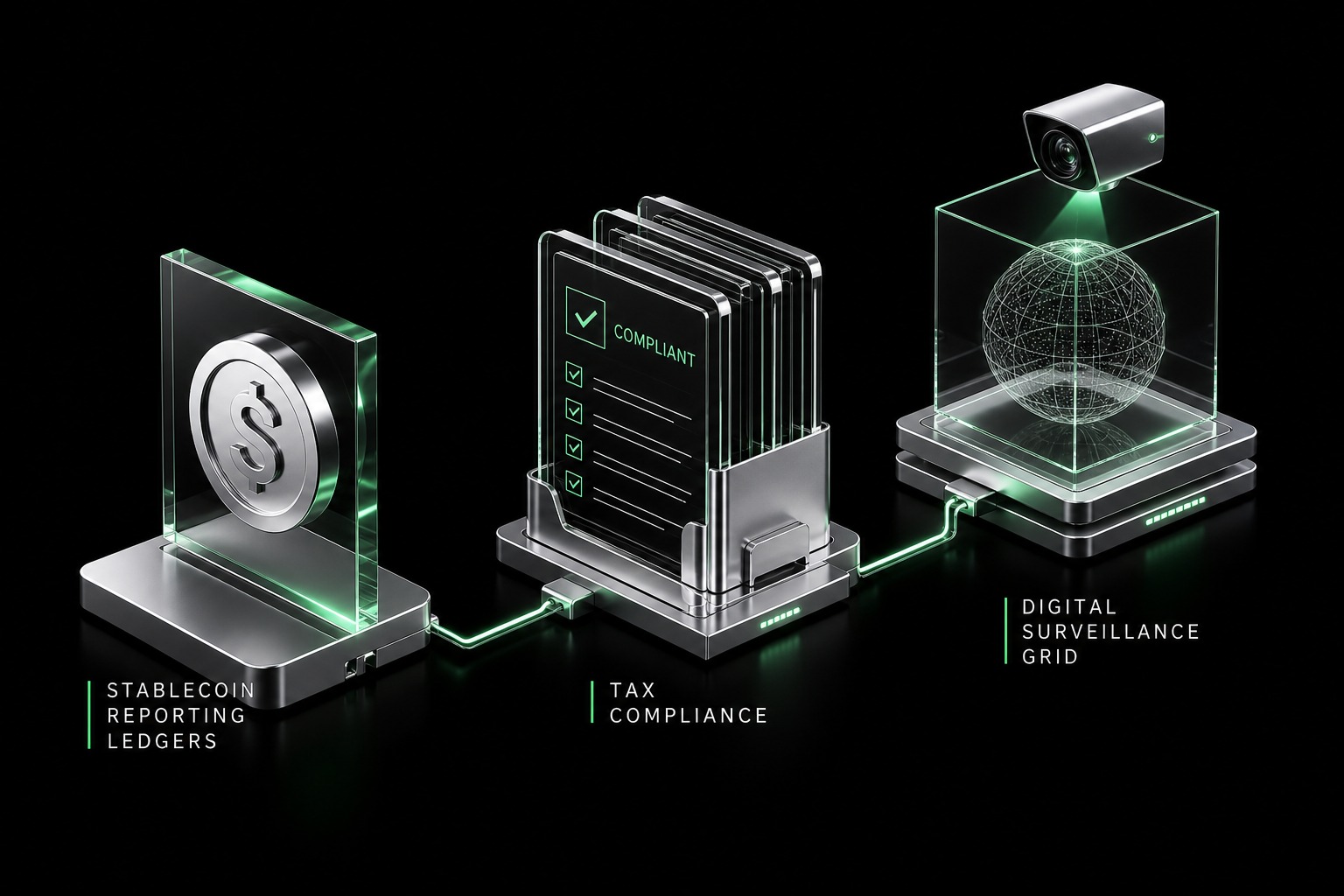
    The NCUA is stuffing stablecoins into the quarterly reports of 4,224 credit unions, while France’s National Assembly wants to tax stablecoin conversions. In the same week, both economies pushed stablecoin regulation from “who may issue” to “who can see, who must pay tax.”

    Key Takeaways

    On October 9, the NCUA, the last major U.S. federal financial regulator to formalize stablecoin oversight, published its Schedule J proposal in the Federal Register, building a stablecoin-specific reporting framework for 4,224 federally insured credit unions — 26 account codes across four functional buckets, adding roughly 47 compliance hours per quarterly report. Two days earlier, France’s National Assembly Finance Committee adopted two amendments: treating crypto-to-stablecoin conversions as taxable sales from 2027, and extending the exit tax to households holding more than €800,000 in crypto assets who relocate abroad. One granularizes regulatory data; the other reshapes the tax perimeter. Both point to the same conclusion: the stablecoin regulatory narrative has moved past issuance access into data infrastructure and fiscal collection.

    NCUA Schedule J: The Last Puzzle Piece, in 26 Account Codes

    Over the past several months, the OCC, the FDIC and the Federal Reserve have each rolled out reporting frameworks for stablecoin activity inside the banking system, while the NCUA, which supervises 4,224 federally insured credit unions, held back. On October 9, that gap was filled: the NCUA published a Federal Register notice proposing a new Schedule J to the Form 5300 Call Report dedicated to payment stablecoin activity. The last data puzzle piece of U.S. depository-institution supervision is now in place. From the largest banks to the smallest community credit unions, regulator visibility into stablecoins is about to be equalized.

    At the heart of Schedule J are 26 account codes split into four functional buckets: eight for custody of reserve assets held for third-party Permitted Payment Stablecoin Issuers (PPSIs); nine tracking custody and control of cryptographic keys, a nod to the technical realities of digital asset management; five capturing direct exposure to PPSIs; and four recording payment stablecoins held directly on a credit union’s balance sheet. The structure reveals the regulator’s intent: it is not satisfied with a binary “yes/no” classification of participation, but wants to see exactly what role each institution plays in the stablecoin ecosystem — whether it holds reserves for an issuer, holds keys, carries issuer credit exposure, or puts stablecoins on its own balance sheet.

    Functional Category Account Codes Activity Covered
    PPSI reserve custody 8 Reserve assets held for permitted payment stablecoin issuers
    Crypto key custody & control 9 Custody and control of credentials granting access to digital assets
    Direct exposure to PPSIs 5 Financial exposure to issuers
    Balance-sheet holdings 4 Payment stablecoins held directly on the institution’s balance sheet

    The compliance cost is quantified too. The NCUA estimates that completing Schedule J will add roughly 47 hours of compliance work per quarterly report, for a total of about 794,112 hours per year across the industry. For a mid-sized credit union, that means the compliance team must first answer a practical question: can existing systems map internal data to these 26 specific codes, or is it simpler to rewrite the reporting software entirely? For small institutions relying on outsourced data processing, this is close to a mandatory new-service procurement.

    “The NCUA is ensuring that credit unions are not operating in a regulatory vacuum compared to their banking counterparts.”
    — Forkast analysis of the NCUA Schedule J proposal, October 2026

    The reporting framework does not exist in isolation. It interlocks with the earlier application framework in NCUA-2026-1024, which sets out how credit union subsidiaries can apply to become PPSIs, with a 120-day review timeline. Regulators are building a closed loop: first apply to be an issuer, then, once approved, report activity through the granular lens of Schedule J. Critics will ask why the agency is building the collection pipeline before the data has even arrived. The answer is the countdown to the GENIUS Act’s full effect on January 18, 2027. The Act mandates 1:1 reserve backing, confines payment stablecoin issuance to authorized PPSIs, and designates the NCUA as the primary regulator for credit union stablecoin activity. Comments close December 8, and the new requirements target the March 31, 2027 Call Report — leaving the industry less than five months to digest 26 new fields.

    France: Stablecoin Conversions Redefined as “Sales,” Exit Tax Extended to Crypto

    On the other side of the Atlantic, the French National Assembly’s Finance Committee passed two crypto tax amendments on October 7-8, aimed squarely at stablecoins’ “tax grey zone.” The first, Amendment I-CF1826, tabled by Nicolas Sansu of the left-wing GDR group with 16 co-signers, would treat conversions of crypto assets into electronic money tokens (EMTs) as defined by MiCA — covering most fiat-pegged stablecoins — as taxable sales from January 1, 2027, subject to France’s existing 31.4% flat tax.

    The logic targets a long-standing loophole: under current French rules, swapping Bitcoin for a stablecoin triggers no tax, because the state only collects when gains are sold for regular money or spent. But stablecoins can now be used for payments at crypto service providers and to purchase other tokens — they have effectively become “ordinary investment instruments.” The sponsors put the annual fiscal estimate at roughly €1.5 billion. Gain calculation follows existing rules: disposal value minus acquisition cost, with documented transaction expenses deductible. For assets acquired before 2027, holders may use documented individual purchase prices or allocate total portfolio acquisition cost as of December 31, 2026, according to each asset’s value on that date; the allocation method is irrevocable once the first return is filed. Crypto-to-crypto swaps with no cash component would not trigger the tax.

    “Currently, swapping Bitcoin for a stablecoin triggers no tax in France because the state only collects when gains are sold for regular money or spent.”
    — Finobird, French Committee Backs Stablecoin Swap Tax, October 2026

    The second amendment, I-CF1822, extends France’s exit-tax framework to crypto assets. It operates through Article 167 bis of the French tax code, which previously covered only traditional securities such as stocks. When a tax household’s combined crypto holdings — including assets held through custodians — exceed €800,000, and the taxpayer has been a French tax resident for at least six of the previous ten years, unrealized gains become taxable upon relocation abroad, applying to moves from January 1, 2027. Taxpayers must declare all crypto holdings as of the departure date, including assets held abroad and in self-custody wallets; payment deferral mechanisms are borrowed wholesale from the stock regime. The €800,000 threshold matches the existing exit tax for securities exactly.

    A companion third amendment from MP Daniel Labaronne would let investors carry realized crypto losses forward for ten years, mirroring how stock losses are treated. Taken together, the three amendments effectively “securitize” France’s crypto tax regime: trading, relocation and loss offsets all converge on the rules already applied to traditional financial assets. For high-net-worth crypto holders, this removes the previous relative advantage of crypto escaping the exit tax; for active traders, every move into a stablecoin “safe harbor” begins to generate a tax event.

    One Thread: Stablecoin Regulation Enters the “Granularity” and “Securitization” Era

    Viewed together, the pattern is clear. For the past two years, stablecoin regulation revolved around “issuance access” — who can issue, under what reserve standards, and how redemption works. The GENIUS Act, MiCA’s stablecoin provisions and national licensing regimes all answered that question. In the three days from October 7 to 9, regulators on both sides of the Atlantic turned the page at once. The NCUA cares about “data visibility”: even a credit union that merely custodies an issuer’s reserves or holds a key will be required to enter the regulator’s reports. France cares about “tax visibility”: even a simple stablecoin conversion will be taxed as a sale.

    The industry implications run deep. First, stablecoins are no longer “crypto-native payment tools” but regulatory objects embedded in financial infrastructure — from depository-institution data collection to individual investors’ tax bases, the regulatory tentacle reaches every layer of intermediation and every user. Second, the compliance burden is spreading to small and mid-sized institutions. The credit union system is the capillary network of American finance; the vast majority of its 4,224 institutions have never touched stablecoins, yet they are now asked to pre-build reporting capability for 26 fields of a business they may not even run. France’s provisions push tax obligations directly down to the individual wallet, including self-custodied assets.

    Deeper still, this is institutional diffusion among regulators. The French sponsors explicitly cite the fact that the UK and Italy have already legislated on stablecoin conversions; the NCUA’s Schedule J aligns with the OCC, FDIC and Federal Reserve frameworks, while Treasury’s September 30 SCRC interim rule (the $10 billion threshold bifurcating state and federal pathways) provides the coordinates for the whole system. When one jurisdiction defines a stablecoin conversion as a taxable event, arbitrage room in neighboring tax zones narrows; when one federal regulator builds 26-field reporting granularity, others find it hard to stay “invisible.” Stablecoin regulation is moving from “who may issue” to “who can see, who must pay tax.” For practitioners, compliance is no longer a licensing question — it is a data architecture and tax engineering problem.

    What This Means for Practitioners

    1
    Regulatory granularity is descending from “institution” to “field”
    The NCUA’s 26 account codes are not a one-off requirement but a template for U.S. depository-institution stablecoin oversight going data-first. Any institution touching stablecoin custody, key management or issuer exposure should map its internal data architecture along the four dimensions — PPSI reserve custody, key control, direct exposure, balance-sheet holdings — ahead of time. The window to influence field definitions closes when comments close on December 8.

    2
    The stablecoin conversion tax rewrites the cost structure of “risk-off” trades
    France proposes taxing crypto-to-stablecoin conversions at the 31.4% flat rate from 2027. For platforms operating in Europe or serving French clients, “rotating into stablecoins to avoid volatility” will start generating tax events. The UK and Italy have already legislated, and France’s amendment is just one node in a converging European tax regime. Trading platforms and tax software need full cost-basis and tax-track tracking for stablecoin conversions.

    3
    Self-custody is no longer invisible; high-net-worth holders must reweigh relocation plans
    France’s exit tax covers self-custody wallets and assets held abroad, with an €800,000 threshold aligned to securities. For high-net-worth crypto holders considering a tax-residence move, unrealized gains could be taxed at departure — a trend aligning crypto with traditional securities exit taxes that is spreading across Europe. Cross-border structuring must now fold crypto into tax-residency planning rather than treat it as a regulatory blind spot.

    4
    Institutional diffusion is compressing cross-border arbitrage room
    France’s stablecoin conversion tax cites UK and Italian precedent; the NCUA’s reporting framework aligns with the OCC/FDIC/Fed; Treasury’s SCRC rule sets the coordinates for the federal-state tracks. As regulatory models converge across borders, firms can no longer dodge stablecoin data and tax obligations by “switching jurisdictions.” Compliance capability should be designed as reusable cross-jurisdictional data and tax infrastructure, not a one-off licensing cost.

  • 监管的下一个战场不是发行,而是数据与税收

    监管的下一个战场不是发行,而是数据与税收

    监管的下一个战场不是发行,而是数据与税收

    美国 NCUA 把稳定币塞进 4,224 家信用合作社的季度报表,法国国民议会则想对稳定币兑换课税。两大经济体在同一天把稳定币监管从”谁来发行”推向”谁能看见、谁该交税”。

    文章解读

    10 月 9 日,美国最后一家主要联邦金融监管机构 NCUA 在《联邦公报》发布 Schedule J 提案,为 4,224 家联邦保险信用合作社建立稳定币专项报告框架,涵盖 26 个账户代码、四类功能、每季度约 47 小时合规工时。两天前,法国国民议会财政委员会通过两项修正案:从 2027 年起把加密转稳定币视为应税出售,并把退出税扩展到持有超 80 万欧元加密资产的离境家庭。一个是在做监管数据的”颗粒化”,一个是在做税法的”边界重塑”。两者指向同一个结论:稳定币的监管叙事已经越过发行准入,进入数据基础设施和财政征收的新阶段。

    NCUA Schedule J:最后一块拼图的 26 个账户代码

    过去数月,OCC、FDIC 与美联储先后为银行体系内的稳定币业务铺开报告框架,唯独监管 4,224 家联邦保险信用合作社的 NCUA 按兵不动。10 月 9 日,这个空缺被填上了:NCUA 在《联邦公报》发布公告,提议在 Form 5300 呼叫报告中新增 Schedule J,专门收集支付型稳定币活动数据。美国存款机构监管的最后一块数据拼图就此到位。从大型银行到最小的社区信用合作社,监管者对稳定币的可见度即将拉平。

    Schedule J 的核心是 26 个账户代码,被拆成四个功能桶:八项用于第三方获准支付稳定币发行人(PPSI)储备资产的托管;九项追踪加密密钥的托管与控制,回应数字资产管理的技术现实;五项捕捉对 PPSI 的直接敞口;四项记录信用合作社资产负债表上直接持有的支付稳定币。这个结构透露出监管的思路:它不满足于”是否参与”的二元分类,而要看清每一家机构在稳定币生态里到底扮演什么角色:是替发行人保管储备,还是持有密钥,还是自身承担发行方风险敞口,抑或直接把稳定币放上自己的资产负债表。

    功能类别 账户代码数 覆盖的活动
    PPSI 储备资产托管 8 为获准支付稳定币发行人保管的储备资产
    加密密钥托管与控制 9 访问数字资产的加密凭证的托管与支配
    对 PPSI 的直接敞口 5 对发行人的财务风险敞口
    资产负债表持有 4 机构自身直接持有的支付型稳定币

    合规成本同样被量化了。NCUA 估计,完成 Schedule J 将使每份季度报告的合规工时增加约 47 小时,全年合计约 79.4 万小时。对一家中型信用合作社而言,这意味着合规团队要先回答一个现实问题:现有系统能否把内部数据映射到这 26 个特定代码,还是干脆重写报告软件。对依赖外包数据处理的小机构,这几乎等于一条绕不开的强制令,往往意味着采购新服务。

    “The NCUA is ensuring that credit unions are not operating in a regulatory vacuum compared to their banking counterparts.”
    — Forkast analysis of NCUA Schedule J proposal, October 2026

    这份报告框架并非孤立存在。它与此前 NCUA-2026-1024 的申请框架互相咬合,后者规定了信用合作社子公司如何申请成为 PPSI(审查周期 120 天)。监管者正在构建一个闭环:先申请成为发行人,获批后通过 Schedule J 的细粒度镜头汇报活动。批评者会问,为何监管者要在数据真正到来之前就建好采集管线?答案是 GENIUS 法案 2027 年 1 月 18 日全面生效的倒计时。法案强制 1:1 储备背书、把支付稳定币发行限定于获准 PPSI,而 NCUA 被指定为信用合作社稳定币活动的主要监管者。征求意见截止 12 月 8 日,新规目标在 2027 年 3 月 31 日的呼叫报告中生效,留给行业消化 26 个新字段的时间不足五个月。

    法国:稳定币兑换被重新定义为”出售”,离境加密资产被课退出税

    大西洋另一侧,法国国民议会财政委员会在 10 月 7 日至 8 日通过两项针对加密资产的税收修正案,矛头直指稳定币的”税务灰色地带”。第一项修正案 I-CF1826 由左翼 GDR 党团议员 Nicolas Sansu 及 16 名联署人提出:从 2027 年 1 月 1 日起,把加密资产兑换为 MiCA 定义的电子货币代币(EMT,涵盖绝大多数与法币挂钩的稳定币)视为应税出售,按法国现行 31.4% 的单一税率征税。

    这背后的逻辑直击一个长期存在的漏洞:目前法国把比特币换成稳定币不触发纳税,因为只有把收益换成普通货币或消费时才征税。而稳定币现在已能在加密服务商处支付、或用于购买其他代币,实质上就是”普通投资工具”。提案人给出的年化财政测算约 15 亿欧元。收益计算沿用既有规则:处置价值减去取得成本,交易费用可抵扣;对 2027 年前购入的资产,可按原始购买价或按 2026 年 12 月 31 日市值的分配法计算,一旦选定首次申报后不可更改。加密转加密、不含现金成分的兑换则不触发纳税。

    “Currently, swapping Bitcoin for a stablecoin triggers no tax in France because the state only collects when gains are sold for regular money or spent.”
    — Finobird, French Committee Backs Stablecoin Swap Tax, October 2026

    第二项修正案 I-CF1822 把法国的退出税框架延伸到加密资产。它通过法国税法第 167 条之二运作,原本只覆盖股票等传统证券。当纳税家庭合计持有加密资产(含经托管机构持有的部分)超过 80 万欧元,且在过去十年中至少六年为法国税务居民时,离境即对未实现收益课税,适用于 2027 年 1 月 1 日起的迁居。纳税人须在离境日申报全部加密持仓,包括存放境外与自托管钱包中的资产;支付递延机制则完全借用股票退出税的规则。80 万欧元的门槛与现行证券退出税完全一致。

    配套的第三项修正案来自议员 Daniel Labaronne,允许投资者把已实现加密亏损向前结转 10 年,与股票亏损处理方式对齐。三项修正案叠加,法国实质上正在把加密资产税制整体”证券化”:交易、离境、亏损结转全部向传统金融资产的既有规则靠拢。对高净值加密持有者,这消除了此前”加密不受退出税约束”的相对优势;对活跃交易者,每一次转入稳定币”避险”都开始产生税务事件。

    同一条主线:稳定币监管进入”颗粒化”与”证券化”时代

    把两件事放在一起看,脉络清晰起来。过去两年的稳定币监管围绕”发行准入”展开,回答谁能发、按什么标准储备、如何赎回。GENIUS 法案、MiCA 的稳定币条款、各国牌照制度都在回答这个问题。而 10 月 7 日至 9 日这三天,美欧监管同时翻过了这一页。NCUA 关注的是”数据可见性”:哪怕一家信用合作社只是托管了发行人的储备或持有一把密钥,也会被要求进入监管者的报表。法国关注的是”税务可见性”:哪怕一次单纯的稳定币兑换,都要被当作出售计税。

    这种转变的行业含义是深远的。其一,稳定币不再是”加密圈的支付工具”,而是被纳入金融基础设施的”监管对象”。从存款机构的数据采集到个人投资者的税基,监管的触角伸向每一层中介与每一个使用者。其二,合规负担开始向中小机构扩散。信用合作社体系是美国金融的毛细血管,4,224 家机构中绝大多数从未接触过稳定币,如今却要为一个尚未开展的业务预建 26 个字段的报告能力;法国的条款则把税收义务直接压到个人钱包层面,包括自托管资产。

    更深一层,这是监管者之间的”制度扩散”。法国提案人明确援引英国与意大利已就稳定币兑换立法的事实;NCUA 的 Schedule J 则是对 OCC、FDIC、美联储既有框架的对齐,Treasury 9 月 30 日的 SCRC 临时规则(100 亿美元门槛分流州级与联邦通道)为整个体系提供了坐标。当一个司法管辖区把稳定币兑换定义为应税事件,相邻税区的套利空间就会收窄;当一家联邦监管机构建立 26 个字段的报告颗粒度,其他机构就很难维持”看不见”的状态。稳定币监管正在从”谁可以发行”走向”谁能看见、谁该交税”。对从业者来说,这意味着合规不再只是牌照问题,而是数据架构与税务工程问题。

    对从业者的一些启示

    1
    监管颗粒度正从”机构”下沉到”字段”
    NCUA 的 26 个账户代码不是一次性要求,而是美国存款机构稳定币监管走向”数据先行”的模板。任何涉及稳定币托管、密钥管理或发行方敞口的机构,都应按 PPSI 储备托管、密钥控制、直接敞口、资产负债表持有四个维度提前梳理内部数据架构。12 月 8 日征求意见截止前,是影响字段定义的最后窗口。

    2
    稳定币兑换税将改写”避险交易”的成本结构
    法国拟从 2027 年起对加密转稳定币按 31.4% 单一税率课税。对在欧洲设有业务或服务法国客户的平台,这意味着”转入稳定币规避波动”将开始产生税务事件。英国、意大利已先行立法,法国修正案只是欧洲税制趋同的一环。交易平台与税务软件需要为稳定币兑换建立完整的成本基准与税基追踪能力。

    3
    自托管不再”隐形”,高净值持有者需重估离境安排
    法国退出税将覆盖自托管钱包与境外资产,门槛 80 万欧元与证券一致。对有意迁移税务居民的高净值加密持有者,未实现收益会在离境时被征税,这一与传统证券退出税对齐的趋势正在欧洲蔓延。跨境架构设计需要把加密资产纳入税务居民规划,而非视为监管盲区。

    4
    制度扩散正在压缩跨区套利空间
    法国的稳定币兑换税援引英意先例,NCUA 的报告框架对齐 OCC/FDIC/Fed,Treasury 的 SCRC 规则为联邦-州两套轨道定坐标。监管模式的跨境趋同意味着,企业不能再用”换个司法管辖区”来回避稳定币的数据与税务义务。合规能力应被设计为可跨辖区复用的数据与税务基础设施,而非一次性牌照成本。

  • Tokenized Funds Enter Rulemaking Era as Regulatory Talks and Retail Rollouts Accelerate

    Tokenized Funds Enter Rulemaking Era as Regulatory Talks and Retail Rollouts Accelerate

    A
    Aurellix
    October 12, 2026
    1 min read

    Today’s Focus
    Tokenized funds are moving from narrative to rule design: Franklin Templeton met the SEC on pricing and fee details, while Hong Kong’s 17 tokenized retail products reached $1.3B in AUM, up 78% year-on-year. On the market side, tokenized Treasuries crossed $10.8B with Circle USYC topping the ranking at $2.41B — regulatory dialogue and retail rollout are accelerating in tandem.

    Industry Flash

    10 items

  • Franklin Templeton meets SEC on tokenized fund trading rules — the October 9 crypto task force session focused on whether pricing and fees trip the 1940 Act, and whether stablecoins can serve as the cash leg remains open
  • Hong Kong lands 17 tokenized retail products — the SFC disclosed AUM of $1.3B, up 78% in 12 months, with the Ensemble project exploring tokenized-deposit investment in tokenized funds
  • Tokenized Treasuries cross $10.8B — Circle USYC topped the single-fund ranking at $2.41B, ahead of Ondo USDY and BlackRock BUIDL, with a sector 7-day APY near 3.62%
  • Hyperliquid RWA perpetuals outpace crypto-native trading for the first time — a 52% weekly volume share with $25.1B in Q3, making leveraged on-chain RWA the largest use case
  • ESMA orders non-compliant stablecoins off the shelves — MiCA-authorized providers must stop offering unauthorized tokens, with legacy exposure fixed within three months as the EU moves to direct ESMA oversight of large CASPs
  • XDC and Brazil’s Liqi expand tokenized credit to $2B — the initial $500M target was hit nine months early, covering receivables, corporate credit and agricultural credit, with XDC up 11.15% in 24 hours
  • SBI Project Trinity completes security token settlement tests — five institutions including SMBC and Daiwa Securities tested simultaneous settlement of security tokens with a trust-based stablecoin, targeting T+2 DvP
  • OCBC and Ant International launch tokenized deposits — live on October 7, moving SGD and USD deposits 24/7 between Singapore and Malaysia entities, bypassing banking cut-off windows
  • Securitize lists tokenized exposure to 12 U.S. stocks — debuting on Solana with USDC settlement and extended-hours trading via its broker-dealer, giving holders economic and voting rights
  • Standard Chartered to offer digital asset custody in Singapore — covering cryptoassets, stablecoins and tokenized assets alongside existing financing and securities services, lowering the institutional entry barrier
  • 代币化基金进入规则制定期:监管对话与零售落地同步提速

    代币化基金进入规则制定期:监管对话与零售落地同步提速

    A
    Aurellix
    2026年10月12日
    1 分钟阅读

    今日焦点
    代币化基金从叙事进入规则设计阶段:富兰克林邓普顿与 SEC 会谈定价与费用细则,香港 17 个零售代币化产品 AUM 达 13 亿美元、年增 78%。市场侧代币化美债突破 108 亿美元,Circle USYC 以 24.1 亿美元登顶,监管对话与零售落地同步提速。

    行业速报

    共 10 条

  • 富兰克林邓普顿与 SEC 会谈代币化基金交易细则 — 10 月 9 日加密任务组会议聚焦定价与费用是否触碰 1940 年法案,稳定币能否充当现金腿仍待解答。
  • 香港 17 个零售代币化产品落地 — 证监会披露 AUM 达 13 亿美元、12 个月增长 78%,Ensemble 项目探索代币化存款投资代币化基金。
  • 代币化美债突破 108 亿美元 — Circle USYC 以 24.1 亿美元登顶单基金,超越 Ondo USDY 与贝莱德 BUIDL,7 天 APY 约 3.62%。
  • Hyperliquid RWA 永续周交易量首超加密原生 — 占比 52%,Q3 累计 251 亿美元,链上 RWA 杠杆交易成为最大用例。
  • ESMA 要求下架不合规稳定币 — MiCA 授权服务商须停供未授权代币服务,存量敞口三个月内整改,欧盟拟由 ESMA 直管大型加密服务商。
  • XDC 与巴西 Liqi 扩至 20 亿美元代币化信贷 — 初始 5 亿美元目标提前 9 个月达成,覆盖应收账款、企业信贷与农业信贷,XDC 24 小时涨 11.15%。
  • SBI Project Trinity 完成证券代币结算测试 — 三井住友、大和证券等 5 家机构实测代币化证券与信托稳定币同步交收,瞄准 T+2 DvP。
  • OCBC 与蚂蚁国际推代币化存款 — 10 月 7 日上线,支持新元与美元存款在新马实体间 24/7 流转,绕过银行结算窗口限制。
  • Securitize 上线 12 只美股代币化敞口 — 首批落地 Solana,USDC 结算,盘后经纪商渠道交易,持有者可享经济与投票权。
  • 渣打拟在新加坡提供数字资产托管 — 覆盖加密资产、稳定币与代币化资产,与现有融资和证券服务协同,降低机构进入门槛。
  • Tokenized Funds Enter Rulemaking as Regulators and Retail Move in Tandem

    Tokenized Funds Enter Rulemaking as Regulators and Retail Move in Tandem

    Tokenized Funds Enter Rulemaking as Regulators and Retail Move in Tandem

    Tokenized Fund Market Cap
    $35.1B
    11.7x growth in three years

    Tokenized Treasury Value
    $14.95B
    109 assets · 86K holders

    HK Tokenized Retail AUM
    $1.3B
    +78% in 12 months

    XDC Brazil Commitment
    $2B
    2028 target · early milestone beat

    Franklin Templeton Meets SEC on Tokenized Fund Trading Details

    October 9, 2026 · SEC Meeting Memo / CoinsKid
    Franklin Templeton met SEC Crypto Task Force staff on October 9 to discuss how tokenized money-market fund and ETF shares could trade against tokenized NMS stocks on permissioned venues. The agenda covered whether liquidity providers could charge service fees without running afoul of Section 22(d) and Rule 22c-1 of the Investment Company Act, and whether payment stablecoins or tokenized money-market funds could serve as the cash leg of such trades. The SEC granted no relief; pricing, fees, and liquidity-pool structure remain open.
    • Liquidity pools holding baskets of tokenized funds and stocks could themselves be treated as investment companies, leaving the status of LP interests unresolved
    • The IMF estimates tokenized RWA at about $65 billion, including roughly $17.5 billion of tokenized money-market funds
    • If the rules land, tokenized fund shares could serve directly as onchain collateral, complementing stablecoins
    Regulatory Signal
    Tokenized funds move from theory into detailed rule design, with pricing and fees as the first gate

    Template
    The SEC Innovation Exemption’s AMM liquidity-pool model is extending toward fund-share trading

    Potential Impact
    Yield-bearing assets entering DeFi collateral could reshape stablecoins’ role as the sole onchain dollar

    Source: CoinsKid · SEC Crypto Task Force meeting memo · October 9, 2026

    Hong Kong SFC: 17 Tokenized Retail Products Live, AUM Up 78% in a Year

    October 10, 2026 · Zhitong Finance / NetEase
    Wu Jiali, executive director of the investment products division at the Hong Kong SFC, said at a forum that the regulator has launched 17 tokenized retail products since setting its tokenization policy in 2023, with total AUM of $1.3 billion and 78% growth over the past 12 months. Under Project Ensemble, the SFC and the Hong Kong Monetary Authority are jointly exploring how tokenized deposits or tokenized money could invest in tokenized funds, testing onchain movement of money within the banking system.
    • A tokenized security is a traditional security wrapped in a token; the existing securities law framework and regulatory requirements still apply
    • Tokenized structures bring additional risks that warrant supervision; liquidity ultimately depends on market participation
    • IMF representative Chen Fangnan in Hong Kong urged technology neutrality, noting legal, regulatory, systems connectivity and settlement remain unresolved
    Asia Sample
    Retail tokenized products move from pilots into scaling, with 78% annual growth signaling real demand

    Dual Track
    Tokenized deposits investing in tokenized funds bridge bank money and onchain assets in settlement

    Regulatory Stance
    Existing securities rules as the base plus targeted risk supervision, without new standalone legislation

    Source: Zhitong Finance via NetEase · October 10, 2026

    ESMA Tells Firms to Pull Non-Compliant Stablecoins as EU Eyes Direct Supervision of Major CASPs

    October 8-9, 2026 · ESMA / EU Council
    ESMA issued an opinion on October 8 requiring MiCA-authorized service providers to stop offering services involving non-compliant asset-referenced and e-money tokens to EU clients, covering trading platforms, exchange, execution, advice, transfer, custody, and portfolio management. Existing exposure must be remediated within three months. The next day, the EU Council agreed its negotiating position on the Market Integration and Supervision Package, proposing direct ESMA supervision of significant crypto-asset service providers.
    • Providers must put in place technical, contractual, and organizational controls preventing clients from acquiring or increasing non-compliant stablecoin exposure
    • Availability of a token outside the EU does not excuse EU-authorized providers from restricting local access
    • Operations necessary for liquidation, conversion, transfer, or safekeeping may continue temporarily, strictly limited
    Enforcement Tightens
    The shift from policy proposals to a concrete supervisory position puts national regulators on the hook

    Market Impact
    Stablecoins without MiCA authorization will gradually exit EU channels, benefiting compliant issuers

    Supervisory Architecture
    Direct ESMA oversight of major CASPs moves EU crypto regulation into centralized enforcement

    Source: Kelman PLLC · Crypto Brief · October 8-9, 2026

    XDC and Brazil’s Liqi Expand Tokenized Credit Pledge to $2B as Emerging-Market Adoption Picks Up

    October 10, 2026 · CoinMarketCap / Tokenpost
    XDC Network and Brazilian fintech Liqi have raised their tokenization commitment for regulated Brazilian credit instruments from $500 million to $2 billion, targeting completion by 2028. The initial $500 million target was reached about nine months ahead of schedule, covering receivables, debentures, corporate credit, agricultural credit, and real-estate credit. XDC rose 11.15% in 24 hours following the news, with a market cap near $751 million.
    • 21Shares has listed an XDC staking ETP (XDCN), and Bitcoin Suisse offers XDC trading and custody
    • The program brings regulated claims onchain rather than issuing new cryptocurrencies, focused on trade finance
    • Large emerging-market credit markets give RWA infrastructure chains a scalable real use case
    Validation
    From narrative to a scaled commitment, emerging-market credit is becoming real demand for RWA rails

    Institutional On-Ramp
    ETP and custody access lower the compliance hurdle for traditional capital

    Industry Reference
    Batch tokenizing credit within a regulatory framework offers a replicable model for other markets

    Source: CoinMarketCap · Tokenpost · October 10, 2026

  • RWA 早报 | 2026年10月12日

    RWA 早报 | 2026年10月12日

    代币化基金进入规则制定期:监管对话与零售落地同步提速

    代币化基金总市值
    $35.1亿
    三年增长 11.7 倍

    代币化美债分布式价值
    $14.95亿
    109 资产 · 8.6 万持有者

    香港代币化零售 AUM
    $13亿
    12 个月增长 78%

    XDC 巴西代币化承诺
    $20亿
    2028 目标 · 提前 9 个月达初值

    富兰克林邓普顿与 SEC 会谈:代币化基金交易细则浮出水面

    2026年10月9日 · SEC 会议纪要 / CoinsKid
    富兰克林邓普顿在 10 月 9 日与 SEC 加密任务组会谈,讨论代币化货币基金与 ETF 份额在许可制场所与代币化 NMS 股票对手交易的具体路径。议题涉及流动性提供商收费是否触碰《1940 年投资公司法》第 22(d) 条与 22c-1 规则,以及稳定币或代币化货币基金能否充当交易的现金腿。SEC 未授予任何豁免,定价、费用与流动性池结构仍待解答。
    • 持有代币化基金与股票篮子的流动性池可能被认定为投资公司,LP 权益性质悬而未决
    • IMF 估算代币化 RWA 约 $650 亿,其中代币化货币基金约 $175 亿
    • 若规则落地,代币化基金份额可直接充当链上抵押品,与稳定币形成互补
    监管信号
    代币化基金从理论进入规则设计细节,定价与费用问题成为首要关口

    路径参考
    SEC 创新豁免允许的 AMM 流动性池模式,正向基金份额交易延伸

    潜在影响
    获利率资产若入池 DeFi 抵押,将改变稳定币作为链上美元的单一地位

    来源:CoinsKid · SEC 加密任务组会议纪要 · 2026年10月9日

    香港证监会:17 个代币化零售产品落地,AUM 一年增长 78%

    2026年10月10日 · 智通财经 / 网易财经
    香港证监会投资产品部执行董事吴家俐在论坛披露,自 2023 年制定代币化产品政策以来,已推出 17 个代币化零售产品,总资产管理规模达 13 亿美元,过去 12 个月增长 78%。在 Ensemble 项目下,香港证监会与金管局共同探索用代币化存款或代币化货币投资代币化基金,测试资金在银行体系内的链上流转。
    • 代币化证券本质是传统证券的代币化包装,现行证券法律框架与监管要求依然适用
    • 代币化结构带来额外风险,须接受相应监管;流动性最终取决于市场参与度
    • IMF 驻港代表陈方楠主张技术中立,指出法律、监管、系统联通与交收仍是待解难题
    亚洲样本
    零售代币化产品从试点进入规模扩张期,78% 的年增速印证真实需求

    双轨探索
    代币化存款投代币化基金,打通银行货币与链上资产之间的结算通道

    监管立场
    既有证券规则兜底 + 针对性风险监管,避免为技术单独立法

    来源:智通财经 via 网易财经 · 2026年10月10日

    ESMA 要求下架不合规稳定币,欧盟拟直接监管大型加密服务商

    2026年10月8-9日 · ESMA / 欧盟理事会
    ESMA 于 10 月 8 日发布意见,要求 MiCA 授权服务商停止向欧盟客户提供不合规资产参考代币与电子货币代币服务,覆盖交易平台、兑换、执行、建议、转账、托管与组合管理等全部环节,存量敞口须在三个月内整改。次日欧盟理事会就市场一体化与监管一揽子方案达成谈判立场,拟由 ESMA 直接监管重要加密资产服务商。
    • 服务商须建立技术、合同与组织控制,防止客户新增或扩大不合规稳定币敞口
    • 代币在欧盟境外可用不构成豁免理由,欧盟授权服务商不得再向本地客户开放
    • 清盘、兑换、转出与保管等必要操作可临时延续,但须从严限定
    执行收紧
    从政策建议转向具体监管立场,各国监管机构须按要求执行

    市场影响
    未获 MiCA 授权的稳定币将逐步退出欧盟渠道,头部合规币种受益

    监管架构
    ESMA 直接监管大型 CASP,欧盟加密监管进入集中执行阶段

    来源:Kelman PLLC · Crypto Brief · 2026年10月8-9日

    XDC 与巴西 Liqi 扩至 $20 亿代币化信贷承诺,新兴市场落地加速

    2026年10月10日 · CoinMarketCap / Tokenpost
    XDC Network 与巴西金融科技公司 Liqi 将代币化监管信贷工具的承诺规模从 5 亿美元提高到 20 亿美元,目标在 2028 年前完成。初始 5 亿美元目标提前约 9 个月达成,覆盖应收账款、债券、企业信贷、农业信贷与房地产信贷等受监管债权。消息公布后 XDC 24 小时上涨 11.15%,市值约 7.51 亿美元。
    • 21Shares 已上市 XDC 质押 ETP(XDCN),Bitcoin Suisse 亦提供 XDC 托管与交易
    • 该计划以链上债权而非新加密货币形式落地,聚焦贸易融资与受监管资产
    • 新兴市场信贷市场体量庞大,为 RWA 基建链提供可规模化的真实用例
    落地验证
    从叙事走向规模承诺,新兴市场信贷成为 RWA 基建的真实需求来源

    机构通道
    ETP 与托管接入补齐传统资本进入通道,降低合规门槛

    行业参照
    监管框架内批量上链债权,为其他新兴市场提供可复制的合作模式

    来源:CoinMarketCap · Tokenpost · 2026年10月10日

  • The Battle Moves to the Clearing Layer: Tokenized Collateral Meets Prediction Markets

    The Battle Moves to the Clearing Layer: Tokenized Collateral Meets Prediction Markets

    The Battle Moves to the Clearing Layer: Europe and the US Target Tokenized Collateral and Prediction Markets on the Same Day

    On October 9, ESMA asked whether tokenized collateral can be converted into liquidity fast enough when a clearing member defaults, while the CFTC proposed folding sports and political event contracts into the swap definition. Global regulators are shifting their focus from "who may issue assets" to "whether the clearing and derivatives layer can absorb them."

    Article Insights

    On October 9, regulators on both sides of the Atlantic advanced their front lines into the financial infrastructure layer. ESMA published a call for evidence on CCP collateral tokenisation (ESMA91-1505572268-4934, comments due January 15, 2027), asking whether tokenized assets can be converted into liquidity as quickly as traditional collateral in a clearing member default or market stress, with digital-twin and native-DLT models, settlement finality and client protection all under review. The same day, the CFTC proposed expressly including sports, political, cultural and weather event contracts in the swap definition (RIN 3038-AF82), and used an interim final rule to carve out casino-style gambling, seeking to lock in a "federal derivatives" identity for prediction markets amid conflicting rulings from three federal circuit courts and gambling lawsuits filed by multiple states. The two moves look unrelated but share the same logic: as issuance-side rules converge, clearing, collateral and derivatives classification become the next regulatory battleground.

    ESMA: Prove You Can Convert Collateral in a Default Before Tokenizing It

    On October 9, 2026, the European Securities and Markets Authority (ESMA) published its Call for Evidence on the CCP collateral tokenisation (ESMA91-1505572268-4934), inviting central counterparties (CCPs), clearing members and their clients, central securities depositories (CSDs), custodians, triparty agents, tokenisation/DLT providers and legal experts to submit evidence by January 15, 2027. ESMA made clear the exercise is not intended to reassess or expand the categories of assets eligible as CCP collateral; it answers a single question: whether tokenisation changes how otherwise eligible assets are transferred, managed, protected and converted into funds.

    ESMA groups current arrangements into two operating models: "digital twins" – tokenized representations of assets that remain recorded in conventional infrastructure, mirroring rights or helping mobilise the asset without necessarily becoming the authoritative ownership record – and "native DLT assets", where issuance, holding and transfer all occur on the ledger, with hybrid arrangements also in scope. For digital twins, ESMA asks which record prevails when the ledger, a custodian’s books and securities-depository records conflict. For native assets, it cautions that holding a private key or technically controlling a token does not automatically establish legal ownership; property, securities and insolvency law still determine the rights a CCP can enforce. The paper contains 30 questions spanning operating models, legal certainty, liquidity, haircuts and operational resilience.

    "Collateral must be of high quality, legally enforceable, highly liquid, and easily operationally available, including in stressed conditions and following a clearing member default."
    – Klaus Löber, Chair of ESMA’s CCP Supervisory Committee, October 9, 2026

    Löber’s quote sets the yardstick for the whole exercise: collateral must be high quality, legally enforceable, highly liquid and easily operationally available, including in stressed conditions and after a clearing member default. ESMA stresses that liquidity must be verified "at the moment of default": a tokenized government bond carries the same credit and market risk as its conventional twin, but if selling, repoing or redeeming the token takes longer, relies on a single platform, or introduces conversion and cyber risk, its collateral treatment changes. Tokenized cash is called out too: central bank money, stablecoins, e-money tokens (EMTs) and tokenized deposits are all listed as candidate settlement assets, but stablecoins risk deviating from par and other instruments depend on issuer credit and redemption terms. A CCP must confirm whether such instruments legally discharge obligations and whether the required currency can be obtained within the default-management window.

    On the legal side, the exercise examines the distributed-ledger counterpart of the "possession or control" standard under the Financial Collateral Directive – whether control of a wallet or private key has legal significance for creating, perfecting or enforcing a security interest – and how, under the Settlement Finality Directive, settlement protections arise from specific operational events being legally recognised as final, rather than from technological features. ESMA is blunt: without an enforceable proprietary right, a token holder ranks as an unsecured creditor. It also reveals that the only tokenised collateral project it has seen so far in its EMIR CCP supervisory colleges is HQLAx. Industry has already moved ahead: Eurex Clearing launched the first CCP DLT collateral service in July 2025, JPMorgan executed the first live deal for Dutch pension investor PGGM, and in September 2026 the Eurosystem went live with Pontes, letting institutions settle tokenised trades in central bank money.

    Dimension Digital Twin Native DLT Asset
    Authoritative record Asset stays in conventional infrastructure; token is not authoritative; priority must be defined on conflict Issuance, holding and transfer all on-ledger; the ledger is the authoritative record
    Ownership basis Depends on custodian/CSD books and legal relationships Private-key control does not equal ownership; property and insolvency law still apply
    Default monetisation Token can pre-position collateral, but sale/repo still relies on custodian and CSD Conversion depends on the ledger, settlement rails and available liquidity
    Key risks Reconciliation failures, record conflicts, long settlement chains Node/permission/smart-contract/key failures; vendor concentration

    ESMA’s review comes on the heels of the United States: in December 2025, the CFTC’s Market Participants Division and Division of Clearing and Risk issued Staff Letters 25-39 and 26-05, allowing futures commission merchants (FCMs) to accept payment stablecoins, bitcoin and ether as margin. Once a derivatives clearing organisation (DCO) clears a "minimal credit, market and liquidity risk" bar, crypto assets and stablecoins can be posted as initial margin, with brokers holding at least a 20% haircut against their own bitcoin and ether positions and 2% against payment stablecoins, aligning with SEC broker-dealer guidance. Washington green-lights while Europe asks questions: the same issue is unfolding at opposite speeds in the two jurisdictions.

    CFTC: Event Contracts Are Swaps, Gambling Is Not – One Definition Settles the Prediction-Market Fight

    That same day, the Commodity Futures Trading Commission (CFTC) announced two actions (Release 9310-26). First, a proposed rule (RIN 3038-AF82) would expressly add "event contracts, including those based on sports-, politics-, cultural and weather-related events" to the list of swap inclusions in 17 CFR Part 1, on the grounds that such contracts are financial instruments "commonly known to the trade as swaps" – a move to resolve classification ambiguity. Second, an interim final rule, effective immediately, explicitly excludes casino-style gambling products (including sportsbook wagers and casino games) from the swap definition. Both measures carry 30-day comment windows running from Federal Register publication.

    Chairman Selig’s framing is unambiguous: these products are commodity derivatives squarely within the CFTC’s remit under the Commodity Exchange Act and within the agency’s exclusive jurisdiction. The practical consequences are immediate: retail participants may trade swaps only on a designated contract market (DCM), while a swap execution facility (SEF) may list event-contract swaps but only for eligible contract participants (ECPs, generally institutional investors). The CFTC proposes no new reporting, recordkeeping or third-party disclosure duties, and says the rule would not alter existing trading rules or exchange requirements.

    "These products are commodity derivatives squarely within the CFTC’s regulatory remit under the Commodity Exchange Act and are within the agency’s exclusive jurisdiction."
    – CFTC Chairman Michael Selig, October 9, 2026

    The backdrop is a fast-growing market and a string of conflicting court rulings. The CFTC discloses that as of September 1, 2026, at least seven registered DCMs offered sports-related event contracts to US users; more than fifteen DCM applications have been filed since 2025, with many applicants planning products that could qualify as event contracts; and in August 2026, monthly event-contract volume across reporting DCMs was about $1.5 billion, of which sports accounted for roughly $1.2 billion, politics (including election contracts) about $11 million and weather about $4 million. On the legal side, three federal circuit courts have reached opposite conclusions on whether sports-outcome contracts are swaps: the Third Circuit ruled in April 2026 that sports event contracts traded on a CFTC-licensed market fit the swap definition; the Ninth Circuit reached the opposite preliminary conclusion in August; and the Sixth Circuit held in September that sports events bear no inherent association with financial, economic or commercial consequences.

    The state-level fight is just as intense. Minnesota enacted a criminal prohibition covering the operation or facilitation of prediction markets; Arizona filed a twenty-count criminal information against a DCM offering sports and election contracts; New York sought a court order to stop related contracts in the state; and courts in Michigan, Washington and Nevada ordered geofencing of sports-related contracts. In the Sixth Circuit’s September 25 alternative holding in the Kalshi case, even assuming the contracts were swaps, the Commodity Exchange Act does not expressly or impliedly preempt the gambling laws of Ohio and Tennessee. That means a swap definition may not settle the preemption fight with state gambling law – a question the Supreme Court will ultimately decide. Nonprofit group Better Markets has criticised the definition for turning sports event contracts into de facto sports betting.

    Action Nature Scope Key impact
    Event-contract swap definition Proposed rule RIN 3038-AF82 Sports, political, cultural and weather event contracts Retail limited to DCM; SEF for institutions; no new disclosure duties
    Casino-style gambling exclusion Interim final rule (immediately effective) Sportsbook wagers, casino games Explicitly not swaps; stays under state gambling law

    Europe’s Backdrop: Digital Euro by 2029 Alongside the Stablecoin Wind-Down

    ESMA’s consultation is not an isolated move. On October 8, ESMA issued a formal opinion requiring EU crypto-asset service providers (CASPs) to wind down all services involving non-MiCA-compliant stablecoins within 90 days, by January 8, 2027 at the latest (covering trading, exchange, custody, transfers and investment advice), with only limited exit services such as selling, exchange and withdrawal permitted in the interim. On October 6, ECB Executive Board member Piero Cipollone described the digital euro’s acceptance-layer design in a speech: banks and regulated payment service providers would distribute it and manage customer relationships, the ECB would supply the core infrastructure, and agreements with the European Card Payment Cooperation, nexo standards and the Berlin Group would reuse existing technical standards. An internal presentation document reported on October 9 shows the digital euro is planned for first issuance in the second half of 2029, covering all online shops in the euro area, some physical retailers and person-to-person transfers in its first wave, supporting both online and offline transactions. Lagarde has said digital euro legislation should pass Parliament by the end of 2026.

    Put these three pieces together and Europe’s picture becomes clear: stablecoins are being wound down, tokenized collateral is under cautious review, and the digital form of central bank money is being accelerated. What regulators want is not "on-chain finance" per se, but an order in which central bank money and compliant infrastructure sit at the core and tokenisation expands only safely at the margins. That also explains why ESMA’s concerns about stablecoins as CCP settlement assets are so concentrated: in the regulatory design, central bank money is the default anchor for collateral and settlement, and private stablecoins are only condition-bound alternatives.

    Implications for Practitioners

    1
    The next threshold for tokenisation projects is a "default monetisation test"
    ESMA’s consultation moves eligibility from "is the asset compliant" to "can it be converted into cash on default". Any project seeking to use treasuries, money-market funds or stablecoins as CCP collateral should start preparing three things now: priority arrangements when authoritative records conflict, a liquidity conversion path under stress, and operational-resilience evidence spanning custodians, CSDs and CCPs. HQLAx is currently the only project inside EMIR’s supervisory horizon – first-mover position is a real competitive moat.

    2
    The US-EU split on crypto collateral deserves close attention
    The US CFTC already lets FCMs take stablecoins, BTC and ETH as margin (20% haircut on broker self-positions, 2% on payment stablecoins), while Europe’s ESMA is still in the evidence-gathering stage with no eligible-asset change proposed. For institutions operating across the Atlantic, the same tokenized treasury can face very different margin treatment in different jurisdictions – compliance architecture must be designed jurisdiction by jurisdiction, not with a single global config.

    3
    Prediction-market classification is a litmus test for federal preemption
    The CFTC is trying to lock event contracts into exclusive federal jurisdiction via the swap definition, but the Sixth Circuit’s alternative holding already shows the Commodity Exchange Act may not preempt state gambling law. For platforms running event, election or sports contracts, the worst case is a dual compliance burden: "federal says swap, state says gambling". Until the Supreme Court speaks, preparing both a DCM/SEF architecture and state-law compliance is the only robust strategy.

    4
    Central bank money is becoming the default anchor of European infrastructure
    The digital euro landing in 2029, the stablecoin wind-down order and the Pontes launch together mean Europe’s settlement and collateral design will revolve around central bank money, with stablecoins more of a "conditional alternative". RWA projects seeking institutional clearing access in Europe should assess compatibility with Pontes and central-bank-money settlement rails, rather than assuming stablecoins are the endgame.

  • 清算层首战:欧美同日把监管枪口对准代币化抵押品与预测市场

    清算层首战:欧美同日把监管枪口对准代币化抵押品与预测市场

    清算层首战:欧美同日把监管枪口对准代币化抵押品与预测市场

    10月9日,ESMA 征询”代币化抵押品在清算会员违约时能否及时变现”,CFTC 提议把体育与政治事件合约纳入互换定义。全球监管的注意力正从”谁能发行资产”转向”清算与衍生品层能否承接”。

    文章解读

    10月9日,欧美监管在同一天把战线推进到金融基础设施层。ESMA 发布 CCP 代币化抵押品征询(ESMA91-1505572268-4934,意见截止2027年1月15日),核心问题是代币化资产在清算会员违约或市场压力下能否像传统抵押品一样快速变现。数字孪生与原生 DLT 两种模型、结算终局性、客户保护全部进入审查视野。同日,CFTC 提议把体育、政治、文化与天气事件合约明确纳入互换定义(RIN 3038-AF82),并用临时最终规则把赌场式博彩排除在外,试图在 3 家联邦巡回法院裁决冲突、多个州发起赌博诉讼的乱局中,为预测市场锁定”联邦衍生品”身份。两个动作看似无关,实则共享同一逻辑:发行端规则趋于收敛后,清算、抵押品与衍生品分类成为监管争夺的下一片疆域。

    ESMA:先验证违约时能变现,再谈代币化抵押品

    2026年10月9日,欧洲证券和市场管理局(ESMA)发布《CCP 抵押品代币化征询》(Call for Evidence on the CCP collateral tokenisation,编号 ESMA91-1505572268-4934),邀请中央对手方(CCP)、清算会员及其客户、中央证券存管机构(CSD)、托管人、三方代理、代币化/DLT 服务商与法律专家在 2027 年 1 月 15 日前提交证据。ESMA 明确表示,本次征询不打算重新评估或扩大 CCP 合格抵押品的资产类别,只回答一个问题:代币化是否改变了原本合格资产的转移、管理、保护与变现方式。

    ESMA 将现有方案归纳为两种运营模型:”数字孪生”(digital twin),即资产仍登记在传统基础设施中,代币镜像其权利或协助其移动,但不必然成为权威所有权记录;以及”原生 DLT 资产”,发行、持有与转让全部发生在账本上,混合安排同样在考察范围。对数字孪生,ESMA 要求回答账本、托管人账簿与证券存管记录冲突时以谁为准;对原生资产,ESMA 提醒:持有私钥或技术性控制代币,并不自动构成法律上的所有权,财产法、证券法与破产法仍决定 CCP 可强制执行的权利。文件共提出 30 个问题,覆盖运营模型、法律确定性、流动性、折扣率与运营韧性五个维度。

    “Collateral must be of high quality, legally enforceable, highly liquid, and easily operationally available, including in stressed conditions and following a clearing member default.”
    — Klaus Löber, Chair of ESMA’s CCP Supervisory Committee, October 9, 2026

    Löber 的这段话是整个征询的标尺:抵押品需高质量、可强制执行、高流动、运营上随时可及,包括在压力情境与清算会员违约之后。ESMA 特别强调流动性要在”违约那一刻”被验证:一张代币化国债的信用与市场风险与传统国债相同,但如果卖出、回购或赎回需要更长时间、依赖单一平台或引入转换与网络风险,其抵押品处理就会改变。代币化现金同样被点名:央行货币、稳定币、电子货币代币(EMT)与代币化存款都被列为候选结算资产,但稳定币有偏离面值风险,其他工具依赖发行人信用与兑换条款,CCP 需确认这些工具在法律上能否清偿义务、能否在违约管理窗口内取得所需货币。

    法律层面,征询触及《金融抵押品指令》(Financial Collateral Directive)中”占有或控制”标准在分布式账本环境下的对应物:钱包或私钥控制是否具有创设、完善或执行抵押权的法律意义;以及《结算终局性指令》(Settlement Finality Directive)下,结算保护来自特定运营事件被法律认可为终局,而非技术特性本身。ESMA 直言,没有可强制执行的财产权利,代币持有人会沦为无担保债权人。ESMA 还透露,截至目前其在 EMIR CCP 监管学院中看到的唯一代币化抵押品项目是 HQLAᵡ。行业已先行一步:Eurex Clearing 于 2025 年 7 月推出首个 CCP DLT 抵押品服务,JPMorgan 为荷兰养老金投资者 PGGM 完成首笔实盘交易;2026 年 9 月欧洲系统(Eurosystem)上线 Pontes 系统,允许机构以央行货币结算代币化资产交易。

    维度 数字孪生 (Digital Twin) 原生 DLT 资产
    权威记录 资产登记在传统基础设施,代币非权威记录,冲突时须定优先权 发行、持有、转让全在账本,账本即权威记录
    所有权基础 依赖托管人或证券存管的账簿与法律关系 私钥控制不必然等于所有权,仍受财产法与破产法约束
    违约变现 代币可预定位抵押品,但出售/回购仍依赖托管人与存管 变现取决于账本、结算机制与可用流动性
    主要风险 对账失败、记录冲突、结算链路环节多 节点/权限/智能合约/密钥故障,供应商集中

    ESMA 的审查在时间上紧随美国:2025 年 12 月,CFTC 市场参与者部门与清算和风险部门先后发布 Staff Letter 25-39 与 26-05,允许期货佣金商(FCM)接受支付稳定币、比特币与以太坊作为保证金。期货清算组织(DCO)在通过”最低信用、市场与流动性风险”门槛后,可用加密资产与稳定币充抵初始保证金,经纪人须对自有比特币与以太坊头寸保持至少 20% 的折扣率、对支付稳定币保持 2%,与 SEC 经纪-交易商指引对齐。美国放行、欧洲征询,同一件事在两大司法管辖区呈现出截然相反的节奏。

    CFTC:事件合约是互换,博彩不是:一纸定义锁死预测市场归属

    同一天,美国商品期货交易委员会(CFTC)发布两项行动(Release 9310-26)。其一是拟议规则(RIN 3038-AF82),提议在 17 CFR Part 1 的互换定义清单中明确加入”事件合约,包括基于体育、政治、文化与天气相关事件的合约”,理由是该类合约已是”业内普遍称之为互换的金融工具”,此举意在消除分类歧义。其二是临时最终规则,立即生效,把赌场式博彩产品(包括体育博彩与赌场游戏)明确排除在互换定义之外。两项措施均有 30 天评议窗口(自《联邦公报》公布起算)。

    Selig 主席的定调毫不含糊:这些产品是《商品交易法》项下完全属于 CFTC 监管范围的商品衍生品,且处于该机构专属管辖之内。分类的实务后果立竿见影:零售参与者只能在指定合约市场(DCM)交易互换;互换执行设施(SEF)虽可挂牌事件合约互换,但其市场仅限合格合约参与者(ECP,通常指机构投资者)。CFTC 明确不新增报告、记录保存或第三方披露义务,也不会改变现有交易规则与交易所要求。

    “These products are commodity derivatives squarely within the CFTC’s regulatory remit under the Commodity Exchange Act and are within the agency’s exclusive jurisdiction.”
    — CFTC Chairman Michael Selig, October 9, 2026

    监管博弈的背景是一组正在快速膨胀的市场数据与一连串相互冲突的法院裁决。CFTC 披露:截至 2026 年 9 月 1 日,至少 7 家注册 DCM 向美国用户提供体育相关事件合约;2025 年以来已有超过 15 份 DCM 申请被提交,多数申请方计划推出可归类为事件合约的产品;2026 年 8 月,报告 DCM 的事件合约月交易量约 15 亿美元,其中体育约 12 亿,政治类(含选举合约)约 1100 万,天气约 400 万。法律层面,3 家联邦巡回法院已就体育结果合约是否构成互换作出相反裁决:第三巡回法院 2026 年 4 月认定在 CFTC 许可市场上交易的体育事件合约符合互换定义;第九巡回法院 2026 年 8 月得出相反的初步结论;第六巡回法院 2026 年 9 月则认定体育事件与金融、经济或商业后果并无内在关联。

    州层面的攻防同样激烈。明尼苏达州通过了涵盖运营或促成预测市场的刑事禁令;亚利桑那州对一家提供体育与选举合约的 DCM 提起二十项刑事指控;纽约州寻求法院命令阻止相关合约在州内提供;密歇根、华盛顿与内华达州法院则下令对体育相关合约进行地理围栏。第六巡回法院 9 月 25 日在 Kalshi 案中的替代性裁决:即使假定合约构成互换,《商品交易法》也并未明示或默示优先于俄亥俄与田纳西州的博彩法。这意味着一纸互换定义未必能解决与州博彩法的管辖权冲突,而这个问题最终将由最高法院裁决。非营利组织 Better Markets 已批评该定义”使体育事件合约演变为变相体育博彩”。

    行动 性质 覆盖范围 关键影响
    事件合约互换定义 拟议规则 RIN 3038-AF82 体育、政治、文化、天气事件合约 零售仅限 DCM,SEF 限机构;不新增披露义务
    赌场式博彩排除 临时最终规则(立即生效) 体育博彩、赌场游戏 明确不属于互换,留在州博彩管辖

    欧洲背景:数字欧元 2029 与稳定币清退并行

    ESMA 的征询不是孤立动作。10 月 8 日,ESMA 刚发布正式意见,要求欧盟 CASP 在 90 天内、最迟 2027 年 1 月 8 日清退所有涉及非 MiCA 合规稳定币的服务(涵盖交易、兑换、托管、转账与投资建议),期间仅可提供卖出、兑换、提取等有限退出服务。10 月 6 日,欧洲央行执委 Piero Cipollone 在演讲中描述数字欧元的接受层设计:银行与受监管支付服务商负责分发与客户关系,欧洲央行提供核心基础设施,并与 European Card Payment Cooperation、nexo 标准与 Berlin Group 签订协议复用现有技术标准;10 月 9 日曝光的内部演示文件显示,数字欧元计划 2029 年下半年首次发行,首批场景覆盖欧元区所有线上商店、部分实体零售店与个人间转账,且同时支持在线与离线交易。拉加德已表示数字欧元立法应在 2026 年底前在议会通过。

    把这三件事拼在一起,欧洲的图景就清晰了:稳定币被清退、代币化抵押品被审慎审查、央行货币的数字形态被加速推进。监管想要的不是”链上金融”本身,而是一个以央行货币与合规基础设施为核心、代币化仅在边缘安全扩张的秩序。这也解释了为什么 ESMA 对稳定币作为 CCP 结算资产的疑虑如此集中:在监管设计中,央行货币是抵押品与结算的默认锚,私人稳定币只是受条件约束的备选。

    对从业者的一些启示

    1
    代币化项目的下一道门槛是”违约变现测试”
    ESMA 的征询把合格性从”资产是否合规”推进到”违约时能否变现”。任何想把国债、货币市场基金或稳定币用作 CCP 抵押品的项目,都应从现在开始准备三样东西:权威记录冲突时的优先权安排、压力情境下的流动性变现路径、以及跨托管人/存管/清算所的运营韧性证据。HQLAᵡ 是目前唯一进入 EMIR 监管视野的项目,先行者的位置是真实的竞争壁垒。

    2
    欧美在”加密抵押品”上的节奏分裂值得关注
    美国 CFTC 已允许 FCM 以稳定币、BTC 与 ETH 作为保证金(经纪自持仓位 20% 折扣、稳定币 2%),欧洲 ESMA 仍在征询阶段且未提出任何合格资产类别变更。对跨大西洋运营的机构,同一笔代币化国债在不同辖区会面临截然不同的保证金处理,合规架构需按辖区单独设计,不能一套配置通吃。

    3
    预测市场分类是”联邦优先权”问题的试金石
    CFTC 试图用互换定义把事件合约锁定在联邦专属管辖,但第六巡回法院的替代性裁决已指出《商品交易法》未必优先于州博彩法。对从事事件合约、选举合约或体育合约的平台,最坏情形是”联邦说互换、州说赌博”的双重合规负担。在最高法院最终表态前,按 DCM/SEF 架构与州法合规双线准备是唯一稳健策略。

    4
    央行货币正在成为欧洲基础设施的默认锚
    数字欧元 2029 年落地、稳定币清退令、Pontes 系统上线,三者叠加意味着欧洲的结算与抵押品设计将围绕央行货币展开,稳定币更多是”有条件备选”。RWA 项目若想在欧洲获得机构级清算接入,应评估与 Pontes、央行货币结算通道的兼容性,而非假设稳定币是终局方案。