博客

  • China Puts RWA Tokenization on National Agenda as Asian Rulebooks Converge

    China Puts RWA Tokenization on National Agenda as Asian Rulebooks Converge

    China Puts RWA Tokenization on National Agenda as Asian Rulebooks Converge

    Total RWA Market
    $38.8B
    rwa.xyz · all networks

    Tokenized Treasuries
    $15.7B
    largest RWA category

    Avalanche RWA
    $1.22B
    C-Chain record high

    Stablecoin Mkt Cap
    $290B
    USD-denominated · global

    Financial Work Report Cites RWA Tokenization Supervision for First Time; Digital RMB Recast as Deposit Money

    November 7, 2026 · PBOC / NPC Standing Committee / Odaily
    People’s Bank of China Governor Pan Gongsheng, on behalf of the State Council, delivered the financial work report to the 25th session of the 14th NPC Standing Committee. In the section on preventing and cracking down on illegal financial activities, the report explicitly proposed, for the first time, “strengthening supervision of real-world asset (RWA) tokenization” — placed alongside improving the virtual currency regulatory framework, strengthening analysis of underground-bank leads tied to virtual assets, and refining the full-chain rectification mechanism for virtual currency mining. The report also confirmed that the digital renminbi’s positioning has smoothly transitioned from cash to deposit money.
    • RWA tokenization moves from ad-hoc circulars to routine financial supervision: issuance, trading and settlement of on-chain assets in China now fall under the financial framework rather than being classified as technology or data businesses
    • With the digital renminbi recast as deposit money, wallet balances enter reserve management and may earn interest, reshaping the monetary-tier attribution of assets priced and settled in e-CNY
    • In the same window, the PBOC halted Solana’s Shanghai event and is investigating local entities, tightening virtual currency marketing oversight
    Regulatory Stance
    “We only provide technology” arguments no longer hold; public fundraising with promised returns falls inside the financial perimeter

    Fund Channels
    Overseas issuance paired with domestic promotion is now targeted by underground-bank lead analysis

    Policy Pace
    Currently an annual-work statement with no specific rule text or effective date; institutions should not yet adjust business processes

    Hong Kong SFC to Legislate Limits on Crypto and Exchange Nomenclature for Unlicensed Firms

    November 6, 2026 · Hong Kong SFC (consultation conclusions 25CP5)
    The Securities and Futures Commission published consultation conclusions proposing amendments to the Securities and Futures Ordinance and the anti-money laundering ordinance, restricting unlicensed entities from using names in titles and marketing that could falsely suggest SFC regulation. Combinations of terms such as “crypto”, “cryptocurrency”, “exchange”, “trading platform” and “virtual asset” with exchange, trading-platform or clearing-facility references enter the restricted list, alongside a mechanism for faster updates. A bill will be introduced to the Legislative Council; the rules take effect six months after enactment.
    • The constraints target unregulated entities that adopt restricted titles, covering names, brands and marketing materials
    • In the same week, Hong Kong’s legislature passed the crypto-asset tax reporting bill (CARF): service providers collect customer and transaction data from 2027, with exchanges to partner jurisdictions starting 2028
    • Responding to market feedback, the SFC agreed to add a mechanism enabling faster updates to the restricted-title list
    Market Order
    Tighter naming guardrails prevent the public from mistaking unlicensed platforms for licensed institutions

    Compliance Cost
    Firms with affected terms in names or marketing must assess exposure before enactment; violations count as misleading conduct

    Institutional Context
    CARF and the VATP licensing regime land in parallel, completing Hong Kong’s digital asset rulebook

    Source: Caproasia · Crypto Watch Desk · November 6, 2026

    South Korea’s Digital Asset Basic Act Draft Due This Month: Exchange Stake Cap of 15-20%, Won Stablecoins to Bank Consortia

    November 8, 2026 · Korea FSC / Seoul Economic Daily
    South Korea’s Financial Services Commission is in final inter-agency coordination, targeting release of the government draft of the Digital Asset Basic Act this month and passage by year-end. Key provisions include: a 15%-20% cap on major-shareholder stakes in virtual asset exchanges (aligned with the alternative trading system standard under the Capital Markets Act), with a 1-2 year transition period; won-pegged stablecoin issuers restricted to bank-led consortia; conversion of exchange entry from registration to a licensing regime; and no-fault liability — operators must compensate for hacks or system failures even absent direct fault.
    • The stake cap may instead apply to voting rights to avoid property-rights disputes; existing exchanges get 1-2 years to adjust structures
    • The Bank of Korea favors restricting stablecoin issuance to bank consortia, while some ruling-party lawmakers want fintech firms included for scalability
    • The ruling party has tied passage of the law to its push to delay the virtual asset income tax, accelerating the legislative clock
    Governance Reshape
    Single-shareholder control is constrained, forcing a systemic restructuring of exchange ownership

    Stablecoin Landscape
    Won stablecoins take a bank-led consortium path, institutionalizing issuance and distribution

    Liability Regime
    No-fault liability sharply raises operator risk costs; security and custody obligations become the baseline

    Source: Seoul Economic Daily · PANews · November 8, 2026

    Amundi Puts Flagship European Equity Index Fund Share Class on Ethereum

    November 5, 2026 · Amundi / CACEIS
    Amundi, one of Europe’s largest asset managers, announced a new tokenized share class of its Core STOXX Europe 600 equity index fund on public Ethereum, with technology provided by CACEIS. This is a rare concrete case in tokenization discussions: the underlying is an existing diversified European equity strategy, and what is tokenized is the fund share class — not the 600 constituent stocks themselves. Traditional distribution channels remain available, with the on-chain share class integrated into the existing operating model.
    • Tokenization changes the infrastructure for issuance, transfer and recordkeeping of units without altering the fund’s underlying economic exposure
    • CACEIS plays the critical role: shareholder rights, transfer restrictions, reconciliation, accounting and redemptions still run through regulated responsible parties
    • Following earlier tokenized money-market products and stablecoin subscriptions, Amundi’s blockchain program extends from cash management into European equity index investing
    Model Validation
    A top-tier asset manager brings a real index product onto a public chain, validating the pragmatic path of “fund-share tokenization” rather than “per-share listing”

    Infrastructure
    A blockchain timestamp cannot replace legal registration and transfer agents; custody and administration remain with licensed institutions

    Open Questions
    Eligible-investor coverage, subscription/redemption costs and secondary transfer rules are yet to be disclosed — operational evidence awaits

    Source: Holder.io · The Token Press · November 5, 2026

    DTCC Tokenizes Treasuries on Canton; Avalanche On-Chain RWA Hits Record High

    November 8, 2026 · DTCC / Blockworks Q3 Report
    The DTCC has begun tokenizing DTC-custodied U.S. Treasury securities on the Canton Network, a permissioned blockchain environment engineered to support up to $6 trillion in RWA volumes, letting the DTCC manage on-chain settlement and custody of Treasuries while maintaining regulatory oversight and compliance controls. The same week, Blockworks’ Q3 report showed tokenized RWA on Avalanche’s C-Chain rose to a record $1.22 billion, ranking the network fourth among 24 tracked networks.
    • On-chain Treasury TVL has expanded sharply recently, with Ondo Finance and BlackRock’s BUIDL attracting stablecoin liquidity at yields near 4.2%
    • BUIDL’s Avalanche holdings rose 21% quarter-over-quarter to $486.5 million, with Securitize’s SECZ adding another $407 million
    • ICE is evaluating Avalanche as a candidate network for its planned 24/7 on-chain trading venue; no decision announced yet
    Settlement Layer
    DTCC progressively moves Treasury positions from its $114 trillion custody system onto permissioned on-chain settlement

    Network Landscape
    Avalanche climbs to fourth on the strength of BUIDL and institutional flows, intensifying competition among top networks

    Selection Signal
    ICE’s “meets many of the criteria” remark points to an upcoming selection window for exchange-grade tokenization infrastructure

    Source: Gokhshtein Media · Hodl.Press · November 8, 2026
  • RWA 早报 | 2026年11月9日

    RWA 早报 | 2026年11月9日

    RWA 代币化首入中国金融工作报告,亚洲监管框架密集成形

    RWA 总市值
    $388亿
    rwa.xyz · 全网络

    代币化美债
    $157亿
    最大 RWA 品类

    Avalanche RWA
    $12.2亿
    C-Chain 历史新高

    稳定币市值
    $2,900亿
    美元计价 · 全球

    金融工作报告首提强化RWA代币化监管,数字人民币定调存款货币

    2026年11月7日 · 中国人民银行 / 全国人大常委会 / Odaily星球日报
    央行行长潘功胜受国务院委托,向十四届全国人大常委会第二十五次会议作金融工作报告,在「防范和打击非法金融活动」部分首次明确提出「强化现实世界资产(RWA)代币化监管」,并与完善虚拟货币监管政策框架、加强涉虚拟货币地下钱庄线索研判、健全挖矿全链条整治机制并列写入年度工作部署。报告同时确认,数字人民币定位已由现金平稳切换为存款货币。
    • RWA 代币化从专项通知走向金融监管常规议程:境内资产上链的发行、交易与结算,监管归属明确落入金融框架,不再按技术服务或数据业务定性
    • 数字人民币切换为存款货币后纳入存款准备金管理、实名钱包余额可计息,将影响以数币计价与清算的资产在货币层次上的归属
    • 同一窗口期,央行叫停 Solana 上海活动并调查境内相关实体,虚拟货币营销监管同步收紧
    监管定性
    「只是做技术」的包装失效,公开募资与收益承诺即落入金融监管半径

    资金通道
    境外发行加境内推广的回流路径,被地下钱庄线索研判机制针对性覆盖

    政策节奏
    当前为年度工作表述,尚无具体规则文本与生效时间,机构暂不宜调整业务

    来源:国务院金融工作报告 · 网易财经解读 · 2026年11月7日

    香港证监会拟立法限制未授权机构使用加密与交易所称谓

    2026年11月6日 · 香港证监会(咨询总结 25CP5)
    香港证监会发布咨询总结,拟修订《证券及期货条例》及《打击洗钱及恐怖分子资金筹集条例》,限制未授权机构在名称与宣传中使用可能造成「受证监会规管」误解的称谓。「crypto」「cryptocurrency」「exchange」「trading platform」「virtual asset」等词与交易所、交易平台、清算设施的关联组合纳入受限清单,并建立清单快速更新机制。法案将提交立法会审议,通过后六个月生效。
    • 约束对象是未获证监会授权却使用受限制称谓的市场主体,涵盖名称、品牌与营销材料中的相关字样
    • 同一周,香港立法会通过加密资产税务报告法案(CARF):服务商自 2027 年起收集客户与交易数据,2028 年起与伙伴管辖区交换
    • 回应市场意见后,证监会同意增设机制以加快受限称谓清单更新
    市场秩序
    称谓护栏收紧,防止公众误认未授权平台为持牌机构,遏制「监管套利式」命名

    合规成本
    名称与宣传含相关字样的机构需在立法生效前完成评估,违规将被认定为误导

    制度配套
    CARF 与 VATP 牌照并行落地,香港数字资产监管框架趋于完整

    来源:Caproasia · Crypto Watch Desk · 2026年11月6日

    韩国数字资产基本法草案本月落地:交易所持股上限15-20%,韩元稳定币归银行联盟

    2026年11月8日 · 韩国金融委员会 / 首尔经济日报
    韩国金融委员会正在进行最终部门协调,目标本月内发布数字资产基本法政府草案并争取年内通过。草案核心条款包括:虚拟资产交易所大股东持股上限设定为 15%-20%(参照资本市场法下另类交易系统标准),并给予 1-2 年过渡期;韩元稳定币发行人限定为以银行为中心的联盟体;交易所准入由注册制转为许可制;引入无过错责任——发生黑客攻击或系统故障时,运营方即使无直接过错也须承担赔偿。
    • 持股上限或改为限制投票权以规避财产权争议;现有交易所获 1-2 年调整期
    • 韩国央行力主稳定币发行限于银行联盟,部分执政党议员主张纳入金融科技企业以增强可扩展性
    • 执政党以该法通过作为推迟虚拟资产收益税的前提,立法节奏明显提速
    治理重塑
    单一大股东控制权被约束,交易所股权结构面临系统性调整

    稳定币格局
    韩元稳定币走银行主导联盟路径,发行与分销的机构化框架确立

    责任机制
    无过错责任条款显著抬升运营方风险成本,安全与托管义务成为经营底线

    来源:首尔经济日报 · PANews · 2026年11月8日

    Amundi 旗舰欧洲股指基金份额上链以太坊,指数投资进入代币化阶段

    2026年11月5日 · Amundi / CACEIS
    欧洲最大资管公司之一 Amundi 宣布在公共以太坊上发行旗下 Core STOXX Europe 600 指数基金的新代币化份额,技术由 CACEIS 提供。这是资产代币化讨论中少见的落地案例:标的是一只既有的多元化欧洲股票策略基金,代币化的对象是基金份额而非 600 只成分股本身。传统分销渠道继续保留,链上份额接入既有运营模式。
    • 代币化改变的是份额的发行、转移与记账基础设施,不改变基金底层策略的经济敞口
    • CACEIS 承担关键角色:份额持有人权利、转移限制、对账、会计与赎回仍由受监管责任方执行
    • 继此前代币化货基产品与稳定币认购后,Amundi 的区块链计划从现金管理延伸至欧洲股票指数投资
    模式验证
    头部资管将真实指数产品接入公链,验证「基金份额代币化」而非「个股上链」的务实路径

    基础设施
    区块链时间戳无法替代法定登记与过户代理,托管与行政职能仍由持牌机构承担

    落地悬念
    合格投资者覆盖、申赎成本与二级转让规则尚未披露,运营证据待市场检验

    来源:Holder.io · The Token Press · 2026年11月5日

    DTCC 将美债代币化接入 Canton 网络,Avalanche 链上 RWA 创新高

    2026年11月8日 · DTCC / Blockworks Q3 报告
    DTCC 已开始将 DTC 托管的美国国债证券在 Canton 网络上进行代币化,该许可型区块链环境按支持最高 $6 万亿 RWA 规模设计,使 DTCC 能在链上管理国债的结算与托管,同时维持监管与合规控制。同周,Blockworks Q3 报告显示 Avalanche C-Chain 上的代币化 RWA 升至 $12.2 亿历史新高,在 24 条被追踪网络中排名第四。
    • 链上美债 TVL 近期显著扩张,Ondo Finance 与 BlackRock BUIDL 以约 4.2% 收益率吸引稳定币流动性
    • BUIDL 在 Avalanche 上的持仓季度增 21% 至 $4.865 亿,Securitize 的 SECZ 另有 $4.07 亿
    • ICE 正在评估 Avalanche 作为规划中 24/7 链上交易平台的候选网络之一,尚未作出选择
    结算层
    DTCC 将 $114 万亿托管体系的国债头寸逐步引入许可型链上结算

    网络格局
    Avalanche 凭 BUIDL 与机构资金流升至第四,头部网络竞争加剧

    候选信号
    ICE 对 Avalanche「符合多项标准」的表态,指向交易场所级代币化基建的选型窗口

    来源:Gokhshtein Media · Hodl.Press · 2026年11月8日

  • Only Banks May Issue Stablecoins: Korea, Taiwan and Thailand Move in Lockstep

    Only Banks May Issue Stablecoins: Korea, Taiwan and Thailand Move in Lockstep

    Only Banks May Issue Stablecoins: Korea, Taiwan and Thailand Move in Lockstep

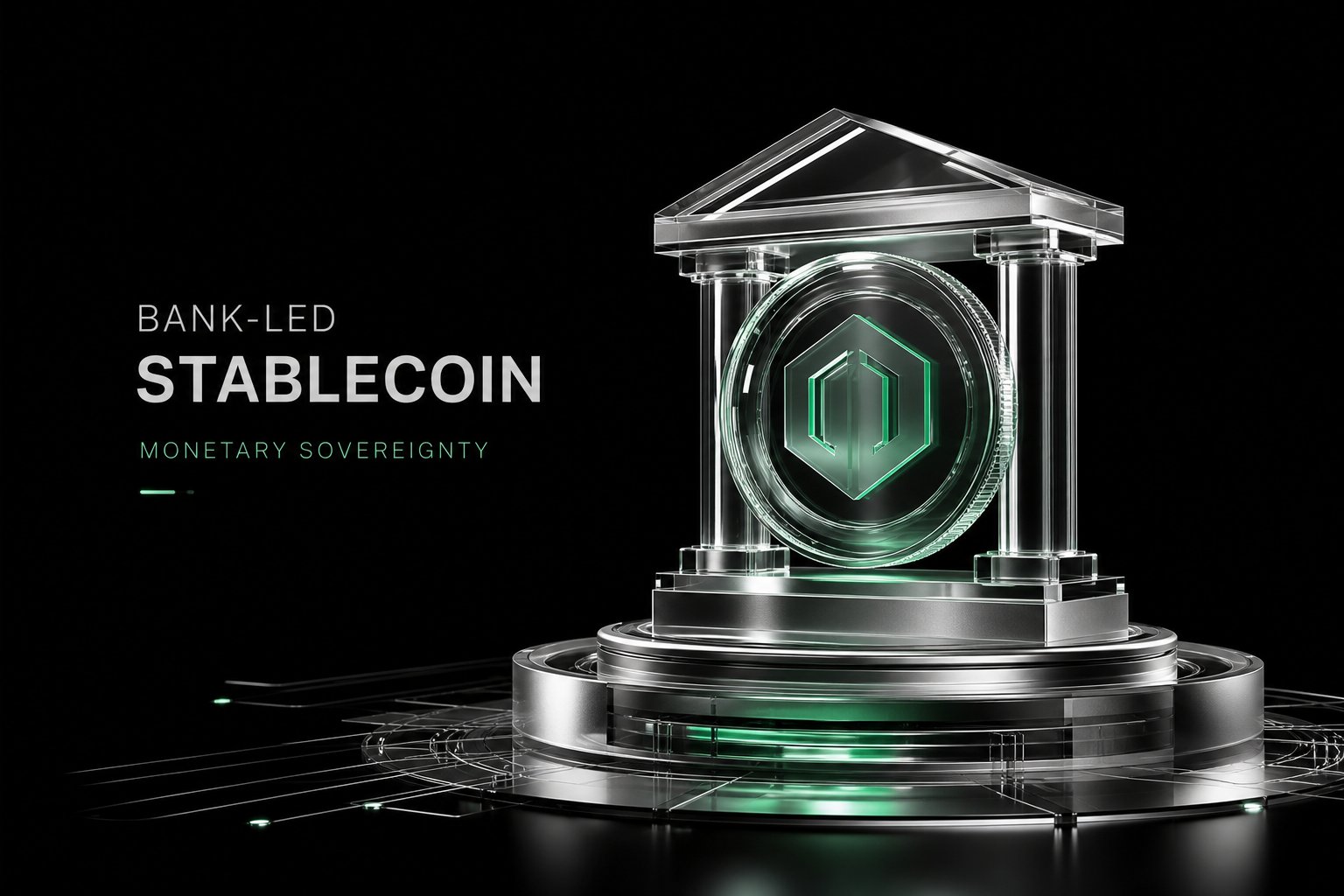
    Korea is sending its Digital Asset Framework Act to the National Assembly this month, Taiwan has pre-announced stablecoin licensing rules, and Thailand’s central bank has opened a consultation on baht stablecoins. In a single week, Asia’s regulators locked issuance into the banking system, diverging sharply from America’s nonbank path.

    Key Takeaways

    In the first week of November 2026, several Asian economies moved almost simultaneously to bring stablecoin issuance under the banking system: Korea’s Financial Services Commission is preparing to send the Digital Asset Framework Act to the National Assembly this month, with won-pegged stablecoins to be issued by bank-led consortiums; Taiwan’s FSC pre-announced stablecoin licensing rules on November 3, requiring nonbank issuers to hold NT$300 million in paid-in capital with financial holding companies owning a majority; Thailand’s central bank is pushing 1:1 fully backed baht stablecoins with universal KYC. The paths share one core premise: stablecoin is part of monetary sovereignty, and issuance is not a privilege for tech companies. That forms a third coordinate in global stablecoin regulation, alongside the US GENIUS Act’s nonbank-and-trust-bank competition and the EU’s MiCA licensing regime.

    Korea: Bank-led Consortiums, a 15-20% Shareholder Cap and a 135+ Article Framework

    According to the Seoul Economic Daily and Korean financial industry sources, the Financial Services Commission (FSC) is in the final stages of coordination, aiming to submit the government draft of the Digital Asset Framework Act to the National Assembly within November. “We are preparing with the goal of having the digital asset framework act introduced within this month,” a senior financial regulator told the media, adding that “not much has changed from the authorities’ earlier draft.” The act is expected to exceed 135 articles (the figure FSC Chairman Lee Eok-won disclosed early this year), covering issuance, distribution, disclosure, listing, operator market access, market order and user protection. It is the second-stage systemic legislation following the first-stage user-protection law.

    The contours of the bill’s contentious points have emerged. First, the cap on major exchange shareholders: the authorities intend to follow the standard for alternative trading systems (ATS) under the Capital Markets Act, limiting any single major shareholder to 15%-20% to address profit and control concentrated in a few founders, with a 1-2 year (some say roughly 3 years) grace period during which no penalties apply for reducing holdings; limiting voting rights instead of equity is also under discussion. Second, stablecoin issuers: the Bank of Korea has long argued that won-pegged stablecoins should only be issued by bank-led consortiums, while some ruling-party lawmakers want fintech firms included to boost competitiveness; the bank-led consortium is currently the leading option in the government draft, but specific shareholding ratios and participation requirements remain open. Third, liability for misfiring and computer accidents: the bill is expected to impose no-fault (strict) liability on virtual asset operators for computer incidents, and to make violations of the duty to actually hold virtual assets a ground for sanctions such as business suspension, directly responding to the large-scale accidental bitcoin transfer at an exchange earlier this year.

    “We are preparing with the goal of having the digital asset framework act introduced within this month. Not much has changed from the authorities’ earlier draft.”
    — A senior financial regulator, cited by Seoul Economic Daily, November 8, 2026

    The bill is also tied to a tax timeline. Deputy Prime Minister and Minister of Economy and Finance Lee Hyeong-ik said on November 5 that he would negotiate with the National Assembly to postpone the virtual asset income tax, originally scheduled to take effect next year, by two years. The ruling party’s logic: build the overall market framework with the framework act first and give businesses and investors an adjustment period, then talk about taxation. The industry is using the moment to demand clarified regulatory standards and permission for derivatives trading.

    Taiwan: Majority Financial Holding Ownership and NT$300 Million Capital Lock Tech Firms Out

    Taiwan’s Financial Supervisory Commission (FSC) pre-announced on November 3 the draft Regulations Governing the Licensing and Management of Stablecoin Issuance, along with eight supporting VASP authorization rules, opening a 40-day comment period. The core design binds stablecoin issuance eligibility to the financial system: qualified applicants are banks, financial holding companies, joint-stock companies invested in by banks or financial holding companies, and other institutions designated by the FSC. Nonbank issuers must publicly list their shares, focus exclusively on issuing and redeeming stablecoins, and hold minimum paid-in capital of NT$300 million (about US$9.4 million); on ownership, banks and financial holding companies combined must hold more than 50% of the issuer, with any single bank or financial holding company holding more than 25%.

    Wang Yun-chung, deputy director of the FSC’s Banking Bureau, said the initial rollout will center on banks and companies backed by financial institutions, and several banks and financial holding companies have expressed interest. The “51% + 25%” dual thresholds borrow from Taiwan’s rules for internet-only banks, with two goals: first, to give the issuer a lead shareholder able to step up on capital raises, compliance and system building; second, to confine tech companies to participation rather than control, in the official’s words, “a technology company acting alone would not fit the initial model we described.” When a single bank or financial holding company owns more than 25%, the issuer’s financial statements must be folded into the group’s consolidated accounts, effectively pulling stablecoin operations into the conglomerate’s supervisory perimeter.

    Reserve and operational requirements are equally strict: stablecoins may only be pegged 1:1 to the New Taiwan dollar or a single foreign currency; reserve assets at fair value must not fall below the total outstanding balance, with periodic accountant reviews; issuers must complete customer identity verification, internal controls, business continuity and cybersecurity systems, and are brought under financial-institution AML rules. The FSC expects the rules to take effect in the first quarter of 2027 together with the Virtual Asset Service Act (promulgated July 22, 2026), with a 12-month application window, licensing within 9-12 months, and up to two years of transition buffer. The accompanying VASP rules set risk-tiered thresholds: lending requires NT$200 million paid-in capital plus NT$50 million guarantee deposit; trading platforms and custody NT$100 million plus NT$30 million; exchange/transfer/underwriting NT$50 million plus NT$10 million. Banks entering via dual-license initially get four business lines (exchange, transfer, custody, underwriting), with trading platforms and lending closed for now.

    Thailand: Universal KYC, No Offshore Access, Baht Stablecoins as “Controlled Tokenized Money”

    The Bank of Thailand (BOT) opened its consultation on baht stablecoin regulation on October 19, with comments due November 17 and implementation targeted for March 2027. BOT Governor Witai Rattanagorn confirmed on October 29 that the stablecoin rules advance alongside regulations for BNPL (buy now, pay later) and large cash gold transactions. The draft clearly borrows from the Hong Kong framework: only a small number of licenses initially, with applicants required to demonstrate added value over existing payment methods; all stablecoin holders must pass KYC; no interest or incentives; redemption within one business day; and reserves initially held only in bank deposits spread across several banks, with short-term government bonds considered later.

    Thailand’s distinct feature lies in its foreign-exchange-control dimension: because of capital controls, there is no avenue for issuing foreign-currency stablecoins, and wallet providers are barred from connecting to offshore digital asset exchanges to prevent circumvention of FX controls; the BOT has made clear it will not license retail foreign exchange for speculative purposes, and a Thai-issued dollar stablecoin would fall into that category. The official positioning of the baht stablecoin is deliberately modest: it is described as “a suitable tokenized money for certain payment scenarios, particularly in supporting innovations utilizing DLT technology and linking to tokenized assets,” whose role is to “complement, not replace, the existing payment system,” operating in an open-loop market structure that clearly separates the roles of issuers and wallet providers.

    “The Bank of Thailand views THB stablecoin, a digital currency pegged to the Thai baht at a 1:1 ratio and fully backed by assets, as a suitable tokenized money for certain payment scenarios, particularly in supporting innovations utilizing DLT technology and linking to tokenized assets.”
    — Bank of Thailand, Stablecoin Consultation Announcement, October 19, 2026

    Three Frameworks Compared: One Answer, Three Drafting Styles

    Dimension Korea Taiwan Thailand
    Legislative tool Digital Asset Framework Act (to Assembly this month, 135+ articles) Stablecoin licensing rules (pre-announced 11/3, 40-day comments) Central bank consultation (opened 10/19, closes 11/17)
    Issuers Bank-led consortium (BOK position) Banks/FHCs/invested companies; FHCs >50%, single entity >25% Small number of licensed firms, must show added value
    Capital floor TBD (framework act level) Nonbank NT$300M (~US$9.4M) Not published
    Reserves TBD Fair value ≥ outstanding, accountant reviews 1:1 fully backed, initial bank deposits only (diversified)
    KYC / FX — Customer identity verification Universal KYC + no offshore exchange links (FX controls)
    Yield / incentives TBD Not explicitly barred (AML is the focus) No interest or incentives
    Timeline Submitted this month, fast-track review Q1 2027, with Virtual Asset Service Act Targeted for March 2027

    Laid side by side, the common signal is clear: East and Southeast Asian regulators treat stablecoins as “payment instruments inside the monetary system,” not as “tradable crypto assets.” Issuance therefore must concentrate in banks (Korea’s consortium, Taiwan’s holding-company control), reserves must be strict (fully backed plus audit), yield must be suppressed (Thailand bans interest outright), and channels must be quarantined (Thailand blocks offshore links; Taiwan’s initial bank dual-license is corporate-client-only). By contrast, the US GENIUS Act (effective January 18, 2027) puts OCC uninsured national trust banks and state-qualified issuers on the same federal track, with Circle, Coinbase and Ripple all taking trust charters, making nonbank issuance an in-system option; the EU’s MiCA goes the licensing route, with Circle issuing USDC/EURC under a French EMI license. Asia’s “bank-monopoly issuance” path is, at bottom, a defensive arrangement against dollar stablecoin penetration, in the same family as Nigeria’s central bank rules that took effect November 5, requiring USDT/USDC to be distributed through locally licensed entities (see our November 7 analysis).

    Implications for Practitioners

    1
    Asia’s stablecoin window opens toward “bank partnerships,” not “solo issuance”
    The Korea, Taiwan and Thailand drafts share one conclusion: issuance rights for domestic-currency stablecoins will be granted to the banking system first. The viable paths for tech firms or startup issuers are few, either becoming a bank consortium’s technology partner or joining as a minority shareholder (Taiwan’s model, under 25%). Issuers seeking a standalone license should reassess their Asian business model sooner rather than later.

    2
    Reserve discipline and KYC are becoming Asia’s version of the compliance dividing line
    Thailand’s universal KYC plus offshore ban, Taiwan’s 1:1 fair-value reserves with accountant reviews, and Korea’s codified “actual holding” duty all make transparent reserves and identity verification preconditions for issuance. This tracks the logic of the US GENIUS reserve requirements and BPI’s November 7 report (only USDC and PYUSD comply): reserve quality and customer identification will decide who survives inside the compliance perimeter.

    3
    Foreign-exchange controls are the hidden variable in stablecoin design
    Thailand shows that in capital-control jurisdictions, stablecoin rules are first an extension of FX policy: no foreign-currency stablecoins, no offshore exchange links, no speculative retail FX licensing. Before building cross-border payment or offshore stablecoin businesses, fold the target market’s capital-control provisions into the product architecture, rather than only tracking the issuance license.

    4
    A third coordinate emerges in global stablecoin regulation: monetary sovereignty first
    The US (nonbank plus trust-bank competition), the EU (licensing) and Asia (bank-led) now coexist as distinct paths. For institutions, the same stablecoin product will face completely different admission logic across jurisdictions. Cross-border issuance planning must be unpacked country by country on five axes, issuer, reserves, KYC, yield and FX, rather than applied from a single global template.

    5
    Legislation and taxation move together: Asia enters a “legislate first, tax later” rhythm
    Korea is deferring virtual asset income tax by two years pending the framework act; Taiwan is rolling stablecoin rules out with the Virtual Asset Service Act; Thailand has set a concrete implementation date. Regulators are trading a compliance runway for legislative sequence, and practitioners should treat legal and tax compliance as two items on the same timetable.

  • 稳定币只能银行发?韩台泰同周亮剑,亚洲监管集体转向

    稳定币只能银行发?韩台泰同周亮剑,亚洲监管集体转向

    稳定币只能银行发?韩台泰同周亮剑,亚洲监管集体转向

    韩国 11 月提交《数字资产基本法》,台湾预告稳定币管理办法,泰国央行启动泰铢稳定币咨询。亚洲经济体在同一周把稳定币发行权锁进银行体系,与美国的非银路径正面分岔。

    文章解读

    2026 年 11 月的第一周,亚洲几个经济体几乎同时把稳定币发行权收归银行体系:韩国金融委员会准备在本月向国会提交《数字资产基本法》,韩元稳定币拟由银行主导的联合体发行;台湾金管会 11 月 3 日预告稳定币管理办法草案,非银发行人需新台币 3 亿元实收资本、金控持股过半;泰国央行推动泰铢稳定币 1:1 全额储备与全员 KYC。各路径共享同一内核——稳定币是货币主权的一部分,发行资格不是给科技公司的。这与美国 GENIUS 法案允许非银与信托银行竞争、欧盟 MiCA 的牌照制,形成了全球稳定币监管的第三条坐标。

    韩国:银行联合体 + 交易所 15-20% 大股东上限,一部 135+ 条的框架法

    据首尔经济日报与韩国金融界消息,金融委员会(FSC)正在进行最后协调,目标是在 11 月内将《数字资产基本法》政府草案提交国会。”我们正以本月内提出数字资产框架法为目标做准备,”一名高级监管官员对媒体表示,”与当局此前的草案相比没有太大变化。”该法预计超过 135 条(FSC 委员长李亿源年初披露的数字),覆盖虚拟资产的发行、流通、公示、上市、运营商准入、市场秩序与用户保护,是继以用户保护为中心的第一阶段立法后的第二阶段系统性立法。

    法案的几项争议点已现轮廓。其一,交易所大股东持股上限:当局拟参照《资本市场法》下替代交易系统(ATS)的标准,把单一大股东持股限制在 15%-20%,以解决收益与支配权过度集中于少数创始人的问题,并配套 1-2 年(亦有说法为约 3 年)的过渡宽限期,期内减持不处罚;限表决权而非限股权的替代方案也在讨论中。其二,稳定币发行主体:韩国央行(BOK)长期主张韩元稳定币只能由银行主导的联合体发行,而部分执政党议员希望纳入金融科技企业以提升竞争力,目前银行联合体是政府草案的有力方案,但具体持股比例与参与条件待定。其三,误操作与黑客责任:法案拟对虚拟资产运营商的计算机事故课以无过失(严格)责任,并把违反”实际持有虚拟资产”义务列为停业等制裁事由,直接回应年初交易所大规模比特币误转事故。

    “We are preparing with the goal of having the digital asset framework act introduced within this month. Not much has changed from the authorities’ earlier draft.”
    — A senior financial regulator, cited by Seoul Economic Daily, November 8, 2026

    法案还捆绑了税收时间表。韩国副总理兼经济财政部长李亨翼 11 月 5 日表示,将与国会协商把原定明年实施的虚拟资产所得税再推迟两年。执政党的逻辑是:先以框架法建立整体市场制度、给企业与投资者适应期,再谈征税。行业则借机提出明确监管标准、允许衍生品交易等诉求。

    台湾:金控持股过半、非银 3 亿实收资本,把科技公司挡在门外

    台湾金融监督管理委员会(金管会)11 月 3 日预告《稳定币发行许可及管理办法》草案及配套的 8 项 VASP 授权法规命令,征求意见期 40 天。草案最核心的设计是把稳定币发行资格与金融体系绑定:合格申请人为银行、金融控股公司、银行或金控转投资的股份有限公司,以及金管会公告指定的其他机构。非银行发行人需公开发行股票、专营稳定币发行与赎回业务,最低实收资本额为新台币 3 亿元(约合 940 万美元);在股权结构上,银行与金控合计持股须超过 50%、单一银行或金控持股须超过 25%。

    金管会银行局副局长王允中指出,初期将以银行及金融业转投资公司为主,多家银行与金控已表达兴趣。这套”51% + 25%”双门槛借鉴了台湾纯网银(线上银行)的持股规则,目的有二:一是让发行主体有一个能在增资、法遵、系统建设上挑大梁的主要股东;二是把科技公司限定在参股而非主导的位置,用官方的话说,”技术公司单独行动不符合我们描述的最初模式”。当单一银行或金控持股超过 25% 时,发行人财务报表须并入金控合并报表,等于把稳定币业务直接纳入集团监管视野。

    储备与运营要求同样严格:稳定币只能 1:1 锚定新台币或单一外币,储备资产公允价值不得低于流通在外总余额,须定期委由会计师查核;发行人须完成客户身份验证、内控稽核、营运持续与资通安全制度,并纳入金融机构洗钱防制规范。金管会预计 2027 年第一季与《虚拟资产服务法》(2026 年 7 月 22 日公布)同步施行,申请窗口 12 个月、牌照核发 9-12 个月、最长两年过渡缓冲。配套的 VASP 规则按风险分层设门槛:借贷业务实收资本新台币 2 亿元+保证金 5,000 万元,交易平台与保管 1 亿元+3,000 万元,交换/移转/承销 5,000 万元+1,000 万元;金融机构兼营初期开放交换、移转、保管、承销四类,交易平台与借贷暂不开放。

    泰国:全员 KYC、不碰离岸,泰铢稳定币成”受控的代币化货币”

    泰国央行(BOT)10 月 19 日启动泰铢稳定币监管咨询,意见截止 11 月 17 日,目标 2027 年 3 月落地。BOT 行长威泰·拉他那功 10 月 29 日确认,稳定币规则与 BNPL(先买后付)、大额现金黄金交易监管同批推进。草案明显借鉴中国香港框架:初期只发少量牌照,申请人须说明服务比现有支付方式有额外价值;所有稳定币持有人须通过 KYC;不得付息或提供激励;赎回须在一个工作日内完成;初期储备只允许分散存放于多家银行的存款,短期政府债券留待后续考虑。

    泰国的特殊之处在外汇管制维度:由于资本管制,泰国不存在发行外币稳定币的通道,钱包服务商也被禁止连接离岸数字资产交易所,以防止规避外汇管制;BOT 明确不会为投机目的发放零售外汇牌照,泰铢锚定的美元稳定币即属此类。官方对泰铢稳定币的定位相当克制,称其为”适合特定支付场景的代币化货币,特别是支持 DLT 技术创新并链接代币化资产”,其角色是”补充而非取代现有支付系统”,采用开放式闭环市场结构、明确区分发行人与钱包服务商职责。

    “The Bank of Thailand views THB stablecoin, a digital currency pegged to the Thai baht at a 1:1 ratio and fully backed by assets, as a suitable tokenized money for certain payment scenarios, particularly in supporting innovations utilizing DLT technology and linking to tokenized assets.”
    — Bank of Thailand, Stablecoin Consultation Announcement, October 19, 2026

    三地对比:同一周、同一个答案,三种不同的写法

    维度 韩国 台湾 泰国
    立法工具 《数字资产基本法》(11月提交国会,135+条) 稳定币许可及管理办法(11/3预告,40天意见期) 央行监管咨询(10/19启动,11/17截止)
    发行主体 银行主导联合体(BOK主张) 银行/金控/其转投资公司,金控合计持股>50%、单家>25% 少量持牌机构,须说明额外价值
    资本门槛 待定(框架法层面) 非银新台币 3 亿元(约 $9.4M) 未公布
    储备要求 待定 公允价值≥流通余额,会计师查核 1:1 全额储备,初期限银行存款(分散多家)
    KYC/外汇 — 客户身份验证 全员 KYC + 禁连离岸交易所(外汇管制)
    收益/激励 待定 未明确禁止(AML为焦点) 不得付息或提供激励
    时间表 本月提交、快速审查 2027 Q1 与虚拟资产服务法同步施行 2027 年 3 月目标落地

    把三个方案并列看,共同信号很清楚:东亚与东南亚监管者把稳定币视为”货币体系内的支付工具”,而不是”可交易的加密资产”。因此发行资格要向银行集中(韩国联合体、台湾金控控股)、储备要严(全额+查核)、收益要压(泰国直接禁息)、渠道要隔离(泰国禁连离岸、台湾初期银行兼营限法人客户)。与之对照,美国 GENIUS 法案(2027/1/18 生效)把 OCC 无保险国家信托银行与州级合格发行人并列为联邦渠道,Circle、Coinbase、Ripple 纷纷拿信托牌照,非银发行人是制度内选项;欧盟 MiCA 则走牌照制,Circle 借法国 EMI 牌照发行 USDC/EURC。亚洲的”银行垄断发行”路径,本质是对美元稳定币渗透的防御性安排,尼日利亚央行 11/5 生效的条例同样要求 USDT/USDC 经本地持牌实体发行(详见本系列 11/7 分析)。

    对从业者的一些启示

    1
    亚洲稳定币的窗口开向”银行合作”,不是”自主发行”
    韩国、台湾、泰国的草案有一个共同结论:本国法币稳定币的发行资格将优先给银行体系。科技公司或初创发行商的可行路径只有几种,要么成为银行联合体的技术伙伴,要么以参股(台湾模式持股低于 25%)身份参与。想独立持牌的发行商,应尽快重新评估在亚洲市场的商业模式。

    2
    储备纪律与 KYC 正成为亚洲版”合规分水岭”
    泰国全员 KYC+禁离岸连接、台湾 1:1 公允价值储备+会计师查核、韩国把”实际持有”写入义务,这几个经济体都把透明储备与身份验证设为发行前提。这与美国 GENIUS 储备要求、BPI 11/7 报告(仅 USDC/PYUSD 达标)的逻辑一致:储备质量与用户身份识别将决定谁能在合规框架内存活。

    3
    外汇管制是稳定币设计的隐藏变量
    泰国案例提醒:在资本管制辖区,稳定币规则首先是外汇政策的延伸,禁外币稳定币、禁连接离岸交易所、不批投机零售外汇。做跨境支付或离岸稳定币业务前,须把目标市场的资本管制条款纳入产品架构,而不是只盯发行牌照。

    4
    全球稳定币监管出现第三条坐标:货币主权优先
    美国(非银+信托银行竞争)、欧盟(牌照制)、亚洲(银行主导)几条路径并存。对机构而言,同一款稳定币产品在不同辖区将面对完全不同的准入逻辑。跨辖区发行规划需按”发行主体、储备、KYC、收益、外汇”五要素逐国拆解,而非套用一个全球模板。

    5
    立法与税收联动,亚洲进入”先立法后征税”节奏
    韩国把虚拟资产所得税再延两年、以框架法为前提;台湾把稳定币规则与虚拟资产服务法同批施行;泰国给出明确落地时间表。监管者用”立法先行、税务跟上”的顺序换取行业适应期,从业者应把法务与税务合规视为同一时间表上的两件事。

  • Gold Unlocks Credit as Stablecoin Reserve Compliance Splits the Market

    Gold Unlocks Credit as Stablecoin Reserve Compliance Splits the Market

    A
    Aurellix
    November 8, 2026
    1 min read

    Today’s Focus
    Coinbase now accepts PAXG gold as collateral to borrow USDC, turning gold from a static holding asset into credit collateral that generates liquidity, with Morpho USDC deposits surpassing $4 billion. BPI finds only USDC and PYUSD meet GENIUS reserve requirements among the top 10 dollar stablecoins, a compliance watershed; OKXICE objections to tokenized stocks rise to 67 companies, and tokenized Treasuries cross the $5 billion milestone.

    Industry Flash

    10 items

  • Coinbase accepts gold-backed USDC loans — Eligible US users (excluding New York) can borrow USDC against PAXG, powered by Morpho protocol on Base, letting holders unlock dollar liquidity without selling gold, backed by a new USDC|PAXG isolated market on Morpho Blue.
  • OKXICE objections reach 67 companies — Apple and Meta joined on November 5, with Palantir, S&P Global and others adding 11 more; Microsoft, Google, Amazon, Nvidia and Tesla had already objected, so the entire Magnificent Seven now rejects third-party tokenization.
  • Only 2 of top 10 dollar stablecoins meet GENIUS reserves — BPI’s June 30 data finds just USDC and PYUSD compliant (~26% of float), with World Liberty’s USD1 and Ripple USD failing because underlying money funds hold corporate debt and longer-dated Treasuries.
  • tZERO goes public via SPAC at $350M valuation — Signed a definitive merger with Nasdaq-listed SPAC FG Imperii, expected to list on NYSE American (TZRO) in early 2027 with up to $231M in trust cash; ICE previously invested.
  • Five global banks launch GL1 Org in Singapore — HSBC, JPMorgan Kinexys, MUFG, Societe Generale-Forge and Standard Chartered founded a non-profit on November 5 to drive common standards for tokenized markets, targeting an open, interoperable, compliant shared ledger.
  • Stripe expands stablecoin payouts to 160+ markets — US businesses can now send USDC or OUSD to crypto wallets across 160+ markets via Global Payouts, typically arriving in minutes; USDC spans 9 chains and OUSD 4, still in public preview.
  • Tokenized Treasuries cross $5 billion — rwa.xyz data tops $5 billion for the first time, adding about $1 billion in two weeks, with BUIDL and Securitize leading; institutions treat them as non-cash collateral for margin and liquidity management.
  • Tether Hadron integrates RedStone for pricing and T+0 exits — Price and NAV feeds for Hadron-issued tokenized assets, with Settle’s auction mechanism enabling T+0 settlement, redemptions and unstaking for eligible assets, closing the “can issue but can’t exit” gap.
  • Dubai court whitepaper: rulings to execute directly on tokenized assets — DIFC Courts propose a Dispute Resolution Oracle converting court orders into onchain-executable instructions to freeze, transfer or dispose of tokenized assets, with Polygon Labs peer review, filling the legal remedy gap.
  • Ethereum Institutional launches — A new independent non-profit accelerates institutional adoption of the Ethereum ecosystem, focusing on tokenization, stablecoins and onchain financial infrastructure, backed by BitMine, SharpLink Gaming and Ethereum co-founder Joseph Lubin.
  • 黄金解锁信贷功能,稳定币储备合规分水岭浮现

    黄金解锁信贷功能,稳定币储备合规分水岭浮现

    A
    Aurellix
    2026年11月8日
    1 分钟阅读

    今日焦点
    Coinbase 首度接受PAXG 黄金抵押借出 USDC,黄金从静态持有资产变为可产生流动性的信贷抵押品,Morpho USDC 存款突破40亿美元。BPI 研究显示 10 大美元稳定币仅 USDC、PYUSD 符合 GENIUS 储备要求,合规分水岭浮现;OKXICE 代币化美股反对升至67家,代币化美债突破50亿美元里程碑。

    行业速报

    共 10 条

  • Coinbase 首度接受黄金抵押借 USDC — 符合条件的美国用户(纽约州除外)可用 PAXG 抵押借出 USDC,贷款由 Morpho 协议在 Base 链驱动,持有者无需卖出黄金即可获得美元流动性,对应 Morpho Blue 新设 USDC|PAXG 隔离市场。
  • OKXICE 反对升至 67 家 — 苹果与 Meta 11 月 5 日加入反对行列,加上 Palantir、标普全球等共新增 11 家,微软谷歌亚马逊英伟达特斯拉此前已反对,「Magnificent Seven」全部拒绝第三方代币化。
  • 10 大美元稳定币仅 2 家符合 GENIUS 储备要求 — BPI 以 6 月 30 日数据测算,仅 USDC 与 PYUSD 达标(占流通量约 26%),World Liberty 的 USD1 与 Ripple USD 因底层货币基金持有机构债与长久期美债而不达标。
  • tZERO 以 3.5 亿美元估值 SPAC 上市 — 与纳斯达克上市 SPAC FG Imperii 签署最终业务合并协议,预计 2027 年初登陆 NYSE American(代码 TZRO),可获至多 2.31 亿美元信托现金,ICE 此前已参投。
  • 五家全球银行在新加坡成立 GL1 Org — 汇丰、摩根大通 Kinexys、三菱日联、法兴 Forge 与渣打 11 月 5 日宣布成立非营利组织,推动代币化金融市场共同标准,目标是开放、可互操作、合规的共享账本。
  • Stripe 稳定币出金扩至 160+ 市场 — 美国企业现可通过 Global Payouts 向 160 多个市场的加密钱包发送 USDC 或 OUSD,通常几分钟到账,USDC 覆盖 9 条链、OUSD 覆盖 4 条,仍为公开预览。
  • 代币化美债突破 50 亿美元 — rwa.xyz 数据首次超越 50 亿美元,两周新增约 10 亿美元,BUIDL 与 Securitize 领跑,机构将其视为保证金与流动性管理的非现金抵押品。
  • Tether Hadron 接入 RedStone 提供定价与 T+0 退出 — 为 Hadron 发行的代币化资产提供价格与净值喂价,Settle 拍卖机制实现合格资产 T+0 清算赎回解押,补齐「能发不能退」短板。
  • 迪拜法院白皮书:判决直接执行代币化资产 — DIFC 法院提出争议解决预言机 DRO,将法院命令转为链上可执行指令用于冻结、转移涉案代币化资产,Polygon Labs 参与评审,补齐法律救济空白。
  • Ethereum Institutional 成立 — 新独立非营利组织加速机构采用以太坊生态,聚焦代币化、稳定币与链上金融基建,获 BitMine、SharpLink Gaming 与以太坊联合创始人 Lubin 支持。
  • Tokenized Gold Enters Coinbase Lending as Stablecoin Reserve Compliance Looms

    Tokenized Gold Enters Coinbase Lending as Stablecoin Reserve Compliance Looms

    Tokenized Gold Enters Coinbase Lending as Stablecoin Reserve Compliance Looms

    Onchain RWA Market Cap
    $39.4B
    Holders 5.65M · +7.17% MoM

    Morpho USDC Deposits
    $4.1B
    ▲ 40% (90d)

    OKXICE Objecting Issuers
    67
    Magnificent Seven all opted out

    PAXG Circulation
    $2.0B
    OCC-regulated · Vault-backed

    Coinbase Accepts Gold as Collateral for USDC Loans, Unlocking Credit for Tokenized Gold

    November 6, 2026 · Coinbase / Paxos / Crypto Briefing
    Coinbase announced that eligible US users (excluding New York) can now borrow USDC against PAX Gold (PAXG), marking the first time Coinbase Borrow accepts a non-crypto asset as collateral. The loans are powered by Morpho on the Base network, matching a new isolated USDC|PAXG market on Morpho Blue, letting holders unlock dollar liquidity without selling their gold.
    • PAXG is issued by Paxos Trust Company under OCC supervision, one token backed by one fine troy ounce of London Good Delivery gold, roughly $2B in circulation with monthly KPMG attestations
    • Loans carry no fixed repayment schedule; rates are set by supply and demand in the Morpho market, with LTV-based liquidation replacing monthly bills when PAXG falls below threshold
    • The Coinbase-Morpho integration already supports about $3.4B in collateral and $1.7B in active loans; Morpho USDC deposits crossed $4B the same day, with RWA platform loans up 40% over 90 days
    Market Impact
    Gold shifts from a static holding asset to credit collateral that generates liquidity, bringing the first non-crypto RWA into mainstream lending

    Structural Trend
    Morpho’s isolated market architecture absorbs TradFi assets, with nearly 20% of onchain loans now in RWA markets

    Growth Potential
    PAXG lending validates the programmability of non-crypto assets, potentially extending to other commodities and yield-bearing assets

    Source: Crypto Briefing · Paxos · November 6, 2026

    OKXICE Objections Hit 67 as Apple and Meta Join, Magnificent Seven Reject Tokenization

    November 5, 2026 · OKXICE TSV / decrypt / CoinDesk
    OKXICE TSV published an updated notice on November 5 adding Apple and Meta to the objection list, along with Home Depot, Boeing, GE Vernova, Palantir, ServiceNow and S&P Global, bringing the total to 67 companies. Combined with earlier objections from Microsoft, Alphabet, Amazon, Nvidia and Tesla, all seven Magnificent Seven members have now declined third-party tokenization.
    • A CoinDesk tally shows 56 of the 62 companies in the original list have objected (about 90%), blocking 57 of 63 share classes; only crypto-linked names such as Strategy, Coinbase, Circle, Robinhood, Securitize and BitGo have not objected
    • The SEC innovation exemption gives issuers a 30-day written objection window, with the veto applying only to that venue; Meta’s objection is ironic given its own abandoned stablecoin project Libra (Diem)
    • The exemption also caps trading volume: 75 Tier-1 symbols capped at 0.25% of prior-month average daily volume and 250 Tier-2 symbols at 2.5%, sharply constraining venue scale
    Market Impact
    With big tech absent, the launch roster will skew heavily toward crypto-linked names, diverging from the cross-industry equity market pitch

    Structural Trend
    The issuer-sponsored model (TSV LLC / CNTN) bypasses the objection window, creating a clear contest with the third-party path

    Regulatory Boundary
    SIFMA questions the silence-as-consent default, with affirmative consent and longer objection periods becoming reform focal points

    Source: Basis Desk · edgeX Exchange · November 5, 2026

    BPI Study: Only 2 of 10 Top Dollar Stablecoins Meet GENIUS Reserve Requirements

    November 6, 2026 · Bank Policy Institute / PYMNTS
    The Bank Policy Institute (BPI) published reserve asset research showing that as of June 30, 2026, only two of the ten largest circulating dollar stablecoins — Circle USDC and Paxos PYUSD — meet GENIUS Act reserve requirements, representing about 26% of tokens outstanding. The Act requires reserves to include Treasuries with 93 days or less remaining maturity, overnight reverse repos and bank deposits among other highly liquid assets.
    • Of the four onshore issuers expected to fall under the Act, World Liberty’s USD1 and Ripple USD fail because their underlying money market funds hold agency debt and longer-dated Treasuries
    • GENIUS takes effect in January 2027; the OCC final rule landed October 21, requiring 1:1 reserves at all times, 5% immediate liquidity, a 40% single-counterparty concentration cap and two-business-day redemptions
    • BPI stresses that compliance is a gate, not a guarantee — meeting reserve tests does not mean a coin always holds its peg, and offshore and crypto-backed stablecoins remain outside the framework
    Market Impact
    Reserve structure becomes the entry ticket to the US payments stack, widening the compliance first-mover advantage of USDC and PYUSD

    Structural Trend
    The stablecoin market splits into regulated-eligible and offshore/crypto-backed tracks, making reserve composition the core decision variable for issuers

    Risk Note
    As GENIUS goes live the compliance bar rises, pushing non-compliant issuers toward reserve restructuring or shrinking market access

    Source: Bank Policy Institute · PYMNTS · November 6, 2026

    tZERO to Go Public via $350M SPAC Merger as Tokenized Securities Infrastructure Capitalizes

    November 6, 2026 · tZERO / FG Imperii / FinTech Global
    tZERO announced a definitive business combination agreement with Nasdaq-listed SPAC FG Imperii Acquisition Corp. (FGII) at a pre-money equity valuation of $350 million, including up to $25 million in milestone-linked consideration. The combined company is expected to list on NYSE American under the ticker TZRO, with access to about $231 million in FGII trust cash, targeting completion in early 2027.
    • Founded in 2014, tZERO holds an SEC-registered broker-dealer, a Reg ATS venue, transfer agent, custody and settlement licenses, plus more than 100 blockchain patents
    • Beyond the exchange listing, tZERO will explore onchain trading and custody; NYSE parent ICE previously invested in the company
    • Meanwhile onchain stock platform StableStock closed a strategic round at a $75M valuation (Amber, Flow Traders, Gate participating), and tokenized securities financing infrastructure Lombard Systems raised a $4M seed
    Market Impact
    Tokenized securities infrastructure enters public capital markets, validating the capitalization path for a licensed-plus-onchain business model

    Structural Trend
    Full-stack infrastructure firms spanning issuance, trading and settlement raise in clusters, entering a consolidation phase

    Ecosystem Signal
    ICE investment plus a SPAC listing gives double institutional endorsement of the long-term value of tokenized securities rails

    Source: FinTech Global · PANews · November 6, 2026

  • RWA 早报 | 2026年11月8日

    RWA 早报 | 2026年11月8日

    代币化黄金首入 Coinbase 借贷,稳定币储备合规大考临近

    RWA 链上总市值
    $393.6亿
    持有者 565 万 · 环比 +7.17%

    Morpho USDC 存款
    $41亿
    ▲ 40% (90天)

    OKXICE 反对发行方
    67家
    Magnificent Seven 全拒

    PAXG 流通市值
    $20亿
    OCC 监管 · 金库背书

    Coinbase 首度接受黄金抵押借 USDC,代币化黄金解锁信贷功能

    2026年11月6日 · Coinbase / Paxos / Crypto Briefing
    Coinbase 宣布符合条件的美国用户(纽约州除外)可用 PAX Gold(PAXG)抵押借出 USDC,这是 Coinbase Borrow 首次接受非加密资产作为抵押品。贷款由 Morpho 协议在 Base 链上驱动,对应 Morpho Blue 新设的 USDC|PAXG 隔离市场,持有者无需卖出黄金即可获得美元流动性。
    • PAXG 由 Paxos 信托银行发行,受 OCC 监管,1 枚锚定 1 金衡盎司伦敦金条,流通约 $20 亿,月度 KPMG 鉴证
    • 贷款无固定还款期限、利率由 Morpho 市场供需决定,以 LTV 清算机制替代月度账单;PAXG 跌破阈值将触发自动清算
    • Coinbase×Morpho 现有整合已支撑约 $34 亿抵押品、$17 亿在贷;Morpho USDC 存款同日突破 $40 亿,RWA 平台贷款 90 天增 40%
    市场影响
    黄金从静态持有资产变为可产生流动性的信贷抵押品,首个非加密 RWA 进入主流借贷场景

    结构性趋势
    Morpho 隔离市场架构承接 TradFi 资产,平台近 20% 链上贷款已落在 RWA 市场

    增长空间
    PAXG 贷款落地验证「非加密资产可编程化」路径,后续或扩展至其他大宗商品与收益资产

    来源:Crypto Briefing · Paxos · 2026年11月6日

    OKXICE 反对升至 67 家:苹果 Meta 加入,Magnificent Seven 全部拒绝代币化上架

    2026年11月5日 · OKXICE TSV / decrypt / CoinDesk
    OKXICE TSV 于 11 月 5 日发布更新通知,苹果与 Meta 加入反对行列,加上家得宝、波音、GE Vernova、Palantir、ServiceNow、标普全球等共新增 11 家,反对发行方总数升至 67 家。微软、谷歌、亚马逊、英伟达、特斯拉此前的反对使「Magnificent Seven」全部选择拒绝第三方代币化。
    • CoinDesk 统计:原 62 家名单中 56 家已反对(约 90%),63 个股票类别中 57 个被封锁;未反对者仅剩 Strategy、Coinbase、Circle、Robinhood、Securitize、BitGo 等加密关联公司
    • SEC 创新豁免赋予发行方 30 天书面反对窗口,反对仅限该平台;Meta 的反对颇具讽刺——其曾力推自有稳定币 Libra(Diem)
    • 豁免同时设交易量上限:一级标的 75 只、单票日交易量≤上月日均成交量 0.25%,二级 250 只≤2.5%,天花板显著压缩平台规模
    市场影响
    大型科技股全部缺席下,平台首发名单将高度集中于加密相关标的,偏离「跨行业股票市场」定位

    结构性趋势
    发行方主导模式(TSV LLC / CNTN)绕开反对窗口,与第三方路径对垒格局成型

    监管边界
    「沉默即同意」的默认机制遭 SIFMA 质疑,肯定式同意与更长异议期成为行业改革焦点

    来源:Basis Desk · edgeX Exchange · 2026年11月5日

    BPI 研究:10 大美元稳定币仅 2 家符合 GENIUS 储备要求,合规分水岭浮现

    2026年11月6日 · Bank Policy Institute / PYMNTS
    Bank Policy Institute(BPI)发布储备资产研究:以 2026 年 6 月 30 日数据测算,10 大流通美元稳定币中仅 2 家——Circle USDC 与 Paxos PYUSD——符合 GENIUS 法案储备要求,占流通量约 26%;其余多为离岸发行或加密资产背书。法案要求储备须含剩余期限≤93 天美债、隔夜逆回购及银行存款等高流动性资产。
    • 四家美国境内发行方中,World Liberty 的 USD1 与 Ripple USD 因底层货币基金持有机构债与长久期美债而不达标
    • GENIUS 法案 2027 年 1 月生效,OCC 最终规则已于 10 月 21 日落地,要求 1:1 全时储备、5% 即期流动性、单对手方≤40% 集中度、2 个工作日赎回
    • BPI 强调「合规是门槛而非保证」——满足储备要求不代表币价永远锚定,离岸与加密背书稳定币仍处监管框架之外
    市场影响
    储备结构成为发行方入局美国支付栈的准入证,USDC / PYUSD 的合规先发优势放大

    结构性趋势
    稳定币市场按「监管可准入」与「离岸/加密背书」分轨,发行方储备结构成为核心决策变量

    风险提示
    GENIUS 生效后合规门槛抬高,未达标发行方或面临储备重组与市场准入收缩压力

    来源:Bank Policy Institute · PYMNTS · 2026年11月6日

    tZERO 拟以 $3.5 亿估值 SPAC 上市,代币化证券基础设施加速资本化

    2026年11月6日 · tZERO / FG Imperii / FinTech Global
    tZERO 宣布与纳斯达克上市 SPAC 公司 FG Imperii Acquisition Corp.(FGII)签署最终业务合并协议,投前股权估值 $3.5 亿(含至多 $2,500 万里程碑对价)。合并后公司预计在 NYSE American 以代码 TZRO 上市,最多可获得 FGII 信托账户约 $2.31 亿现金,交易预计 2027 年初完成。
    • tZERO 成立于 2014 年,持有 SEC 注册经纪自营商、Reg ATS 交易场所、过户代理、托管结算等牌照,并拥有 100+ 项区块链专利
    • 除交易所上市外,tZERO 将探索链上交易与托管路径;纽交所母公司 ICE 此前已参投
    • 同期链上股票平台 StableStock 以 $7,500 万估值完成战略轮(Amber、Flow Traders、Gate 参投);代币化证券融资基础设施 Lombard Systems 完成 $400 万种子轮
    市场影响
    代币化证券基础设施进入公开资本市场,验证「合规牌照+链上交易」商业模式的资本化路径

    结构性趋势
    从发行、交易到结算的全栈基础设施公司密集融资,行业进入规模化整合阶段

    生态信号
    ICE 入股 + SPAC 上市双重背书,机构对代币化证券基建的长期价值判断趋同

    来源:FinTech Global · PANews · 2026年11月6日

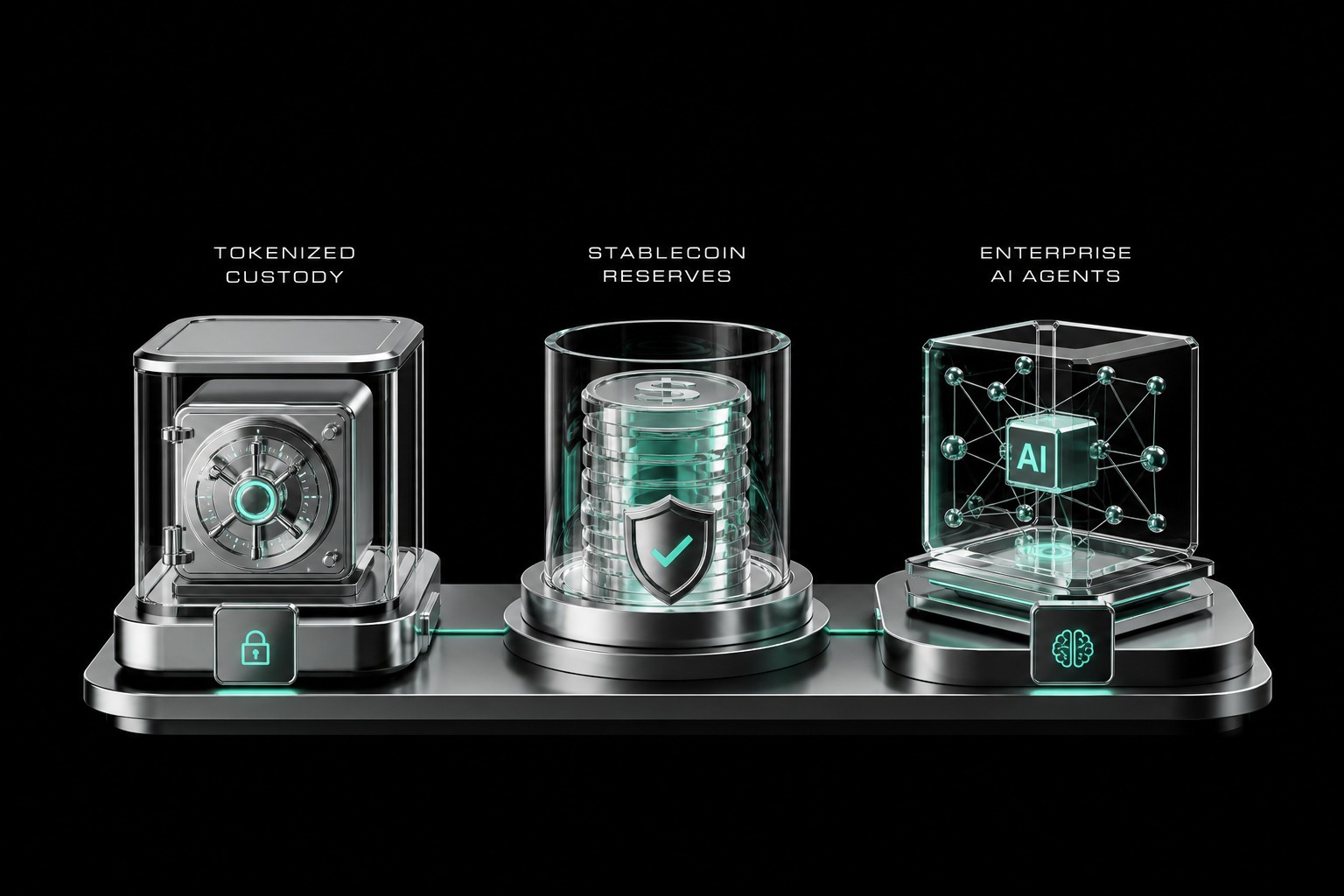
  • Wall Street Writes AI Agents and Tokenization Into Operating Budgets

    Wall Street Writes AI Agents and Tokenization Into Operating Budgets

    Wall Street Writes AI Agents and Tokenization Into Operating Budgets

    DTCC opens up $30 trillion of custodial securities, BlackRock wires a chain-native pipeline for stablecoin reserves, and Citi puts 180,000 employees on AI agents. Three years of pilots are over; the tech is moving from research budgets into operating budgets.

    DTCC assets under custody
    $114T
    First wave opens $30T in tokenizable securities

    Institutions signed at launch
    20firms
    JPMorgan, Citi, BofA, Morgan Stanley, Fidelity

    Citi Arc employee coverage
    180Kstaff
    40K developers on Devin, 100K+ agentic hours weekly

    Anthropic IPO raise
    $80-100B
    Valuation center near $1.5T, listing mid-November

    The clearest statement of the week came from DTCC. On October 28 its tokenization service (DTS) went live, opening roughly $30 trillion of the $114 trillion in assets held by its depository subsidiary to tokenization, with 20 institutions signed at launch, running on the Canton Network and a private Besu chain. This is not another whitepaper: the central clearinghouse of US securities settlement has moved “custody” itself onto a ledger, with an SEC no-action letter from December 2025 as its regulatory foundation.

    The same week, BlackRock filed with the SEC for two chain-native money market funds designed specifically as reserve assets for stablecoin issuers. The hundreds of billions in Treasuries and overnight repo held by Circle, Tether and others get an on-chain, yield-bearing vehicle that can be transferred, pledged or redeemed around the clock. a16z crypto flagged tokenization and stablecoins as its two big themes for 2026; this filing is exhibit A.

    Banks shifted gears too. Citi has rolled its Arc platform out to 180,000 employees across 85 countries this quarter, with 40,000 developers running Cognition’s Devin and legacy migration time cut from 12 months to four weeks. Anthropic made its S-1 public on October 26 and is slated to list in mid-November, with a valuation center around $1.5 trillion and a raise of $80-100 billion. Finance has handed agents 180,000 desks, and handed their builder the second-largest IPO in US history.

    1. This Week at a Glance

    DTCC Tokenization Service goes live: DTC’s $114T custody opens up, 20 institutions sign at launch (JPMorgan, Citi, BofA, Fidelity, Morgan Stanley, UBS, Barclays, BNP Paribas, Citadel Securities), covering Russell 1000 names, major index ETFs and US Treasuries; more chains planned for 2027.

    BlackRock files for chain-native reserve funds: Two tokenized MMFs designed for stablecoin issuers, letting reserves be transferred and redeemed 24/7, moving short-end Treasury liquidity on-chain.

    Citi Arc goes firm-wide: 180,000 employees under one risk framework, 40,000 developers writing agent code with Devin, a $5B program largely self-funded through efficiency gains.

    Anthropic IPO advances: S-1 public under ticker ANT, roadshow from Nov 9, JPMorgan investor briefing Nov 13, valuation range $1.25-1.75T, raising $80-100B.

    Hammack flags the regulatory gap: Cleveland Fed president said on Nov 5 that AI agents using stablecoins would mark a major shift in money movement, but current rules do not cover smart contracts or agentic AI payments, with GENIUS rules due by January 2027.

    Shopify opens checkout to agents: Fall ’26 Edition lets any AI agent search, fill a cart and pay with Shop Pay.

    Europe and Asia keep pace: Boerse Stuttgart won Europe’s first DLT trading and settlement licence, Spiko’s SAFO overtook BUIDL as the largest tokenized fund; Hong Kong is pushing forward with tokenization of 400-ounce gold bars.

    Tokenized-stock friction grows: 59 companies object to their shares trading on OKXICE, Nasdaq says it does not support the venue, and the SEC responds with a 30-day notice rule.

    2. Top 3 Events of the Week

    1. DTCC’s tokenization service goes live: $114T of custody opens. The US central depository lets clients mint digital certificates against custodied securities, convertible in both directions and transferable to digital wallets, with ownership rights and investor protections intact. The trust anchor of on-chain finance has moved from the chain to the depository, and the ceiling on tokenization has switched from issuance narratives to national settlement infrastructure.

    2. BlackRock builds the chain-native pipeline for stablecoin reserves. Two tokenized MMFs target stablecoin issuers directly, so reserves are no longer static assets sitting in legacy accounts. Once reserves are on-chain, collateral can move, be pledged and be redeemed 24/7, and dollar short-end rates share one balance sheet with on-chain liquidity for the first time.

    3. Citi Arc and the Anthropic IPO: agents go into production at banks. 180,000 employees, a unified risk framework, every agent auditable: Citi turns agentic AI from slogan into daily operations. Anthropic goes to public markets with an $81B ARR and $895B in compute commitments. Together they answer the same question: how much finance is paying for machines to do the work.

    3. Trend Watch

    Three lines point to the same destination: custody, reserves and execution in on-chain finance were all taken over by depository-grade players this week. DTCC owns custody, BlackRock owns reserves, Citi owns execution. The center of gravity in tokenization has moved from supply to infrastructure access, and the competition is now over settlement networks and custody licences rather than issuing platforms.

    On the agent side, banks have opened 180,000 desks for agents, but regulation has not kept up. Hammack put the contradiction plainly: stablecoins can run smart contracts and support agentic workflows, and those two features are exactly where demand comes from, and also where the rules have no answer. The GENIUS Act covers payment stablecoins only; smart contracts and agent-initiated payments still sit in a gray zone, and Hammack said that gap could hold US institutions back.

    Resistance is building too. 59 companies oppose tokenized versions of their shares trading on OKXICE, Nasdaq has said it does not consider that path the best one, and the SEC answered with a 30-day notice rule. Depository-grade infrastructure and crypto-native exchanges are now pulling at the same question: whose tokenization gets to sit at the table.

    4. What to Watch Next Week

    Anthropic roadshow and pricing: Formal roadshow starts Nov 9, JPMorgan holds its investor briefing Nov 13, listing expected before Thanksgiving. Where the valuation lands inside the $1.25-1.75T range is a direct test of market appetite for AI capex.

    GENIUS rule countdown: New federal rules are due by January 2027 at the latest; whether smart contracts and agentic AI payments are folded in decides the pace of US stablecoin institutionalization.

    Tokenization expansion pace: DTCC’s 2027 multi-chain plan, Hong Kong’s gold-bar pilot and Boerse Stuttgart’s DLT licence are all on the agenda for the coming weeks.

    Key signal: Three years of PoCs are over; Wall Street has written AI agents and tokenization into operating budgets at the same time. DTCC holds, BlackRock reserves, Citi executes: depository-grade players now own all three layers of on-chain finance, and the gap between infrastructure and regulation is the most certain variable of the next phase.
    1
    Depository-grade players take over on-chain financeDTCC’s $114T custody opening moves the trust anchor of tokenization from the chain to the depository. The ceiling on on-chain assets is now set by US settlement infrastructure, not by issuance narratives.

    2
    On-chain reserves reshape stablecoin balance sheetsBlackRock’s chain-native MMFs let stablecoin collateral move 24/7; dollar short-end rates and on-chain liquidity share one balance sheet, and short-end Treasury liquidity begins migrating on-chain.

    3
    Agents get desks; regulation does notCiti gives agents 180,000 desks and Anthropic lists with an $81B ARR, but GENIUS rules still do not cover smart contracts or agent-initiated payments. The responsibility gap Hammack named has no answer yet.

    4
    Two tokenization routes enter a tug-of-warDepository-grade infrastructure (DTCC/Canton) and crypto-native exchanges (OKXICE) compete over whose tokenization gets to sit at the table; the SEC’s 30-day notice rule is only the first step.

  • 从实验到投产:华尔街把 AI 代理与代币化写进运营预算

    从实验到投产:华尔街把 AI 代理与代币化写进运营预算

    从实验到投产:华尔街把 AI 代理与代币化写进运营预算

    DTCC 开闸 30 万亿证券托管、BlackRock 给稳定币储备铺链上管道、Citi 让 18 万员工跑 AI 代理。三年试点结束,技术从研究预算转入运营预算。

    DTCC 托管资产规模
    $114万亿
    首发开放 $30 万亿可代币化证券

    DTCC 首发签约机构
    20家
    摩根大通/花旗/美银/摩根士丹利/富达在列

    Citi Arc 平台覆盖员工
    18万人
    4 万开发者用 Devin,每周超 10 万代理工时

    Anthropic IPO 募资规模
    $800-1000亿
    估值中枢约 $1.5 万亿,11 月中挂牌

    本周最清晰的一句话来自 DTCC。10/28 其代币化服务(DTS)正式上线,把 DTC 名下 114 万亿美元托管资产中的约 30 万亿开闸到链上,首发 20 家机构签约,跑在 Canton Network 与私有 Besu 链上。这不是又一份白皮书,而是美国证券结算中央基础设施第一次把「托管」本身搬上账本,SEC 2025 年 12 月的 no-action letter 是它的监管地基。

    同一周,BlackRock 向 SEC 提交两只专供稳定币发行商作储备的链上货币市场基金。Circle、Tether 们手里几百亿美元的美债与隔夜回购,第一次有了可全天候转移、抵押、赎回的链上承载物。a16z 年初把代币化与稳定币列为 2026 年两大主线,这份文件就是注脚。

    银行侧同样在换挡。Citi 本季度把 Arc 平台铺向 85 国 18 万员工,4 万开发者跑 Cognition 的 Devin,遗留系统迁移从 12 个月压到 4 周。Anthropic 10/26 公开 S-1,11 月中挂牌,估值中枢约 1.5 万亿美元,募资 800 到 1000 亿美元。金融业给代理配了 18 万工位,也给代理的发行商配了史上第二大 IPO。

    一、本周概览

    DTCC Tokenization Service 上线:DTC $114 万亿托管开闸,首发 20 家机构(摩根大通/花旗/美银/富达/摩根士丹利/UBS/巴克莱/法巴/Citadel Securities),覆盖 Russell 1000、主要指数 ETF 与美国国债,2027 年将扩至更多链。

    BlackRock 提交链上储备基金:两只代币化 MMF 专为稳定币发行商设计,储备可 24/7 转移与赎回,美债短端流动性开始上链。

    Citi Arc 全行投产:18 万员工接入统一风险框架,4 万开发者用 Devin 写代理代码,$50 亿投入靠效率自融资。

    Anthropic IPO 推进:S-1 公开,代码 ANT,11/9 启动路演、11/13 摩根大通办投资者说明会,估值 1.25-1.75 万亿,募资 800-1000 亿美元。

    Hammack 点名监管空白:克利夫兰联储行长 11/5 称 AI 代理用稳定币是资金流动重大转变,但现行规则未覆盖智能合约与代理式 AI 支付,GENIUS 细则最迟 2027/1 生效。

    Shopify 向代理开放结账:Fall ’26 Edition 让任何 AI 代理可搜索、加购并用 Shop Pay 支付。

    欧洲与亚洲跟进:Boerse Stuttgart 获欧洲首个 DLT 交易结算牌照,Spiko SAFO 超越 BUIDL 成最大代币化基金;香港金管局推进 400 盎司金条代币化。

    代币化股票争议升温:59 家公司反对 OKXICE 代币化股票,Nasdaq 表态不支持,SEC 出台 30 天通知规则。

    二、本周 TOP 3 事件

    1. DTCC 代币化服务上线:$114 万亿托管开闸。美国结算中央存管机构首次让客户把托管证券铸成数字凭证,可双向转换、可转入数字钱包,且保留原有所有权与投资者保护。链上金融的信任来源第一次从「链」移到「存管机构」,代币化的体量天花板从资产发行方叙事切换到国家结算基建。

    2. BlackRock 为稳定币储备铺链上管道。两只代币化 MMF 直接面向稳定币发行商设计,让储备不再是躺在传统账户里的静态资产。储备上链后,稳定币的抵押品可以 24/7 移动、抵押、赎回,美元短端利率与链上流动性第一次共用同一张资产负债表。

    3. Citi Arc 与 Anthropic IPO:银行代理大规模投产。18 万员工、统一风险框架、每代理可审计,Citi 把「代理式 AI」从口号变成日常运营;Anthropic 带着 810 亿美元 ARR 与 8954 亿美元算力承诺走向公开市场。两者合起来回答同一个问题:金融业为机器干活付了多少钱。

    三、趋势观察

    三条线指向同一件事:链上金融的持有、储备、执行三个环节,本周全部出现存管级玩家接管。DTCC 管持有,BlackRock 管储备,Citi 管执行。代币化叙事的重心从「发行量」移到「基础设施接入」,竞争对象从发币平台变成结算网络与托管牌照。

    代理侧,银行给代理开了 18 万工位,但监管没跟上。Hammack 的发言把矛盾挑明:稳定币能跑智能合约、能支持 agentic workflows,这两点正是需求来源,也是规则没有答案的部分。GENIUS Act 只覆盖「支付稳定币」,智能合约与代理式 AI 付款仍落在灰色地带,Hammack 直言这可能拖住美国机构进场。

    阻力也在积累。59 家公司反对自己的股票在 OKXICE 上代币化,Nasdaq 表态不支持,SEC 用 30 天通知规则回应。存管级基建与加密原生交易所两条路线,正围绕「谁的代币化能上桌」展开拉锯。

    四、下周关注

    Anthropic 路演与定价:11/9 启动正式路演,11/13 摩根大通投资者说明会,感恩节前挂牌。估值在 1.25-1.75 万亿区间内如何落定,直接检验市场对 AI 资本开支的态度。

    GENIUS 细则倒计时:新联邦规则最迟 2027/1 生效,智能合约与代理式 AI 支付是否被纳入,决定美国稳定币机构化的速度。

    代币化扩展节奏:DTCC 2027 年扩链计划、香港金条代币化试点、Boerse Stuttgart 的 DLT 牌照落地,都在下周议程上。

    关键信号:三年 PoC 结束,华尔街把 AI 代理与代币化同时写进运营预算。DTCC 管持有、BlackRock 管储备、Citi 管执行,存管级玩家接管链上金融的三个环节,竞争从发行量叙事切到基础设施接入。监管与基建的落差,成为下一阶段最确定的变量。
    1
    存管级玩家接管链上金融DTCC 的 $114 万亿托管开闸,把代币化信任来源从「链」移到「存管机构」。链上资产的体量天花板,第一次由美国结算基建而非发币叙事决定。

    2
    储备上链改变稳定币资产负债表BlackRock 的链上 MMF 让稳定币抵押品 24/7 可动,美元短端利率与链上流动性共用一张资产负债表,美债短端流动性开始向链上迁移。

    3
    代理开工位,监管没跟上Citi 给代理 18 万工位、Anthropic 携 810 亿 ARR 上市,但 GENIUS 细则仍未覆盖智能合约与代理式支付,Hammack 点名的责任空白没有答案。

    4
    两条代币化路线开拉锯存管级基建(DTCC/Canton)与加密原生交易所(OKXICE)围绕「谁的代币化能上桌」竞争,SEC 30 天通知规则只是第一步。