博客

  • Securitize Taps UAE First Institutional Chain, Ushering a Two-Track Middle East

    Securitize Taps UAE First Institutional Chain, Ushering a Two-Track Middle East

    Securitize Taps UAE First Institutional Chain, Ushering a Two-Track Middle East

    Securitize is wiring its institutional tokenization infrastructure into ADI Chain, moving regulated assets onto a Gulf sovereign-backed blockchain as the UAE pivots from pilot projects to a settlement hub.

    Securitize tokenized AUM
    $5B
    $4.3B Jun → ~$5B Sep

    Q2 transaction volume
    $5.3B
    +147% YoY

    DDSC May single transfer
    AED 110M
    about $30M

    ADI Chain funding
    $50M
    July strategic round

    On September 30, ADI Foundation announced that Securitize, a tokenization platform registered with the US SEC and listed on the NYSE, is integrating with ADI Chain. The Middle East’s first institutional-grade Layer-2 blockchain thus becomes part of Securitize’s multichain ecosystem, opening a pathway for eligible regulated financial products to move onchain. By the official framing, this is the first time a US-licensed tokenization platform has formally connected with a Gulf sovereign-adjacent blockchain.

    Two threads converge here. Securitize has secured two UAE relationships within a single month: a tokenization MOU with Dubai’s VARA on September 3, and the ADI Chain integration on September 30. ADI Chain itself sits behind DDSC, a dirham-backed stablecoin co-created by IHC, First Abu Dhabi Bank and Sirius International Holding, licensed by the UAE Central Bank, which handled an institutional-grade AED 110 million (about $30 million) transfer in May.

    1. Why It Matters: The Middle East Moves From Issuance Narratives to Institutional Settlement Rails

    Middle East crypto attention has mostly landed on exchange licenses, stablecoin issuance and real-estate tokenization pilots. ADI Chain has a different positioning: it is institutional infrastructure built around payments, RWAs and settlement, constructed on zkSync’s ZK Stack with the GPU-accelerated Airbender prover for zero-knowledge proofs, and supporting policy-aware Layer-3 networks. This integration effectively connects a US institutional product issuance pipeline onto that rail.

    The signal is direct: the question for regulated assets is shifting from “which chain to issue on” to “which compliant rail to settle on.” The Middle East is competing not for issuance volume but for settlement-layer influence.

    2. Industry Snapshot: A $5B AUM Multichain Bet

    Securitize’s tokenized AUM now sits near $5 billion, climbing from $4.3 billion at the end of June, with Q2 transaction volume of $5.3 billion, up 147% year over year, serving 663 active funds. Its client roster includes Apollo, BlackRock, BNY, Hamilton Lane, KKR and VanEck. Over recent months it has pushed a multichain strategy: in August, it and Neuberger Berman launched the HINC high-yield tokenized fund simultaneously across Avalanche, Ethereum, Solana and Sui.

    ADI Chain is not paper infrastructure either. Beyond DDSC, it completed a $50 million strategic financing round in July, is registered in ADGM, and counts BlackRock, Mastercard, Visa and Franklin Templeton among its collaborators. This integration is an infrastructure-layer expansion, not the launch of a new tokenized fund.

    3. Deep Dive: The “Rail War” of Institutional Tokenization

    1
    Settlement layers displace issuance layers as the main battlefieldThe contest used to be over who could tokenize assets; now it is about which compliant rails regulated assets settle on. ADI Chain fences governments, banks and enterprises into bespoke networks through policy-aligned Layer-3s, while Securitize plugs them into a global product pool from the issuance end. The two logics stack here.

    2
    The Global South becomes the distribution gapSecuritize CEO Carlos Domingo spells out the motivation: the Global South holds 85% of the world’s population, and India alone has more than 230 million investment accounts, yet access to quality global financial products remains uneven. The UAE is positioned as a distribution hub connecting these markets, with ADI Chain as the first piece of infrastructure. The tokenization story is shifting from repatriating Western assets to distributing products to emerging markets.

    3
    Regulatory friction between sovereign chains and US institutionsThis is a technical connection; whether each product actually deploys still depends on product structure, investor eligibility and local jurisdiction. VARA and the CBUAE operate two parallel regimes, so companies often must satisfy both the federal payment-token rules and Dubai’s virtual-asset framework. The compliance burden lands on financial institutions.

    4
    The quiet line to AI and machine-native paymentsBlackRock’s “Machine-Native Economy” paper argues stablecoins could become machine-native money for AI agents and tokenized compute a new asset class. ADI Chain’s dirham stablecoin plus institutional settlement rails form exactly the regulated base layer machine-to-machine payments need. The infrastructure-first logic runs parallel to the AI payment narrative.

    4. Investment View

    ADI’s token (ADI) holds a market cap near $77.7 million and showed no sharp move on the integration news, with the market apparently waiting for real product deployments rather than conceptual catalysts. Securitize (SECZ), the only platform holding regulated digital-securities licenses in both the US and EU, is worth tracking for its multichain expansion pace. More telling than any single event would be the circulating supply of DDSC: if institutional settlement volume keeps compounding, the UAE’s “stablecoin plus tokenization” dual engine says more than any one announcement.

    5. Conclusion: The UAE Is Staking Its Claim as a Global Settlement Hub

    Securitize plugging into ADI Chain is a watershed moment for institutional tokenization in the Middle East: regulated assets now have a compliant lane into the Gulf, and the Gulf now has a doorway into the global product pool. For practitioners, two variables deserve attention: the institutional settlement volume of DDSC, and how the VARA and CBUAE frameworks lock together. Whoever thickens the settlement layer holds the microphone for the next round of tokenization growth.

  • 美国代币化巨头接入阿联酋首条机构链,中东RWA进入双轨时代

    美国代币化巨头接入阿联酋首条机构链,中东RWA进入双轨时代

    美国代币化巨头接入阿联酋首条机构链,中东RWA进入双轨时代

    Securitize将机构代币化基建接入ADI Chain,把受监管资产搬上海湾主权系区块链,阿联酋正从”代币化试点”转向”机构结算枢纽”。

    Securitize代币化AUM
    $5亿
    6月底$4.3亿→9月约$5亿

    Q2交易量
    $5.3亿
    同比+147%

    DDSC五月单笔转账
    AED 1.1亿
    约$3000万

    ADI Chain融资
    $5000万
    7月战略轮

    9月30日,ADI Foundation宣布美国SEC注册、纽交所上市的代币化平台Securitize接入ADI Chain。这家中东地区首条机构级Layer-2区块链,从此成为Securitize多链生态的一环,为符合条件的受监管金融产品提供上链通道。按官方口径,这是首次有美国持牌代币化平台与海湾主权系区块链正式打通。

    两条线在此交汇。Securitize刚在一个月内拿下两条阿联酋关系:9月3日与迪拜VARA签署代币化MOU,9月30日接入ADI Chain。而ADI Chain背后是IHC、First Abu Dhabi Bank与Sirius International Holding共同孵化的迪拉姆稳定币DDSC,已通过阿联酋央行许可,五月完成一笔AED 1.1亿(约$3000万)的机构级转账。

    一、为什么关注:中东从”发币叙事”切到”机构结算轨”

    此前中东加密的注意力大多落在交易所牌照、稳定币发行和地产代币化试点。ADI Chain的定位不同——它是一套面向支付、RWA与结算的机构基建,基于zkSync的ZK Stack构建,用Airbender prover做GPU加速零知识证明,支持按地区、按政策定制Layer-3。这次Securitize的接入,等于把美国机构级产品发行管道接到这条轨上。

    信号很直接:受监管资产的上链路径,正在从”在哪条链发”转向”用谁的合规轨道结”。中东要争的不是发行量,而是结算层的话语权。

    二、行业现状:$5亿AUM背后的多链押注

    Securitize当前代币化AUM约$5亿,从6月底的$4.3亿快速爬升,Q2交易量$5.3亿、同比增147%,托管663只活跃基金。它的客户名单包含Apollo、BlackRock、BNY、Hamilton Lane、KKR、VanEck。过去数月它密集押注多链:8月与Neuberger Berman在Avalanche、Ethereum、Solana、Sui四链同步发行HINC高收益代币化基金。

    ADI Chain也非纸面基建。除DDSC稳定币外,它在7月完成$5000万战略融资,ADGM是注册地,BlackRock、Mastercard、Visa、Franklin Templeton都在其合作名单上。这次接入是基础设施层的扩容,而不是一款新代币基金。

    三、深度分析:机构化代币化的”轨道之争”

    1
    结算层取代发行层成为主战场过去比拼的是谁能把资产代币化,如今比拼的是受监管资产在哪些合规轨道上结算。ADI Chain用”政策对齐”的Layer-3把政府、银行、企业各自圈进专属网络,而Securitize用统一的发行端把它接进全球产品池。两套逻辑在此叠加。

    2
    全球南方成为分发缺口Securitize CEO Carlos Domingo点破动机:全球南方占世界人口85%,印度已有超2.3亿投资账户,但优质金融产品的可得性极不均等。阿联酋被当作连接这些市场的分发枢纽,ADI Chain是第一步基础设施。代币化的故事从欧美回流资产,转向向新兴市场分发产品。

    3
    主权系链与美系机构的监管磨合这次接入是”技术打通”,每个产品能否真正部署,仍取决于产品结构、投资门槛和各地司法管辖。VARA与CBUAE两套体系并存,企业常需同时满足联邦支付代币监管与迪拜虚拟资产框架。合规成本的担子,实际落在金融机构肩上。

    4
    AI与机器原生支付的暗线BlackRock在《机器原生经济》报告中指出,稳定币可能成为AI代理的机器原生货币,代币化算力可能成为新资产类别。ADI Chain的迪拉姆稳定币加机构结算轨,恰好构成”机器到机器”支付所需的受监管底层。基础设施先行的逻辑,与AI支付叙事同频。

    四、投资视角

    ADI代币(ADI)当前市值约$7770万,接入消息后并未剧烈波动,市场似乎在等实际产品部署而非概念利好。Securitize(SECZ)作为唯一同时持有美欧受监管数字证券牌照的平台,其多链扩张节奏值得跟踪。更值得观察的是DDSC稳定币的流通量——若机构级结算量持续放大,阿联酋”稳定币+代币化”的双轮结构会比单一事件更能说明问题。

    五、结论:阿联酋正卡位全球结算枢纽

    Securitize接入ADI Chain,是中东机构化代币化的一个分水岭式动作:受监管资产有了通往海湾的合规轨道,海湾也有了接入全球产品池的通道。对从业者而言,值得盯住两个变量——DDSC稳定币的机构结算规模,以及VARA/CBUAE两套监管框架如何咬合。谁把结算层做厚,谁就握住下一轮代币化增长的话筒。

  • The $10 Billion Line: Treasury Drops the First GENIUS Act Rule

    The $10 Billion Line: Treasury Drops the First GENIUS Act Rule

    The $10 Billion Line: Treasury Drops the First GENIUS Act Rule

    On September 30, Treasury issued the first immediately-effective rule under the GENIUS Act, splitting the stablecoin market into federal and state tracks, with Tether and Circle shut out of the state pathway by the $10 billion threshold — the stablecoin endgame is shifting from legislative debate to regulatory action.

    There is deeper market logic behind this pricing mechanism. The American Bankers Association (ABA) has raised concern that if a state regime is deemed “substantially similar” but allows issuers to engage in activity beyond the scope defined by the GENIUS Act, a regulatory arbitrage window could open that the SCRC must police through annual recertification. The committee’s power to deny recertification on the basis of a “material change” or a “significant change in circumstances” provides a correction mechanism, but it also layers persistent uncertainty onto state-regulated issuers. Looking ahead, January 18, 2028 is the deadline for initial state certification, while states that had prudential regimes in place before January 14, 2026 will benefit from an expedited timeline. The industry is currently in a holding pattern while the “substantial similarity” standard awaits final definition.

    At the Same Time, the Swiss Central Bank’s “Singleness of Money” Warning

    On the very day Treasury published its rule (September 30), Swiss National Bank Governing Board member Petra Tschudin issued a different kind of warning at an event in Zurich: large stablecoins that operate outside the existing two-tier financial system could make it “harder for central banks to fulfil their mandate.” She made clear that “modernising the payment system is sensible,” but pointed to two technical transmission risks — financial disintermediation and the “singleness of money.”

    The first risk is financial disintermediation. If households and businesses shift large sums from commercial bank deposits into stablecoins, banks end up with a smaller funding base and, as a direct result, reduced capacity to lend to the real economy. The central bank’s ability to influence how much credit is available, and at what cost, feeds directly into the overall effectiveness of monetary policy. This is not a concern invented for the occasion. As early as July 2026, the SNB’s financial stability report flagged disintermediation as one of the primary risks associated with stablecoin proliferation. The second risk is the “singleness of money”: because stablecoins operate outside the central banking system, a “stablecoin franc” is not automatically guaranteed to hold the same value as a real franc at every moment, and that gap directly undermines the uniformity principle.

    “Modernising the payment system is sensible. But large stablecoins that are not integrated in the existing two-tier financial system frame a situation where it is harder for central banks to fulfil their mandate.”
    Petra Tschudin, SNB Governing Board member, Zurich, September 30, 2026 (via Bloomberg)

    Tschudin’s position is not a rejection of innovation. She acknowledged that stablecoins can help multinational companies move money across borders at lower cost and stated plainly that “there’s a competition between commercial banks and stablecoins” and that “competition, rivalry is a good thing, it brings innovation.” What she called for is a regulatory framework capable of preserving central bank influence, not a ban. Notably, the SNB itself is a pioneer in wholesale central bank digital currency (wCBDC), having begun issuing blockchain-based interbank digital currency three years ago and planning to continue the project until at least 2028. But Tschudin conceded that volumes on the platform remain limited and that “the big lift-off hasn’t happened yet.” The warning is not isolated. The European Central Bank, the New York Fed, and the Bank for International Settlements (BIS) have all voiced similar concerns in recent months that stablecoins could substitute for bank deposits, alter how credit institutions fund themselves, and complicate monetary policy transmission — echoing the fear behind the ECB’s proposal to revise MiCA’s stablecoin reserve rules over the direct channel between issuers and commercial banks.

    Key Takeaways for Practitioners

    1
    Scale Now Decides the Regulatory Track: $10 Billion Is the New Divide
    Stablecoin regulation has moved from the abstract “state or federal” debate to a hard line drawn by issuance volume. Issuers planning to operate in the U.S. must measure their consolidated issuance early. Those at or below $10 billion can take the state pathway; those above must transition to the federal framework within 360 days. The headliners are already locked onto the federal track, while smaller issuers whose home-state regime is not yet SCRC-approved still have to wait for the federal path. Choosing a compliance route is no longer a single decision but a continuous arrangement that adjusts with scale.

    2
    The “Substantial Similarity” Standard Is the Biggest Variable on the State Path
    Whether the SCRC recognizes a state regime as “substantially similar” determines whether an issuer in that state can actually land. Because the certification process only opens after OMB approves the information collection, and because the “substantial similarity” principles are still being drafted (Docket TREAS-DO-2026-0232), the state pathway involves a real waiting window. Practitioners should not treat a state license as an immediately usable route; they should build federal compliance capacity in parallel and track each state regime’s recertification cadence closely — a missed recertification is treated as a suspension of approval.

    3
    The Central Bank Lens Is the Next Battleground in the Stablecoin Narrative
    The SNB’s “singleness of money” and disintermediation warnings, combined with the aligned concerns of the ECB, the New York Fed, and the BIS, mark an escalation in the debate from “anti-money laundering and reserve safety” to “monetary policy sovereignty.” For stablecoin issuers, this means future regulation will pay more attention to the structural relationship between stablecoins, the banking system, and central bank money — including the composition of reserves, redemption channels, and the substitution effect on the deposit base. Whoever can show evidence that their product does not weaken monetary policy transmission will gain an edge in the next round of compliance competition.

    4
    Wholesale Central Bank Money Remains the “Reference Point” for Stablecoins
    The SNB is wary of stablecoins on one side while advancing wholesale CBDC on the other, and it has made clear that the benefits of retail CBDC do not outweigh the risks. This orientation suggests central banks would rather respond to stablecoin competition with wholesale instruments anchored to central bank money than simply ban them. For practitioners building payment and settlement infrastructure, interoperability with the wholesale CBDC ecosystem is becoming a key moat that distinguishes them from pure-stablecoin solutions.

    avatar” style=”width:30px;height:30px;border-radius:50%;background:var(–text);color:var(–bg);display:inline-flex;align-items:center;justify-content:center;font-size:14px;font-weight:500;flex-shrink:0;line-height:20px”>A

    Aurellix
    2026-10-01
    7 min read

    Key Takeaways

    A year after the GENIUS Act was signed, Treasury has finally delivered the first binding, immediately-effective rule: the procedural framework for the Stablecoin Certification Review Committee (SCRC). The centerpiece is a $10 billion threshold — issuers with total outstanding issuance at or below that level may choose state regulation, while those above must move to the federal track. Because Tether and Circle’s issuance far exceeds that line, both are effectively excluded from state-level oversight. On the same day, Swiss National Bank board member Petra Tschudin warned that large stablecoins could erode monetary policy transmission and the “singleness of money.” The two events point to the same conclusion: the stablecoin endgame is no longer decided by Congress, but is being rewritten by monetary authorities through rules and influence.

    The First Immediately-Effective Rule: The SCRC Procedural Framework

    On September 30, 2026, the U.S. Treasury Department, on behalf of the Stablecoin Certification Review Committee (SCRC), issued an immediately-effective rule (Federal Register 2026-19966, RIN 1505-AC97) establishing the procedural and form framework for state certification under 12 CFR Part 1522. This is the first rule with binding “effective-upon-publication” force under the GENIUS Act (signed July 18, 2025), a sharp contrast to the earlier run of proposed rules from the OCC, the Federal Reserve, and Treasury’s own Section 3 efforts that read as signals of intent. This time, it is operational.

    The SCRC is chaired by the Treasury Secretary and includes the Chair of the Federal Reserve Board (or the delegated Vice Chair for Supervision) and the Chairman of the FDIC. Its mandate is to evaluate whether state regulatory regimes are “substantially similar” to federal standards. Under Section 4(c) of the GENIUS Act, a state-qualified issuer with total outstanding issuance of not more than $10 billion may elect state regulation, provided the state regulator submits a certification and attestation and the SCRC approves the state regime as meeting or exceeding the standards in Section 4(a).

    The rule prescribes the submission mechanics for initial certifications and annual recertifications (§1522.10) and provides that a missed recertification is treated as a suspension of approval. It also includes a cure-period design: where state regimes need time to adjust to an Act of Congress or updated federal regulatory materials, the cure period runs two years from the relevant enactment or publication. The rule took effect September 30, but certifications will not be accepted until the Office of Management and Budget approves the required information collection under the Paperwork Reduction Act (OMB Control No. 1505-NEW); Treasury will post a website notice on when intake opens. Comments are due by November 30.

    Track Issuance Threshold Applies To
    State Pathway (4c) ≤ $10 billion Small U.S. trust-charter / SPDI issuers, subject to SCRC approval of the home-state regime
    Federal Track (4a) > $10 billion Systemic issuers, must transition to the federal framework within 360 days unless granted a 4(d)(3) waiver
    Tether Far above threshold Non-U.S. entity, state pathway inapplicable as a matter of law, must use federal/overseas path
    Circle Far above threshold Held an OCC federal charter since December 2025, already on the federal track

    This $10 billion line produces a structural bifurcation in the stablecoin market. Tether and Circle, the two largest players, have issuance far above the threshold and are effectively barred from the state pathway. Circle secured an OCC federal bank charter as early as December 2025, so it was already advancing on the federal track; Tether, as a non-U.S. entity, faces a state pathway that under GENIUS Section 4(c) applies only to issuers organized under U.S. or state law, so the route does not even exist for it as a matter of design. The state option has in practice become a “sandbox” for small U.S. trust-charter and SPDI issuers. It funnels the systemically important players into the federal fold.

  • 100 亿美元的分界线:财政部落下 GENIUS 法案第一道闸门

    100 亿美元的分界线:财政部落下 GENIUS 法案第一道闸门

    100 亿美元的分界线:财政部落下 GENIUS 法案第一道闸门

    财政部 9 月 30 日发布 GENIUS 法案下首份即时生效规则,把稳定币市场劈成”联邦级”与”州级”两套轨道,Tether 与 Circle 被 100 亿美元门槛挡在州级通道之外。稳定币的最终形态正从立法辩论转向监管落地。

    文章解读

    GENIUS 法案签署一年后,财政部终于落地第一份即时生效的绑定规则:稳定币认证审查委员会(SCRC)的程序框架。核心是一条 100 亿美元的门槛:总发行量不超过该数字的发行商可走州级通道,超过者须转入联邦轨道。由于 Tether 与 Circle 的发行规模远高于此线,两者实质上被彻底排除在州级监管之外。与此同时,瑞士央行委员 Tschudin 在苏黎世警告大型稳定币会侵蚀货币政策传导与”货币单一性”。两件事同一天发生,指向同一个判断:稳定币的终局不再由国会决定,而正被货币当局用规则与话语权重新书写。

    第一条即时生效的规则:SCRC 程序框架

    2026 年 9 月 30 日,美国财政部代表稳定币认证审查委员会(Stablecoin Certification Review Committee,SCRC)发布了一份即时生效规则(Federal Register 2026-19966,RIN 1505-AC97),在 12 CFR Part 1522 下建立了州级认证的程序与表格框架。这是 GENIUS 法案(2025 年 7 月 18 日签署)之下首份具备”发布即生效”约束力的规则,与此前 OCC、美联储以及财政部 Section 3 的一系列”意向信号”式拟议规则形成了鲜明对比。这一次是真正的操作化。

    SCRC 由财政部长担任主席,成员包括美联储主席(或其委托的监管副主席)和 FDIC 主席。其职责是评估各州监管框架是否与联邦标准”实质相似”(substantially similar)。依据 GENIUS 法案 Section 4(c),总发行量不超过 100 亿美元的州合格发行商可以自行选择接受州级监管,前提是州监管机构提交认证与证明、且 SCRC 认可该州制度达到或超过 Section 4(a) 的标准。

    规则规定了初始认证与年度再认证的提交机制(§1522.10),并设置了再认证逾期即视为暂停批准的条款。其中包含一段”宽限期”设计:若因国会立法或联邦监管材料更新,州制度需要时间调整,治愈期为相关立法生效或监管材料发布之日起两年。规则自 9 月 30 日生效,但认证要等到白宫预算管理办公室(OMB)依据《文书削减法》(PRA)批准信息收集(OMB Control No. 1505-NEW)后才会正式接受,财政部将在官网另行公告开通日期。征求意见截止 11 月 30 日。

    轨道 发行门槛 适用对象
    州级通道 (4c) ≤ 100 亿美元 小型美国信托牌照 / SPDI 发行商,需所在州制度获 SCRC 认可
    联邦轨道 (4a) > 100 亿美元 系统性发行商,360 天内转入联邦框架,除非获得 4(d)(3) 豁免
    Tether 远超门槛 非美国实体,州级通道制度上不适用,须走联邦/海外路径
    Circle 远超门槛 2025 年 12 月已获 OCC 联邦牌照,本就在联邦轨道上

    这条 100 亿美元分界线让稳定币市场出现结构性分叉。Tether 与 Circle 两大头部玩家的发行规模均远高于该门槛,实质上被彻底挡在州级通道之外。Circle 早在 2025 年 12 月便取得 OCC 联邦银行牌照,本身已在联邦轨道上推进;而 Tether 作为非美国实体,州级通道依据 GENIUS Section 4(c) 仅适用于依美国或州法律组织的发行商,因此对 Tether 而言这条路径从制度上就不成立。州级选项事实上成为小型美国信托牌照与 SPDI 发行商的”沙盒”。它把系统重要玩家收拢进联邦框架。

    “A state-qualified payment stablecoin issuer with consolidated total outstanding issuance of not more than $10 billion may opt for state regulation, provided that the state payment stablecoin regulator has submitted a certification and attestation and the Committee has approved the state-level regulatory regime.”
    GENIUS Act Section 4(c), as implemented by Treasury Interim Final Rule 2026-19966, September 30, 2026

    这一定价机制背后有更深的市场逻辑。美国银行家协会(ABA)已经提出担忧:如果某个州的制度被认定”实质相似”,却允许发行商从事超出 GENIUS 法案界定范围的业务,便会形成监管套利空间,需要 SCRC 在年度再认证中加以约束。SCRC 依据”重大变化”或”情况重大改变”驳回再认证的权力,提供了纠偏机制,但也给州级发行商带来一层持续的不确定性。往前看,2028 年 1 月 18 日是初始州级认证的截止大限,而 2026 年 1 月 14 日前已有审慎监管制度的州将获得加快审批。行业目前正处于等待”实质相似”标准最终定稿的观望期。

    同一时间,瑞士央行的”货币单一性”警告

    就在财政部发布规则的当天(9 月 30 日),瑞士央行管理委员会委员 Petra Tschudin 在苏黎世的一场活动中发出了另一重警告:大型稳定币如果脱离现有的双层金融体系运行,会让央行”更难履行其职责”。她明确表示”支付体系现代化是合理的”,但点出了两个技术性传导风险,即金融脱媒与”货币单一性”(singleness of money)。

    第一个风险是金融脱媒。如果家庭和企业把大额资金从商业银行存款转入稳定币,银行的融资基础会缩水,进而降低其向实体经济放贷的能力。央行影响信贷供给和成本的能力,直接关系到货币政策的整体有效性。这并非临时起意的担忧。早在 2026 年 7 月,瑞士央行的金融稳定报告就已将脱媒列为稳定币扩散的主要风险之一。第二个风险是”货币单一性”:由于稳定币运行在央行体系之外,”一枚稳定币瑞士法郎”并不自动保证在任何时刻都与真实瑞士法郎等值,这种缺口直接侵蚀了货币统一性原则。

    “Modernising the payment system is sensible. But large stablecoins that are not integrated in the existing two-tier financial system frame a situation where it is harder for central banks to fulfil their mandate.”
    Petra Tschudin, SNB Governing Board member, Zurich, September 30, 2026 (via Bloomberg)

    Tschudin 的立场并非反对创新。她承认稳定币能帮助跨国企业以更低成本在全球转移资金,并直言”商业银行和稳定币之间存在竞争,竞争本身是好事,能带来创新”。她呼吁的是”能保障央行政策影响力的监管框架”,而非禁令。瑞士央行本身还是批发型央行数字货币(wCBDC)实验的先锋,三年前便开始发行基于区块链的银行间数字货币,并将至少延续至 2028 年。但 Tschudin 坦言目前该平台交易规模有限,”真正的大规模起飞还没有发生”。这一警告并不孤立。欧洲央行、纽约联储和国际清算银行(BIS)近几个月都表达过稳定币会替代银行存款、改变信用机构融资方式并干扰货币政策传导的类似关切,与 ECB 提议修改 MiCA 稳定币储备规则时对银行与发行商之间风险传导通道的担忧一脉相承。

    对从业者的一些启示

    1
    规模决定监管轨道:100 亿美元是新的分水岭
    稳定币监管已从”选州还是选联邦”的抽象争论,变成一条以发行量为准的硬分界线。计划在美运营的发行商需尽早测算自身综合发行量。低于 100 亿美元的走州级通道,超过者则须在 360 天内转入联邦框架。头部玩家早已被锁定在联邦轨道,而中小发行商若所在州制度未获 SCRC 认可,仍需等待联邦路径。合规路径的选择不再是单一决策,而是随规模动态调整的持续安排。

    2
    “实质相似”标准是州级路径的最大变量
    SCRC 是否认可一个州的制度”实质相似”,决定了该州发行商能否真正落地。由于认证程序需待 OMB 批准信息收集后才正式开放,且”实质相似”的原则仍在制定中(Docket TREAS-DO-2026-0232),州级路径存在一段实际的等待窗口。从业者不应把州牌照当作即刻可用的通道,而应同时推进联邦合规储备,并密切跟踪各州制度的再认证节奏。逾期再认证会被视为暂停批准。

    3
    央行视角成为稳定币叙事的下一个主战场
    瑞士央行的”货币单一性”与金融脱媒警告,加上 ECB、纽约联储和 BIS 的一致关切,推动一场从”反洗钱与储备安全”到”货币政策主权”的议题升级。对稳定币发行商而言,这意味着未来监管将更多关注稳定币与银行体系、央行货币之间的结构性关系,包括储备资产的构成、赎回通道,以及对存款基础的替代效应。谁能拿出证据说明自己的产品不会削弱货币政策的传导,谁就在下一轮合规竞争中获得先机。

    4
    批发型央行货币仍是稳定币的”参照系”
    瑞士央行一边警惕稳定币,一边推进批发型 CBDC,且明确零售型 CBDC 的收益不足以抵消风险。这一取向表明,央行更愿意用”锚定央行货币的批发工具”来回应稳定币的竞争,而非简单禁止。对做支付与结算基础设施的从业者而言,与批发型 CBDC 生态的互操作能力,正成为区别于纯稳定币方案的关键护城河。

  • DTCC Goes Full Onchain in October as Wall Street’s $114T Pipeline Moves to Blockchain

    DTCC Goes Full Onchain in October as Wall Street’s $114T Pipeline Moves to Blockchain

    A
    Aurellix
    October 1, 2026
    1 min read

    Today’s Focus
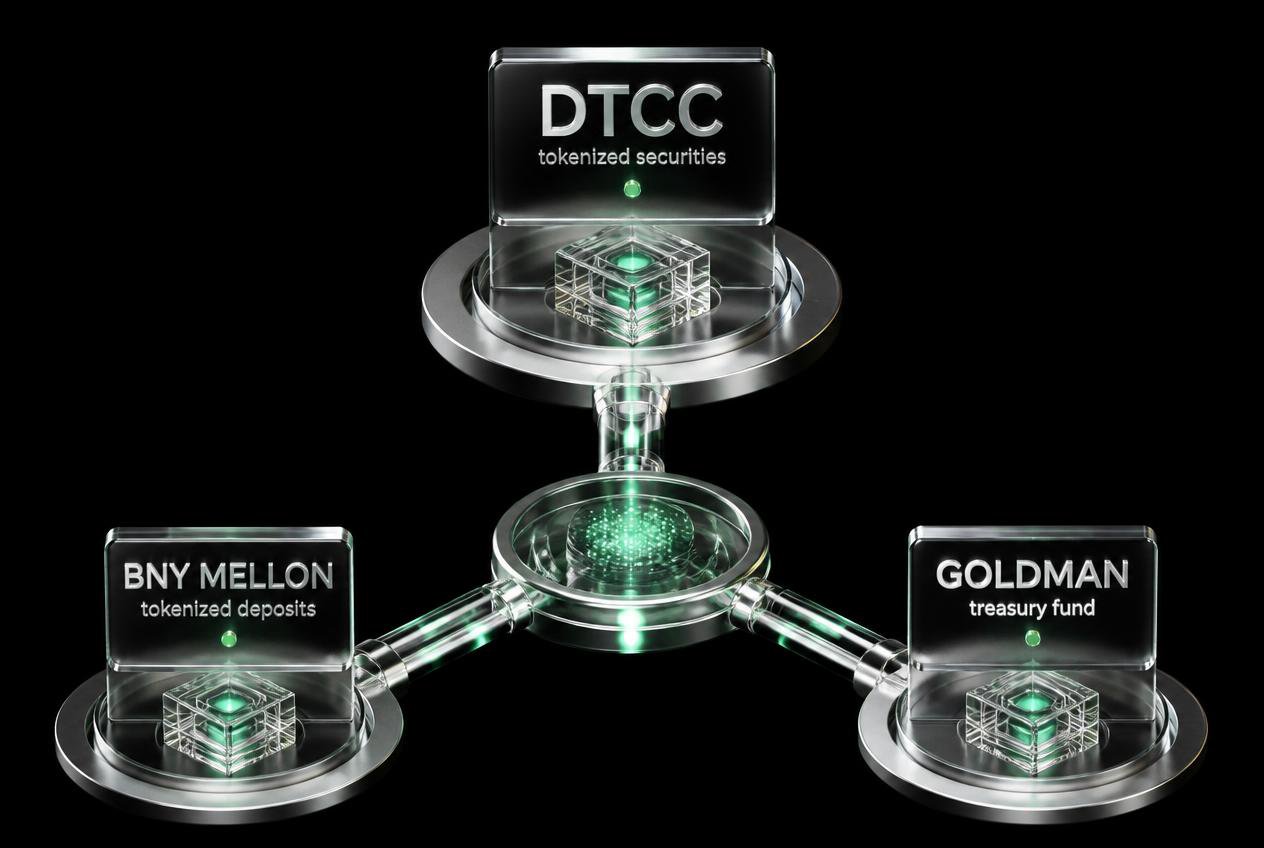
    Tokenization is shifting from experiment to production infrastructure: DTCC’s tokenization service moves this month from pilot to full commercial launch, bringing the roughly $114 trillion in DTC-custodied assets onto onchain settlement. BNY Mellon rolls out institutional tokenized deposits with ICE, Citadel and Circle as first clients, as the custody giant formally enters. Pantera’s report pegs total tokenized RWA at $331.8 billion, with tokenized-stock DEX 30-day volume hitting a record $2.09 billion.

    Industry Wire

    10 items

  • DTCC tokenization service goes live — This month it brings Russell 1000 constituents, major ETFs and U.S. Treasuries onto onchain settlement with 50-plus institutions, marking the first time a clearing layer directly adopts a blockchain rail
  • BNY Mellon launches institutional tokenized deposits — ICE, Citadel Securities, Ripple Prime and Circle are first clients as onchain institutional deposits move from experiment to commercial product
  • Goldman connects its $105B treasury fund to Lynq — The Financial Square treasury fund opens to crypto trading firms, letting idle cash earn compliant treasury yield while staying instantly callable
  • Pantera: issuance mature, secondary liquidity is the bottleneck — 671 tokenized assets total $331.8B, but permissioned products hold 59% of market cap yet contribute just 0.2% of spot volume
  • Tokenized-stock DEX volume hits record — 30-day volume reaches $2.09B with Uniswap contributing 60.1%, as open-access products carry 99.8% of spot trading with 41% of market cap
  • Superstate expands USTB to Base — The tokenized short-term U.S. Treasury fund joins Coinbase’s L2, widening institutional coverage across the digital asset ecosystem
  • Chainlink: AI will favor tokenized assets — The co-founder says AI agents chase the most efficient settlement path, so tokenized assets will be preferred over traditional ones
  • RWA WEEK lands in Singapore this October — The Oct 5-9 flagship summit expects 1,500-plus attendees and 70-plus speakers, focused on institution-grade tokenization in practice
  • Quant jumps on clearing house selection — Chosen to build the tokenized deposit network for the On-Chain Money Initiative, QNT surges 54% in a single day
  • East Asian regulation accelerates — Korea’s tokenized-securities framework is set for February 2027, while Japan’s FSA plans to reclassify crypto assets as financial products by FY2027
  • DTCC 十月全面上链,华尔街 $114 万亿清算管道驶向链上

    DTCC 十月全面上链,华尔街 $114 万亿清算管道驶向链上

    A
    Aurellix
    2026年10月1日
    1 分钟阅读

    今日焦点
    代币化从实验转向生产基础设施:DTCC 代币化服务本月从试点转入全面商用,将 DTC 托管的 $114 万亿 资产纳入链上结算。BNY Mellon 推出机构代币化存款,ICE、Citadel 与 Circle 首批接入,托管巨头正式入场。Pantera 报告显示代币化 RWA 总规模达 $3318 亿,代币化股票 DEX 30 天交易量 $20.9 亿 创新高。

    行业速报

    共 10 条

  • DTCC 代币化服务全面上线 — 本月起将 Russell 1000、主流 ETF 与美国国债纳入链上结算,50 余家机构参与,清算层首次直接采用区块链轨道
  • BNY Mellon 推机构代币化存款 — ICE、Citadel Securities、Ripple Prime 与 Circle 成为首批客户,链上机构存款从实验走向商业产品
  • 高盛 $1050 亿国库基金接入 Lynq — Financial Square 国库基金向加密交易机构开放,闲置现金可随时调用并获取合规国库收益
  • Pantera:发行成熟,二级流动性成瓶颈 — 671 项代币化资产总规模 $3318 亿,许可制产品占市值 59% 却仅贡献 0.2% 现货交易量
  • 代币化股票 DEX 交易量创新高 — 30 天量达 $20.9 亿,Uniswap 贡献 60.1%,开放访问产品以 41% 市值承载 99.8% 现货交易
  • Superstate 将 USTB 拓展至 Base — 代币化短期美债基金接入 Coinbase L2,扩大机构投资者在数字资产生态的服务覆盖
  • Chainlink:AI 将优先代币化资产 — 联合创始人称 AI 代理追求最高效结算路径,代币化资产将比传统资产更受青睐
  • RWA WEEK 十月落地新加坡 — 10 月 5-9 日旗舰峰会预计 1500+ 参会、70+ 演讲者,聚焦机构级代币化落地
  • Quant 受清算所青睐暴涨 — 美国清算所 On-Chain Money Initiative 选其构建代币化存款网络,QNT 单日飙涨 54%
  • 东亚监管提速 — 韩国代币化证券监管体系拟 2027 年 2 月实施,日本 FSA 计划财年 2027 完成加密资产金融产品重分类
  • DTCC Tokenization Goes Live as Wall Street’s $114T Pipeline Moves On-Chain

    DTCC Tokenization Goes Live as Wall Street’s $114T Pipeline Moves On-Chain

    DTCC Tokenization Goes Live as Wall Street’s $114T Pipeline Moves On-Chain

    DTCC Assets Under Custody
    $114T
    DTC-held · tokenizable

    Tokenized RWA Market
    $331.8B
    Pantera · 671 assets

    Tokenized Equity DEX 30D
    $2.09B
    Uniswap 60.1%

    GS Treasury Fund AUM
    $105B
    FTIXX via Lynq

    DTCC Tokenization Service Goes Fully Live This Month, Bringing Russell 1000, Major ETFs and US Treasuries On-Chain

    September 30, 2026 · DTCC / CoinDesk / RWAToday
    DTCC, the clearing and settlement core of US capital markets, announced its tokenization service will move from pilot to full production in October 2026, bringing roughly $114 trillion of DTC-custodied assets into scope for on-chain representation. Coverage includes Russell 1000 constituents, ETFs tracking major indices, and US Treasury bills, notes and bonds. The service rests on a December 2025 SEC staff no-action letter (a three-year window from launch); DTCC completed its first real tokenized trades in a July 15 pilot with 50-plus institutions. This marks the first time America’s settlement layer has directly adopted blockchain rails.
    • Covers the $114T DTC custody pool, with 50+ participants (BlackRock, Goldman, JPMorgan, Vanguard and more)
    • Dual-chain approach: Canton Network and Hyperledger Besu for settlement, with Stellar set to join in H1 2027 as the first public chain
    • Backed by an SEC no-action letter, a three-year window from launch that can be withdrawn at any time and does not renew automatically
    • In the pilot, JPMorgan tokenized part of its Invesco QQQ holdings; Microsoft shares and Treasury ETFs moved on-chain through the clearinghouse for the first time
    Industry Milestone
    The clearinghouse itself moves on-chain, turning tokenization from edge experiment into core US market infrastructure

    Settlement Efficiency
    On-chain settlement approaches real time, freeing margin and collateral locked in the T+1 cycle

    Reference Architecture
    European and Asian clearing utilities will use this as the global template for tokenized settlement

    Source: RWAToday · Tokenising Startups · September 30, 2026

    BNY Mellon Launches Institutional Tokenized Deposits, Counting ICE, Citadel and Circle Among First Clients

    October 1, 2026 · BNY Mellon / Bloomberg / ForkLog
    BNY Mellon, the world’s largest custodian bank, has officially launched tokenized deposit services for institutional clients, creating digital representations of assets held at the institution on the blockchain. The service enables funds to be used as collateral in secured and margin transactions and supports 24/7 instant payments that bypass traditional fiat channel limits. First clients include Intercontinental Exchange (ICE), Citadel Securities, DRW Holdings, Ripple Prime, Baillie Gifford and Circle. Observers largely attribute US institutions’ interest to the GENIUS Act, which has fueled demand for compliant on-chain yield.
    • Tokenized deposits are created within the existing banking system and can bear interest, unlike fiat-pegged stablecoins
    • First clients span exchanges, market makers, proprietary trading and crypto-native firms across the full value chain
    • Citi, HSBC, Standard Chartered and 14 other banks are simultaneously advancing Swift 24/7 cross-border tokenized-deposit pilots
    Banking Signal
    A custodian giant formally enters the space, moving institutional on-chain deposits from experiment to commercial product

    Settlement Path
    Tokenized deposits and stablecoins run on parallel tracks, accelerating bank-crypto convergence

    Regulatory Driver
    The GENIUS Act stablecoin framework gives banks a clear legal footing for on-chain products

    Source: ForkLog · Bloomberg · October 1, 2026

    Goldman Sachs Routes Its $105B Treasury Fund Into Lynq, Opening a Compliant Yield Channel for Crypto Institutions

    September 30, 2026 · Goldman Sachs / MEXC
    Goldman Sachs is making its Financial Square Treasury Instruments Fund (FTIXX) available to qualified US participants through Lynq, a real-time settlement and treasury-management network for digital-asset institutions. The fund held approximately $105 billion in net assets at the end of August 2026; once integrated, crypto-native trading firms can park idle cash in an established US Treasury money market fund between transactions while retaining access to capital when needed. It is one of the first cases of an ultra-large money market fund opening directly to the crypto trading ecosystem.
    • FTIXX holds roughly $105B in net assets, with institutional scale and maturity
    • Lynq enables real-time settlement and treasury management that fits digital-asset institutions’ cash rhythm
    • Alongside Circle and Swift on-chain deposit channels, it forms one of several routes for institutional “cash management on-chain”
    Capital Efficiency
    Idle crypto-institution cash shifts from zero yield to readily accessible Treasury returns

    Product Complement
    Traditional money market funds and on-chain tokenized Treasuries form parallel cash-management options

    Institutional Reach
    Ultra-large funds proactively connect to crypto rails, marking a further opening of the supply side

    Source: MEXC · Goldman Sachs · September 30, 2026

    Pantera Report: Tokenized Issuance Has Matured, But Compliant High-Liquidity Secondary Markets Remain the Core Bottleneck

    September 30, 2026 · Pantera Capital / TechFlow Post
    Pantera Capital published its “State of Tokenization” report, tracking 671 tokenized assets with a combined market of $331.8 billion. The report finds that on-chain issuance has matured, but compliant, highly liquid secondary markets remain the industry’s core bottleneck: permissioned products account for 59% of sampled market value yet contribute just 0.2% of spot trading volume, while open-access products carry 41% of value and drive 99.8% of spot activity. Meanwhile, tokenized-equity DEX volume reached roughly $2.09 billion over the past 30 days, a liquidity milestone, with Uniswap contributing 60.1%.
    • Tokenized US Treasuries grew from $13B to $16.5B (+$3.5B); private credit expanded from $4.1B to $5.1B
    • Of 48 whitelisted products, 46 post monthly turnover below the 1% liquidity threshold; permissioning and KYC hard limits suppress secondary liquidity
    • The maturity index TPI averages just 2.04, with most products still on-chain mirrors of off-chain assets and native on-chain capability lagging
    • Issuance is no longer the challenge; accessibility determines spot trading, and liquidity varies sharply across assets
    Industry Pain Point
    The shift from “getting issued” to “turning over” makes secondary liquidity the key growth variable

    Open Access
    Open products carry 41% of value yet 99.8% of spot trading; accessibility is liquidity

    Structural Read
    The tokenized-equity secondary market is accelerating, moving on-chain trading from issuance toward active trading

    Source: TechFlow Post · Pantera Capital · September 30, 2026

  • RWA 早报 | 2026年10月1日

    RWA 早报 | 2026年10月1日

    DTCC 代币化十月全面上线,华尔街 $114 万亿清算管道驶向链上

    DTCC 托管资产
    $114万亿
    DTC 托管 · 可代币化

    代币化 RWA 总规模
    $3318亿
    Pantera 671 项资产

    代币化股票 DEX 30天量
    $20.9亿
    Uniswap 占 60.1%

    GS 国库基金 AUM
    $1050亿
    FTIXX 接 Lynq

    DTCC 代币化服务本月全面上线:Russell 1000、主流 ETF 与美国国债进入链上结算

    2026年9月30日 · DTCC / CoinDesk / RWAToday
    美国证券清算结算核心设施 DTCC 宣布其代币化服务将于 2026 年 10 月从试点转入全面生产,将 DTC 托管的约 $114 万亿资产纳入可链上表示的范畴。覆盖资产包括 Russell 1000 成分股、追踪主要指数的 ETF 以及美国国债票据与债券。该服务依托 2025 年 12 月 SEC 工作人员无异议函(launch 起三年期),DTCC 已于 7 月 15 日完成首批真实代币化交易试点,50 余家机构参与。这是美国资本市场的清算层第一次直接采纳区块链轨道。
    • 覆盖 DTC 托管 $114 万亿资产池,参与机构 50+(BlackRock、Goldman、JPMorgan、Vanguard 等)
    • 双链并进:Canton Network 与 Hyperledger Besu 可供结算,Stellar 将于 2027 上半年接入成为首个公开链
    • 合规基础为 SEC 无异议函,三年期自 launch 起算,可随时撤回、不自动续期
    • 试点中 JPMorgan 将部分 Invesco QQQ 持仓代币化,Microsoft 股票与国债 ETF 首次经清算所上链
    行业里程碑
    清算所直接上链,代币化从边缘实验变为美国市场核心基础设施

    结算效率
    链上结算逼近实时,释放 T+1 周期中被占用的保证金与抵押品

    参考架构
    欧洲与亚洲清算机构将以此为代币化结算的全球模板

    来源:RWAToday · Tokenising Startups · 2026年9月30日

    BNY Mellon 推出机构代币化存款服务,ICE、Citadel 与 Circle 成为首批客户

    2026年10月1日 · BNY Mellon / Bloomberg / ForkLog
    全球最大托管行纽约梅隆银行(BNY Mellon)正式为机构客户推出代币化存款服务,在区块链上创建机构持有资产的数字表征,使资金可用于担保品与保证金交易,并支持 24/7 即时支付、绕开传统法币通道限制。首批客户包括洲际交易所(ICE)、Citadel Securities、DRW Holdings、Ripple Prime、Baillie Gifford 与 Circle。市场普遍将其归因于 GENIUS Act 落地后美国金融机构对链上合规收益需求的升温。
    • 代币化存款在现有银行体系内创建、可生息,区别于法币锚定稳定币
    • 首批客户横跨交易所、做市商、自营交易与加密原生机构,覆盖全产业链
    • 花旗、汇丰、渣打等 17 家银行同期推进 Swift 代币化存款跨境 24/7 试点
    银行业信号
    托管巨头正式入场,链上机构存款从实验走向商业产品

    结算路径
    代币化存款 + 稳定币双轨,银行体系与加密市场加速融合

    监管驱动
    GENIUS Act 稳定币框架为银行链上产品提供明确法律地基

    来源:ForkLog · Bloomberg · 2026年10月1日

    高盛将 $1050 亿国库基金接入 Lynq,加密机构闲置资金获合规收益通道

    2026年9月30日 · Goldman Sachs / MEXC
    高盛(Goldman Sachs)正通过 Lynq——面向数字资产机构的实时结算与国库管理网络——向合格美国参与者开放其 Financial Square Treasury Instruments Fund(FTIXX)。该基金 8 月末净资产约 $1050 亿,接入后加密原生交易机构可在交易间隙将闲置现金投入成熟的美国国库货币市场基金,同时保留随时调用资金的灵活性。这是传统超大市值货币基金向加密交易生态开放的首批案例之一。
    • FTIXX 净资产约 $1050 亿,具备机构级规模与成熟度
    • 通过 Lynq 实现实时结算与国库管理,契合数字资产机构的资金使用节奏
    • 与 Circle、Swift 等链上存款通道一起,构成机构”现金管理上链”的多条路径
    资金效率
    加密机构闲置现金由零收益转向可随时调用的国库收益率

    产品互补
    传统货币基金与链上代币化国债形成并行的现金管理方案

    机构参与
    超大市值基金主动接入加密网络,标志资金供给端进一步开放

    来源:MEXC · Goldman Sachs · 2026年9月30日

    Pantera 报告:代币化发行已成熟,合规高流动性二级市场成核心瓶颈

    2026年9月30日 · Pantera Capital / 深潮TechFlow
    Pantera Capital 发布《2026 年 9 月代币化行业现状》报告,统计 671 项代币化资产、总规模达 $3318 亿。报告指出,代币资产上链发行已趋于成熟,但合规、高流动性的二级市场成为行业主要瓶颈:许可制产品占样本总市值 59%,却仅贡献 0.2% 的现货交易量,开放访问产品以 41% 市值贡献了 99.8% 的现货交易额。同期,代币化股票 DEX 30 天交易量达约 $20.9 亿创流动性里程碑,Uniswap 贡献 60.1%。
    • 代币化美债市值由 $130 亿增至 $165 亿(+$35 亿),私人信贷由 $41 亿扩至 $51 亿
    • 48 个白名单限定产品中 46 个月度换手率不足 1%,许可与 KYC 硬限制压制约二级流动性
    • 成熟度指数 TPI 均值仅 2.04,多数产品仍为链下资产的链上映射,链上原生能力滞后
    • 发行不再是难点,可访问性决定现货交易,资产间流动性高度分化
    行业痛点
    从”发得出去”转向”转得起来”,二级流动性成增长关键变量

    开放访问
    开放产品以 41% 市值承载 99.8% 现货交易,可访问性即流动性

    结构判断
    代币化股票二级市场加速,链上交易从发行走向活跃交易阶段

    来源:深潮TechFlow · Pantera Capital · 2026年9月30日

  • Arthur Hayes Unveils FLOP in Seoul: Should AI Agents Use Compute as Money?

    Arthur Hayes Unveils FLOP in Seoul: Should AI Agents Use Compute as Money?

    Arthur Hayes Unveils FLOP in Seoul: Should AI Agents Use Compute as Money?

    At Korea Blockchain Week, the BitMEX co-founder argued that neither stablecoins nor bitcoin deserve to be AI agents’ native money, betting instead on a “compute-as-currency” network called FLOP. A Bittensor developer pushed back on stage, while Tether backed stablecoins as the main rail for machine commerce.

    TAO price / market cap
    $305 / $3.5B
    24h -7.3%

    FLOP community airdrop
    25%
    of total supply, no presale/VC

    FLOP mainnet launch
    Q1 2027
    about 90-day test phase

    Hermes agent coverage
    7 subnets
    Bittensor, buys digital goods with TAO

    On September 30, at the Walkerhill Hotel in Seoul, on the main stage of Korea Blockchain Week (KBW2026), BitMEX co-founder Arthur Hayes delivered a bold claim: no currency today can serve as AI agents’ native money. Fiat like the dollar and the won cannot. Stablecoins cannot. Bitcoin cannot either. The reason, he said, is that none of them convert into the resource agents actually consume: compute.

    That is why he launched FLOP, a network designed to turn “floating-point operations” directly into money, using a mechanism he calls “proof of useful inference.” Under it, GPU owners process verifiable AI inference for agents, get it validated, and earn tokens. A developer in the room pushed back immediately: markjeffrey showed off his Hermes agent, saying it already spends TAO to buy digital goods across seven Bittensor subnets. “It works fine, Arthur.”

    The same day, Tether U.S. CEO Bo Hines offered a contrasting read in another KBW session: stablecoins will play a key role in “agentic commerce,” with machines potentially executing billions of sub-cent micropayments a day. In Seoul, two radically different answers to “what money should AI agents use” collided within hours of each other.

    1. Why It Matters: Whether Compute Can Be Money Decides Where the Next Stack Is Bet

    This is not a pure conceptual debate. Over the past month, AI-agent payments have become the most crowded narrative in crypto: BlackRock published “The Machine-Native Economy,” while Coinbase’s x402 and Stripe’s MPP are both racing to own the “machine payment rail.” Hayes pushes the question further, rejecting the rail race outright and arguing the real question is what money even is. If compute can truly become a convertible currency, then agent payments, compute tokenization, and decentralized inference markets all become extensions of a single story.

    2. Industry Snapshot: Three Routes Clash Head-On in Seoul

    The first is Hayes’s “compute standard.” FLOP has no presale and no VC, and 25% of total supply goes straight to the community as an airdrop. Hayes laid out the core logic in an August 26 interview: today’s “token” pricing units for AI services do not map to real compute, and definitions and pricing vary across AI labs, making it hard to compare actual workloads on a common basis. He proposes a “proof of useful inference” modeled on bitcoin’s proof of work: GPU holders execute verifiable inference tasks and earn rewards. Per Dow Jones reporting, the FLOP mainnet is targeted for Q1 2027, with Hayes expecting to start counting airdrop eligibility in late October before a roughly 90-day test phase.

    The second is Tether’s “stablecoin standard.” At KBW, Bo Hines argued that information sharing and payments among AI agents will create new demand for stablecoins. He drew a line between USDT and USAT: USDT serves individual users in emerging markets, while USAT targets institutions and aims to be a neutral settlement tool between banks and traditional financial firms. When tokenized securities arrive, he argued, institutions will need a neutral way to reconcile, and Tether wants that position. In his view the real problem is not “a different currency” but making stablecoins and the blockchains carrying information cheap enough for micropayments.

    The third route comes from infrastructure already moving. Bittensor developer markjeffrey countered the “no native currency” thesis with a working example: his Hermes agent already uses TAO to buy digital goods across seven subnets. TAO’s market cap is around $3.5 billion, and Bittensor is doubling its subnet capacity ceiling from 128 to 256. Closer to home, MoonPay announced MoonPay Korea in Seoul on September 29, teaming up with Woori Bank, KB Financial Group and KakaoBank to build an overseas channel for a won stablecoin that does not yet exist. KB’s earlier stablecoin remittance pilot settled faster than SWIFT with fees about 87% lower.

    Key signal: The claim that “AI agents have no native currency” is less a technical disagreement than a fight over which “money anchor” wins. Hayes anchors to compute (floating-point ops), Tether to the dollar stablecoin, and Bittensor is already settling in TAO. All three share one more certain premise: machine payments will actually happen.

    3. Deep Dive: The Three Tests Facing the Compute Standard

    1
    The pricing problem of “useful inference”Hayes’s design mirrors PoW, but “useful inference” is far harder to verify than hashing. A hash has an objective, checkable result; whether a given inference is useful or how good it is depends on validators judging output quality, which forces a value judgment into the consensus layer. Bittensor has spent a decade on exactly this, adjudicating via subnets and validator scoring at real cost. That is why no second “compute currency” has yet run at scale.

    2
    The real resistance to the stablecoin routeTether is betting on “agents pay in dollar stablecoins,” a path closer to production but one that ties machine payments to centralized issuance and dollar reserves. Hines’s “billions of sub-cent micropayments” place extreme demands on throughput and fees, and Tether must run two product lines, USDT for individuals and USAT for institutions, at once. Meanwhile, the won stablecoin does not even have final rules, yet MoonPay is already building the export channel for it. That kind of front-running suggests institutions are betting regulation is only a matter of timing.

    3
    What is scarce is demand, not currencyThe three camps argue over which money to use, but the thing actually holding back AI-agent payments is demand: few agents are paying automatically today. Bittensor’s Hermes, the traffic on x402, and the micropayments Tether describes are all early. Whoever first runs a scene where real agents pay persistently is more likely to set the standard. Hayes is front-running with an airdrop and a 90-day test window, trying to claim the mindshare of “the money agents use by default.”

    4
    Asia-Pacific is becoming the main battlegroundHolding this debate in Seoul was not accidental. Around KBW2026, South Korea is laying two tracks at once: global decentralized compute markets like Bittensor, and compliant stablecoin channels built by MoonPay with three major banks. Because regulation is still forming, each route gets a window to try out on the same turf. For practitioners, the watch point is not whose theory is right, but which agents start paying persistently in the next six months and in what asset they settle.

    4. Investment View

    On the news itself, TAO did not rally on FLOP’s launch; it fell with the broader market, down about 7.3% in 24 hours to near $305, a market cap around $3.5 billion. Some of the market’s split over a “new compute coin” may show up in Bittensor’s subnet expansion not yet being priced in: doubling the subnet ceiling from 128 to 256 leaves more room for agents to pay in TAO. On the stablecoin side, institutional momentum keeps building. Tether stresses that USAT should move into tokenized-securities settlement, and MoonPay is treating Korea as its test bed for Asian expansion. Both point to the same end: on-chain settlement infrastructure for machines and institutions.

    A caveat: FLOP itself is early. There is no whitepaper, tokenomics document, or contract address yet, and Hayes has publicly disowned the fake FLOP tokens circulating, clarifying the official token has not been issued. The compute-tokenization narrative has room to run, but it faces a long validation gap before agents actually pay in FLOP. Anyone betting on this line should put liquidity risk first.

    5. Conclusion: The Real Winner of the Route Debate Is “Machine Payments” Itself

    Hayes’s compute standard, Tether’s stablecoin standard, and Bittensor’s TAO standard look like three currency philosophies in conflict, but underneath they share one judgment: economic exchange among AI agents will genuinely happen, and could be far larger than imagined. Whoever first makes agents default to “my money” holds the pricing power over the next AI x blockchain infrastructure cycle. Rather than argue compute versus stablecoins, practitioners should watch an earlier signal: over the next six months, which assets real, persistently paying agents actually settle in.

  • Arthur Hayes首尔发布FLOP:AI Agent该有自己的算力货币吗

    Arthur Hayes首尔发布FLOP:AI Agent该有自己的算力货币吗

    Arthur Hayes首尔发布FLOP:AI Agent该有自己的算力货币吗

    韩国区块链周上,BitMEX联合创始人声称稳定币和比特币都不配当AI Agent的货币,转而押注”算力即货币”的FLOP网络;一个Bittensor开发者当场反驳,Tether则押注稳定币才是机器交易主轨道。

    TAO 价格 / 市值
    $305 / $35亿
    24h -7.3%

    FLOP 社区空投
    25%
    总供应量,无预售/无VC

    FLOP 主网上线
    Q1 2027
    测试期约90天

    Hermes agent 覆盖
    7个子网
    Bittensor,用TAO买数字商品

    9月30日,首尔华克山庄,韩国区块链周(KBW2026)主会场。BitMEX联合创始人Arthur Hayes抛出一个论断:当下没有任何一种货币能当AI Agent的原生货币——美元、韩元这类法币不行,稳定币不行,比特币也不行。理由是它们都换算不到AI Agent真正消耗的资源:算力。

    他为此发布了FLOP网络,要把”浮点运算”直接变成货币,用一套他称之为”有用推理证明”(proof of useful inference)的机制,让持有GPU的人为AI Agent做推理、验证并获得代币。现场立刻有人唱反调:开发者markjeffrey亮出他的Hermes agent,说它已经在Bittensor的七个子网上用TAO买数字商品,”它跑得好好的,Arthur”。

    同一天,Tether美国业务CEO Bo Hines在KBW的另一个环节给出截然相反的判断——稳定币将在”agentic commerce”里扮演关键角色,机器之间每天可能发生数十亿笔低于一美分的微支付。一场关于”AI Agent到底该用什么钱”的路线之争,在首尔同一天对撞。

    一、为什么关注:算力能不能当货币,决定下一轮基建押注谁

    这不是一场纯概念辩论。过去一个月,AI Agent支付已成为加密叙事最拥挤的赛道:BlackRock发布《机器原生经济》报告,Coinbase的x402协议、Stripe的MPP协议都在抢”机器支付轨道”的位置。Hayes的观点把问题推得更远——他否认轨道之争的合法性,主张先解决”货币到底是什么”。如果算力真的能变成可兑换的货币,那么AI Agent支付、算力代币化、去中心化推理市场都会是同一个故事的延伸。

    二、行业现状:三条路线在首尔正面交锋

    第一条是Hayes的”算力本位”。FLOP网络没有预售、没有VC,总供应量25%直接空投给社区。Hayes在8月26日的访谈里解释过核心逻辑:目前AI服务的”token”计价单位并不对应真实算力,各家AI实验室的定义和定价各不相同,很难在统一基础上比较实际计算负载。他提出仿照比特币的工作量证明,做一个”有用推理证明”——GPU持有者执行可验证的AI推理任务获得奖励。按道琼斯报道,FLOP主网计划2027年一季度上线,Hayes预计10月下旬开始统计空投资格,随后进入约90天的测试期。

    第二条是Tether的”稳定币本位”。Bo Hines在KBW上称,AI Agent之间信息分享与支付将催生稳定币新需求。他区分了USDT与USAT的定位:USDT服务新兴市场的个人用户,USAT面向机构,要成为银行与传统金融机构之间中立的结算手段;当代币化证券出现后,机构需要一种中立的对账工具,Tether想占据这个位置。在他看来,真正的问题不是”换一种货币”,而是让稳定币和承载信息的区块链在微支付场景里把成本打下来。

    第三条来自正在发生的基础设施迁移。Bittensor开发者markjeffrey用实际运行反驳”没有原生货币”的论断——他的Hermes agent已经在七个子网里用TAO购买数字商品。TAO市值约35亿美元,Bittensor正在把子网容量上限从128翻倍到256。而在韩国本土,MoonPay于9月29日在首尔宣布成立MoonPay Korea,联手友利银行、KB金融集团和KakaoBank,为尚未发行的韩元稳定币搭建出海通道;KB此前的稳定币汇款试点,流程比SWIFT快、费用低约87%。

    关键信号:所谓”AI Agent没有原生货币”,真正的分歧不在技术,而在”货币锚”选谁。Hayes主张锚定算力(浮点运算),Tether主张锚定美元稳定币,Bittensor已经在用TAO做实际结算。三者的共同前提是机器支付会真实发生——这才是比”用哪种钱”更确定的判断。

    三、深度分析:算力本位面临的三重考验

    1
    “有用推理”的定价难题Hayes的方案仿照PoW,但”有用推理”比哈希计算难验证得多。哈希的结果客观可校验,而”这次推理是否有效、质量如何”依赖验证者对输出质量的判定,等于把价值判断塞进了共识机制。Bittensor十年来处理的就是这个问题,用子网和验证者打分来裁决,成本不低,这也是为什么”算力货币”目前没有第二个跑通的范本。

    2
    稳定币路线的现实阻力Tether押注的是”机器用美元稳定币付账”,这条路离落地更近,但把机器支付绑在了中心化发行与美元储备上。Hines口中”几十亿笔低于一美分的微支付”对公链吞吐与手续费提出极高要求,Tether自己也要在USDT(个人)与USAT(机构)之间维持两条产品线。而另一边,韩元稳定币连规则都还没定稿,MoonPay却在为一个”还不存在的韩元稳定币”先建出海渠道——这种抢跑的架势,说明机构赌的是规则落地只是时间问题。

    3
    真正稀缺的是”需求”而非”货币”三家吵的是用哪种钱,真正卡住AI Agent支付的其实是需求侧:现在真正在自动付账的agent还很少。Bittensor的Hermes、x402上的交易、Tether口中的微支付,都还停留在早期。谁先跑通”有真实的agent在持续付费”的场景,谁定义的标准就更可能胜出。Hayes用空投和90天测试期抢跑,正是想先占据”agent默认会用的钱”这个心智。

    4
    亚太正在成为主战场这场辩论的主会场选在首尔并非偶然。KBW2026期间,韩国本土在同时铺两条路:一边是Bittensor这类全球去中心化算力市场,一边是MoonPay联手三大银行做合规稳定币通道。监管尚未定型反而给了各条路线同场试错的窗口。对从业者而言,观察点不是”谁的理论对”,而是未来半年哪些agent真的开始持续付账、用哪种资产结算。

    四、投资视角

    消息层面,FLOP发布当天TAO并没有因此大涨,反而随大盘回落,24小时跌约7.3%至305美元附近,市值约35亿美元。市场对”新算力币”的分歧,部分反映在Bittensor子网扩容的利好尚未被定价上——把子网上限从128翻倍到256,等于给”agent用TAO付账”留出更大空间。另一边,稳定币概念在机构侧继续升温,Tether强调USAT要切入代币化证券结算,MoonPay把韩国当作亚洲扩张的试验场,这些动作指向的仍是同一件事:机器与机构之间的链上结算基础设施。

    需要提醒的是,FLOP本身仍处早期,没有白皮书、代币经济模型与合约地址也尚未披露,Hayes还专门澄清过市面上流传的FLOP代币是假的。算力代币化叙事有想象空间,但距离”agent真的用FLOP付账”还有很长的验证期,押注这条线的资金应该把流动性风险放在首位。

    五、结论:路线之争的赢家是”机器支付”本身

    Hayes的算力本位、Tether的稳定币本位、Bittensor的TAO本位,表面上是三种货币观的冲突,底层共享同一个判断:AI Agent之间的经济往来会真实发生,而且规模可能远超想象。谁先让agent形成”默认用我的钱”的习惯,谁就握住了下一轮AI×区块链基建的定价权。对从业者来说,与其纠结”算力还是稳定币”,不如盯着一个更早的信号——未来半年,真实跑起来、持续付账的agent到底用哪种资产结算。